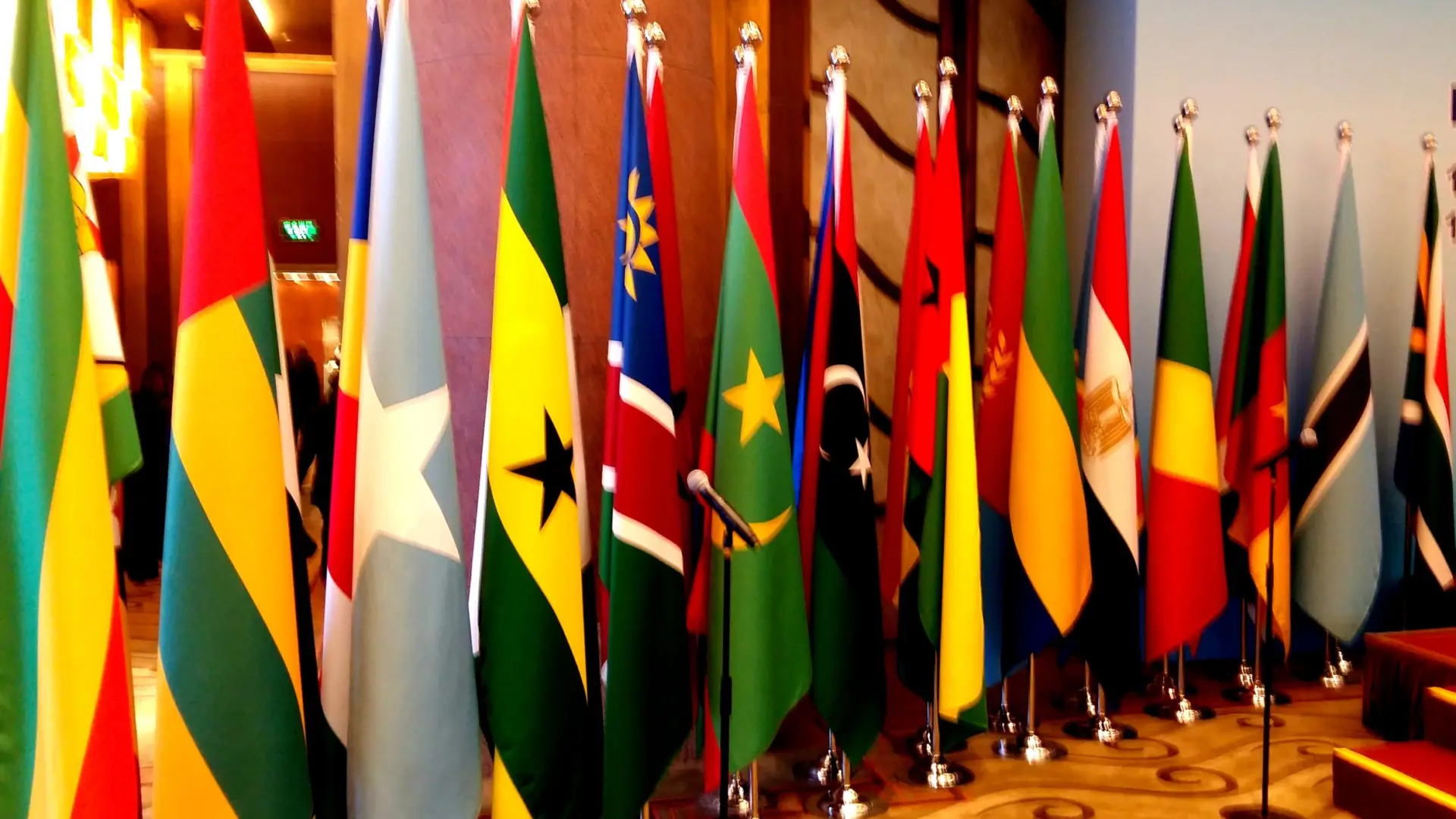
African presidents are in Beijing with the Chinese government for the 2018 Summit of the Forum on China-Africa Cooperation (FOCAC). The leaders of a whole continent have travelled to meet a single country, something Asian or European presidents are not asked to do for any one African government.
This is a new scramble for Africa, with Africans themselves playing an active part this time and with a preferred partner, China. The foreign powers that court the continent still want what they always wanted: its raw materials and its markets. Africa’s answer, the author argues, must be to build its own industry and its own trade before it courts foreign investors.
Sub-Saharan Africa is once again a topic on the global table, or perhaps it has remained unfinished business since the Berlin Conference of 1884–85. The big difference is that there are new participants now, and the region itself can have a say if it chooses to use it.
From Berlin to Beijing
Thirteen decades ago, the European colonial powers, with the United States attending, met in Otto von Bismarck’s Berlin and shared out African territories with no African at the table. Colonisation was made official, drowning out Africa’s voice for years, even after its countries won their independence.
Building modern societies has been a struggle for every African leader since independence. Political interests, domestic and international, have combined to hinder or delay growth. From the decades of colonialism until now, the region has kept losing its resources, both human and mineral.
- Ivory Coast exports its cocoa and imports chocolate and chocolate drinks.
- Nigeria exports barrels of crude oil and imports fuel, among other things.
- Every day, young Africans migrate, legally and illegally.
- The continent loses its best brains to developed economies that are more accommodating.
The industries that should process Africa’s raw materials are too few to employ its rising population, and young people do not have enough work. Many want to go where industries are alive, some of them processing the same raw materials that lie in their own backyards.
Merkel and May come calling
Last week, Angela Merkel of Germany and Theresa May of the United Kingdom were both in Africa, for different but similar reasons.
Merkel, deeply troubled by illegal migration to Europe, came with a group of chief executives and signed deals to help revive industries in West Africa, the sub-region most of the migrants come from. Her watchword was investment, the word African leaders love to hear.
For May, Britain’s coming exit from the European Union has revived its need for the continent it once ruled. Losing its ties with the other EU nations is not good for the UK, but Africa is there, open and waiting. May too came with the word that wins over African leaders: investment.
A continent summoned to one country
The FOCAC meeting was set for Monday 3 and Tuesday 4 September, yet many African leaders were already in Beijing on Friday 31 August. That China can draw an entire continent’s leadership out of their offices to Beijing shows how far its institutions have made economic inroads into Africa. It is not an Asia-Africa forum, mind you.
Besides China’s FOCAC, there is the Germany-Africa Business Forum (GABF) and the Russia-Africa Trade and Investment Forum (RAFTIF). From the United States comes the African Growth and Opportunity Act (AGOA), which offers trade and other opportunities to African beneficiaries so long as they meet US eligibility requirements.
Intercontinental and inter-regional trade relations are key to industrial growth and development, so none of these fora is wrong in itself. The concern is the role African leaders are playing, and whether they ensure that the mistakes of the past are not repeated. The original motives of foreigners coming to Africa, to obtain raw materials and to prepare a ready market for finished products, have not changed. The test is whether African leaders understand this well enough to negotiate truly equal agreements.
Africa has the raw materials, the human resources and a very large market, yet it still waits for international forums in Beijing, Moscow and Berlin before it can industrialise. Whether foreign countries import raw materials from Africa or export finished products to it, they have little to lose. So they arrive with different trade packages and jostle for trade space within the continent, while Africa is still ‘reflecting’ on holding such fora for its own business opportunities.
The language of these relationships tells the story. We cannot talk of Kenya-Asia or Ghana-Europe relations, because Ghana is a country and Europe is a continent. Yet we comfortably say China-Africa relations, as if the two had the same geographical status. A whole continent, with all its wealth, has been cast as the counterpart of a single country.
While world leaders come for Africa’s markets and resources, intra-African trade still suffers from barriers between African states. Here is the irony. Developed nations scramble for Africa’s raw materials and markets to grow their own economies, while Africa’s trade with itself is held back.
Africa must come of age. While the continent courts every foreign investor, domestic trade ties must come first. The African Continental Free Trade Area (AfCFTA) has been agreed but is not yet in force. We cannot keep selling the continent’s raw materials and expect foreigners to grow it for us. Beware, Africa.
What happened next
The AfCFTA entered into force on 30 May 2019 and was formally launched for trading on 1 January 2021. As of May 2026, 49 of its 54 signatories had ratified it. China hosted FOCAC in Beijing again from 4 to 6 September 2024. AGOA lapsed on 30 September 2025 and was renewed in February 2026 for one year only, to 31 December 2026, backdated to the lapse. In Nigeria, the privately owned Dangote refinery began producing petrol in September 2024.



