When Nelson Mandela walked onto Ellis Park wearing Francois Pienaar’s number six Springbok jersey in 1995, the image worked because it was true. A man who had spent 27 years in prison chose the symbol of his oppressors’ sport as the instrument of his country’s reconciliation. The photograph became a theory of transformation, the claim that sport could carry the weight of political history and bend it towards something better. This analysis argues that three decades on, South Africa’s sporting success symbolises a transformation that the systems behind sport, from school facilities to media revenue, have not yet delivered.
What has changed
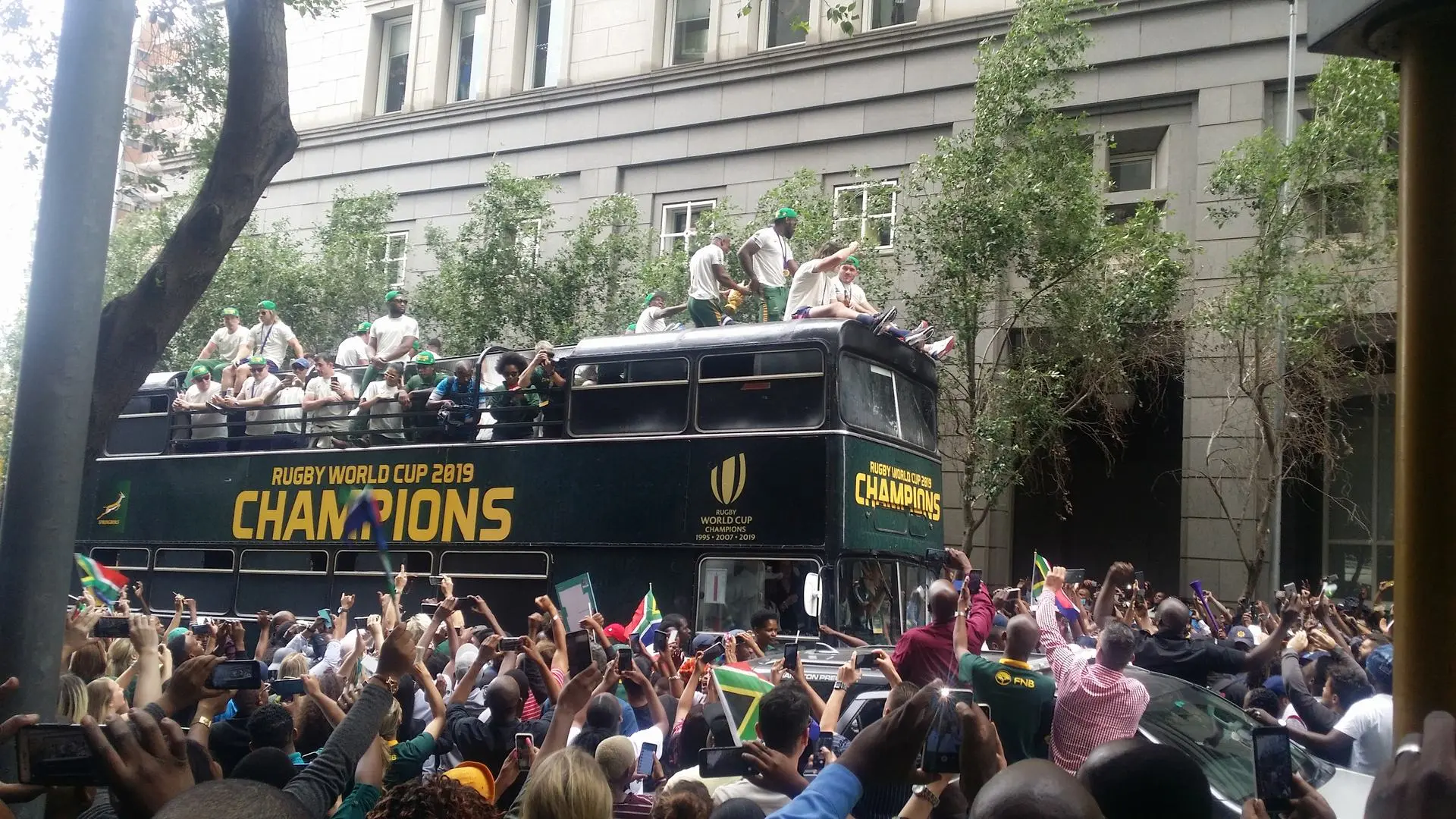
The achievements are not in dispute. South Africa has won four Rugby World Cup titles since 1994, including back-to-back victories in 2019 and 2023. It hosted the 2010 FIFA World Cup. Its cricket team has competed consistently at the highest international level. The Springbok programme, under Rassie Erasmus, integrated Black players into starting positions at a scale and depth not previously seen in the squad’s history. It produced in Siya Kolisi a captain whose biography, from impoverished beginnings in the Eastern Cape townships to lifting the Webb Ellis Trophy in Paris, is the most powerful single argument that something has genuinely changed in South African sport.
Who gets to play
That argument has to be held alongside another. Change in sport mirrors change in society more broadly: real, measurable and incomplete. South Africa’s school sport infrastructure remains stratified by race and class in ways that the 1994 political settlement did not address. Former white schools in the suburbs of Johannesburg and Cape Town have maintained sports facilities, coaching staff and competitive structures that produce the next generation of elite players. Former township schools, serving the majority Black population, operate with a fraction of those resources. The talent that emerges from that system does so through individual will and community investment, not because the system has been rebuilt equitably.
Rugby’s transformation has been more visible at the elite level and more contested in its implementation. The transformation targets intended to improve representation have been attacked from both sides, by those who argue they undermine meritocracy and by those who argue they do not go far enough to address exclusion from the development pathway. Both arguments contain elements of truth. The quota debate is a proxy for a deeper dispute about whether South African sport can be transformed at the elite level without transforming the conditions that produce elite players in the first place.
Who gets the money
The country’s sports broadcasting rights, commercial sponsorship and elite athlete development pathways generate significant economic value, and who captures that value is an open question. The Premier Soccer League draws most of its fan base from Black South African communities, yet in the author’s view little of its media rights revenue reaches grassroots football in those communities. Cricket South Africa’s transformation agenda has improved Black and Coloured representation in the national team but has not transformed the grassroots infrastructure through which most Black South Africans would encounter the sport.
The 2010 World Cup left behind stadium infrastructure that several host cities have struggled to sustain. Cape Town’s stadium, built in Green Point, illustrates the need to assess long-term operating costs alongside tenancy and event revenue. The pattern is one in which sporting success, and the genuine pride it generates, can substitute politically for the harder conversation about whether the economic systems attached to that success distribute their benefits equitably.
A symbol, not a programme
South Africa’s sporting legacy is a mirror of the country itself: remarkable, internally divided and unfinished. The rainbow nation metaphor that sport has repeatedly been asked to embody is not wrong. It captures something real about what South African communities have chosen to believe about themselves in moments of collective achievement. What it cannot capture, and what no trophy can substitute for, is the land, the education, the capital and the equal institutional participation that transformation requires. The Springbok jersey can be a symbol. It cannot be a programme.



