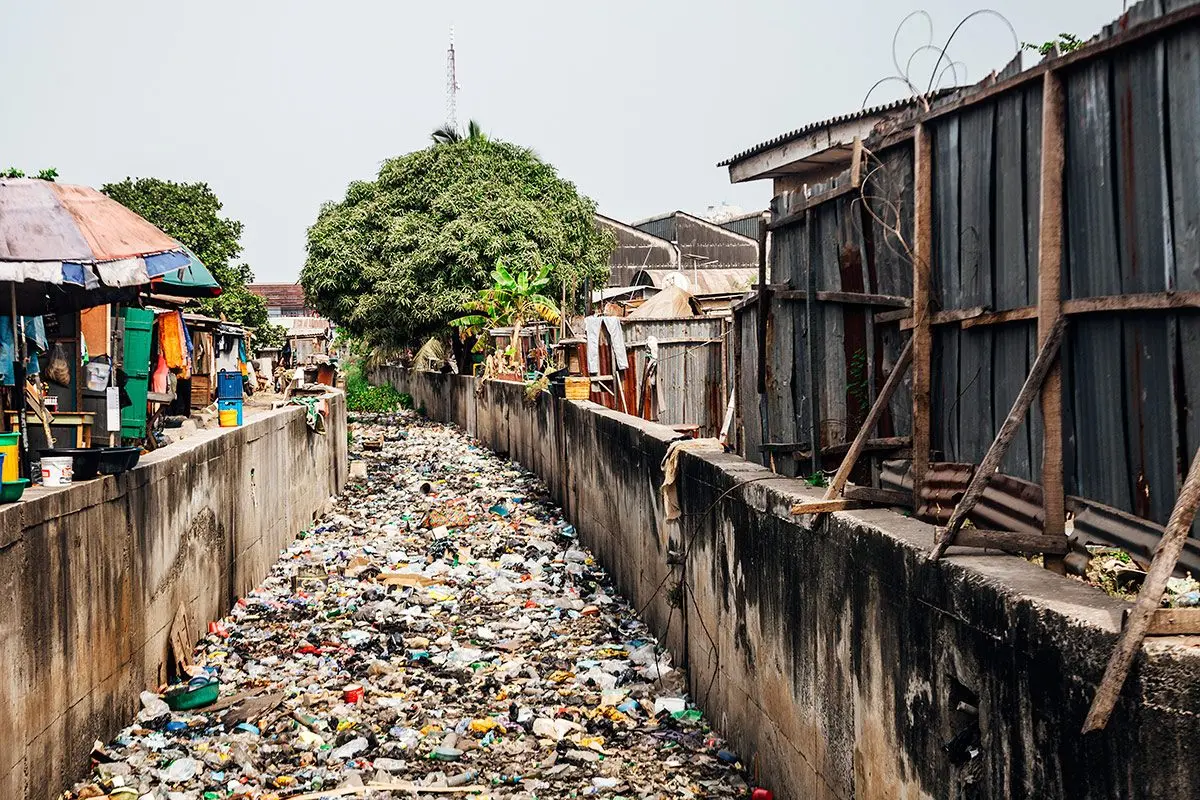
Africa, a continent exceptionally rich in biodiversity, is urbanising fast, and the way its cities grow will decide much of what happens to its forests, wildlife and water. The change shows in the growth of its megacities and of its smaller towns alike. It strains infrastructure that is already inadequate, creates new problems of governance and puts pressure on natural habitats far beyond city limits.
People move to cities in the hope of better living conditions, better education and more economic opportunity. In 2008, for the first time in human history, half of the world’s population lived in towns and cities. The United Nations now uses a stricter definition that counts cities separately from towns, and by that measure its World Urbanization Prospects 2025 puts 45 per cent of the world’s 8.2 billion people in cities.
Megacities and slums
The flow of people to urban areas has produced “megacities”, urban areas of 10 million people or more, most of them in developing countries. The UN counts 33 megacities in 2025, up from eight in 1975, and expects 37 by 2050. In 2018, according to the UN’s The World’s Cities in 2018, Africa had only three: Lagos in Nigeria, Cairo in Egypt and Kinshasa in the Democratic Republic of Congo. Cairo is now the only city outside Asia among the world’s ten most populous, and the UN projects that Addis Ababa and Dar es Salaam will pass 10 million by 2050.
Urbanisation can lift national economies, but it also brings infrastructure and humanitarian problems. Slums are a common result of rapid urban growth. According to World Bank data, sub-Saharan Africa was 41 per cent urban in 2018, and about 52 per cent of its urban residents lived in slums. By 2025 the region was about 45 per cent urban. The slum share had fallen from about 65 per cent in 2002 to 51 per cent in 2020, but it rose again to 54 per cent in 2022, the latest year for which the Bank gives a figure.
Why African urbanisation is different
Africa’s rates of urbanisation resemble those of other fast-urbanising regions, but the forces behind them are very different, as a 2017 review by Burak Güneralp and colleagues in Environmental Research Letters argues. Much of Africa’s urban expansion is unplanned and unregulated. The legacy of colonialism, structural adjustment and neoliberal policy left urban planning institutions weak.
Unemployment in African cities is high, and about 60 per cent of jobs are in the informal or grey economy, which the state neither taxes nor monitors. Social protection, land markets, infrastructure and services are largely informal too. Local authorities are weak and land use is poorly managed. So although slums and informal settlements can be extremely crowded, African cities as a whole are spread out at low density.
Many African countries also show a high degree of urban primacy despite fast urban growth everywhere. One city, usually the capital, holds several times the population, economic activity and political power of the next largest. Because government and institutions are concentrated there, other cities, towns and villages get far less attention and fewer resources, and that includes resources for conservation.
Cities and natural habitats
It is often assumed that migration to cities will ease the pressure on natural habitats. In parts of sub-Saharan Africa it has, by thinning out rural populations and slowing deforestation. In West Africa, however, rising demand for food in the cities has encouraged farmers to clear forest for fields. Whatever relief rural–urban migration brings can be outweighed by the cities’ growing demand for food and other natural resources, and in many countries deforestation has risen even as urbanisation has advanced. Conservation planning will increasingly have to account for the direct and indirect effects of the continent’s urban growth.
The damage shows in widening rings of deforestation around cities and along transport routes. Resources are stripped in waves, the most valuable first, around large cities and small settlements alike. Farming on the urban fringe is important for food security in many sub-Saharan countries, but it also degrades habitats around cities. Good transport links can make the damage spread outward from a city faster and further. Güneralp and his co-authors expect eastern and southern Democratic Republic of Congo and southern Cameroon to suffer most, and soonest, because of their dense rural populations and strong foreign demand for their farmland.
Conflict drives urbanisation too. Ethnic conflicts and civil wars, some of them decades old, have arguably done more than anything else to shape the fate of biodiversity in central Africa. Refugees and internally displaced people who settle informally on the edges of cities add to the pressure on peri-urban habitats, and in East Africa and the Horn of Africa more and more of them live in cities. All this adds to the burden on city governments. A camp meant to be temporary can turn into a town over time, and its need for fuelwood, building materials, fresh water and wild food can badly degrade the land around it.
Demand from outside the continent plays a part as well. Rising incomes, and closer ties to global markets in the countries where the demand originates, have increased the trade in animal parts for food, ornament and medicine. These outside pressures combine with those inside Africa to shape both urbanisation and the degradation, loss and fragmentation of habitats.
Managing the growth
When urban populations grow fast, governments and private businesses may find it hard or impossible to create enough jobs. Many people are forced into the informal sector, which generally pays much less. Worsening social problems tend to push biodiversity down the agenda, though there are promising efforts to tackle social, institutional and ecological problems together.
Well managed, urbanisation in Africa could push local, regional, national and international governance on the continent towards more effective protection of biodiversity. Several of Africa’s regions have exceptional biodiversity, which offers urban populations recreation, a natural heritage and a source of national pride. Its ecosystems can also serve as the basis for green infrastructure that meets the needs of growing cities without ravaging the very ecosystems on which rural and urban livelihoods alike depend.



