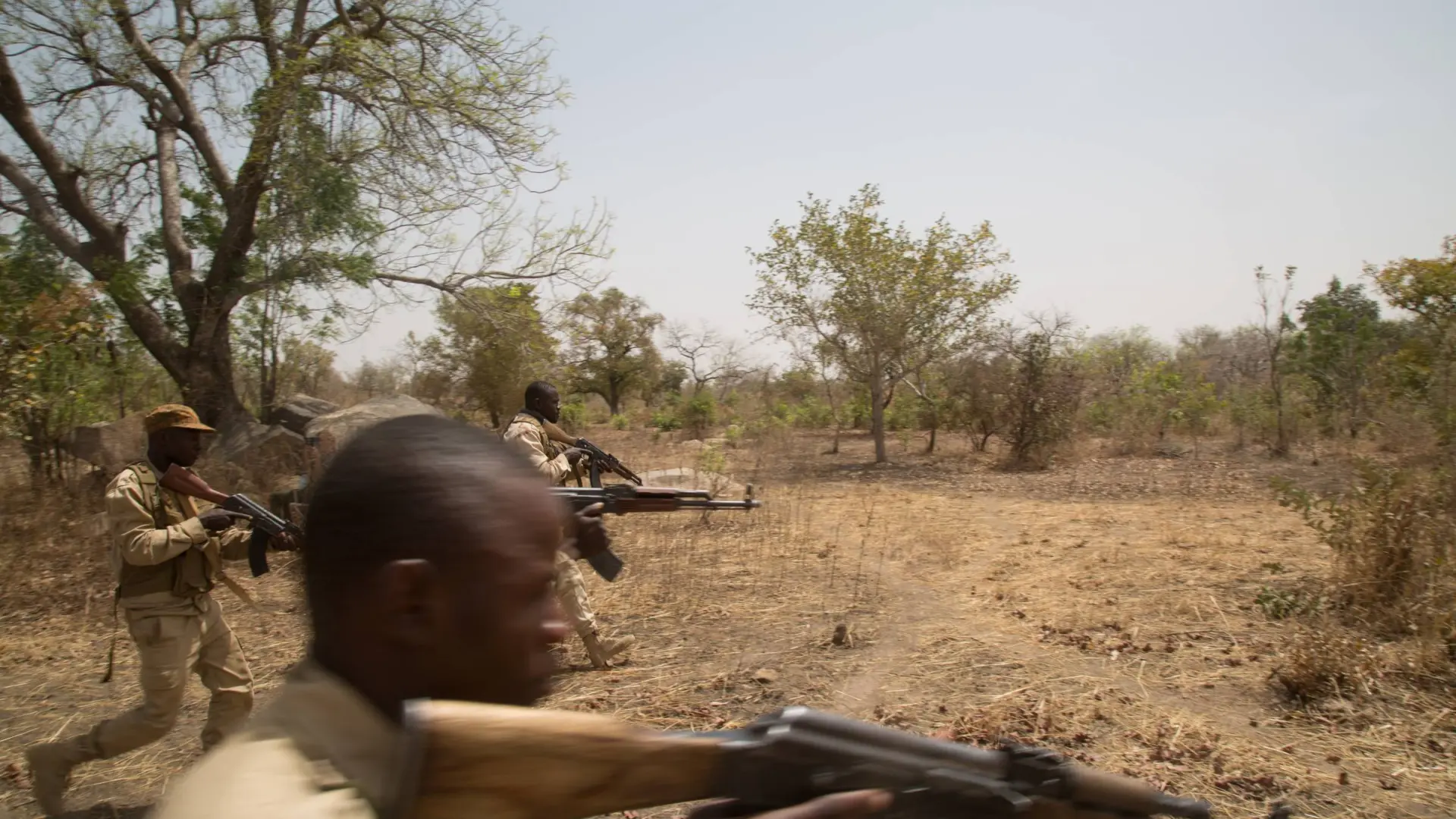
Burkina Faso, once a relatively stable West African country, is struggling with a devastating surge in jihadist violence that has forced millions from their homes and eroded the authority of the state. This analysis argues that the crisis grows out of a long history of colonial exploitation, coups and misrule, and that military force alone will not end it without political and social reform that answers the grievances armed groups exploit.
From Upper Volta to Sankara
Burkina Faso, formerly Upper Volta, was colonised by France in the late 19th century. The colonial administration imposed foreign structures of government and extracted resources, particularly farm produce, at the expense of local communities. Upper Volta became independent on 5 August 1960 with a fractured political landscape and regional divisions that would test its stability.
The first years of independence brought military coups and ineffective governments. Agriculture, which employed most of the population, suffered from a lack of investment, leaving many communities poor and exposed to outside shocks. Corruption and mismanagement fed public disillusionment and protest.
Politics changed in 1983 with the rise of Thomas Sankara, a young army officer who led a popular coup. His government put self-sufficiency, land reform and gender equality first, and launched campaigns for education, health care and infrastructure, often mobilising ordinary people to take part. His slogan, “La patrie ou la mort, nous vaincrons” (The homeland or death, we will conquer), inspired a generation of Burkinabè. His anti-imperialism and his case for African unity and self-reliance struck a deep chord in a country still living with its colonial legacy, and he remains a symbol of self-sufficiency and fair government for many citizens.
Compaoré and the years of instability
Sankara’s vision was cut short on 15 October 1987, when he was assassinated in a coup led by his former ally, Blaise Compaoré. In April 2022 a court in Burkina Faso convicted Compaoré in absentia over the killing and sentenced him to life in prison; he lives in Côte d’Ivoire.
Compaoré’s 27-year rule (1987–2014) began with promises of economic reform but came to be defined by authoritarianism, corruption and nepotism. Popular uprisings in 2014, driven by anger at his attempt to extend his presidency, forced him out. The transition that followed was deeply troubled, held back by weak institutions and factionalism.
Coups have compounded the instability. Soldiers deposed President Roch Marc Christian Kaboré in January 2022, and Captain Ibrahim Traoré ousted the coup leader, Paul-Henri Sandaogo Damiba, on 30 September 2022.
The jihadist surge
The spread of terrorism across the Sahel, particularly in neighbouring Mali and Niger, has hit Burkina Faso directly. Jihadist groups such as Jama’a Nusrat ul-Islam wa al-Muslimin (JNIM) and the Islamic State in the Greater Sahara (ISGS) have used porous borders and weak government in the region to set up safe havens and launch attacks.
The scale of the crisis is clear in the Global Terrorism Index. Burkina Faso was the country most affected by terrorism in the world for two years running, in the 2024 and 2025 editions. In the 2026 edition Pakistan overtook it, and Burkina Faso’s recorded terrorism deaths fell by 45% to 846 in 2025, mainly because far fewer civilian deaths were recorded. The Sahel as a whole still accounted for nearly half of the world’s terrorism deaths.
What fuels the violence at home
The armed groups exploit grievances that the state has left unanswered.
- Tension between communities and the state. Burkina Faso is ethnically diverse, with a Mossi majority and minorities including the Fulani. Extremist groups have exploited rising tensions between some communities and the government.
- Social and economic inequality. High poverty and unemployment and poor access to education and health care leave people vulnerable. Extremist groups use these grievances to recruit members and win local support.
- Corruption and poor government. Corruption, mismanagement and a lack of accountability in state institutions have eroded public trust, and many citizens feel the government fails to meet their needs.
The state’s response
The government has relied on military operations, intelligence gathering and community engagement, and each faces serious obstacles.
- Limited resources. The army is often ill-equipped to cope with the sophistication and brutality of jihadist attacks, which leads to heavy losses and public frustration. In August 2024 JNIM fighters killed more than 200 civilians who were digging defensive trenches around Barsalogho.
- Poor coordination. Efforts to coordinate the security agencies, local militias and international partners are often held back by bureaucratic inefficiency and a lack of strategic coherence.
- The rise of local militias. Because the national army cannot protect everyone, local militias have emerged. They can offer communities some protection, but they also raise concerns about human rights abuses and reprisals. In April 2026 Human Rights Watch reported war crimes and crimes against humanity by all sides, including government forces and the Volunteers for the Defence of the Homeland (VDP) militia.
Foreign powers
The break with France has reshaped Burkina Faso’s foreign partnerships. Amid rising anti-French feeling and protests, the government ordered French troops out of the country in January 2023, and French operations formally ended in February 2023. The government said this did not end diplomatic relations. The move reflects a wider regional turn away from French influence.
Russia and China present themselves as alternatives to Western influence. Russia offers military help to regimes facing insurgencies, and Russian military personnel arrived in Burkina Faso in January 2024. China concentrates on economic interests, investing in infrastructure and other projects.
The human cost
The violence has forced millions from their homes. The last government figure, from 31 March 2023, counted 2,062,534 internally displaced people. Displacement and the disruption of farming have led to severe food insecurity, and the destruction of schools, health centres and roads has made it harder still for aid organisations to reach remote and insecure areas.
What would end it
Ending the crisis will need action on several fronts. Military action must go hand in hand with political and social reforms that tackle the root causes of the violence: answering the grievances of marginalised communities, promoting social justice and strengthening the institutions of government. Burkina Faso must also work with its neighbours to coordinate counterterrorism and tackle cross-border threats, and international support, including funding, training and humanitarian aid, remains vital.
The country stands at a critical crossroads. If its leaders understand the forces driving the violence and act on them, it is possible to build a more peaceful and prosperous future.
Since this article was first published, military rule has tightened. National consultations in May 2024, boycotted by most political parties, extended Traoré’s mandate by five years and allowed him to stand in future elections. Burkina Faso, Mali and Niger formed the Alliance of Sahel States and left ECOWAS on 29 January 2025. In late January 2026 Burkina Faso’s military government dissolved all political parties.



