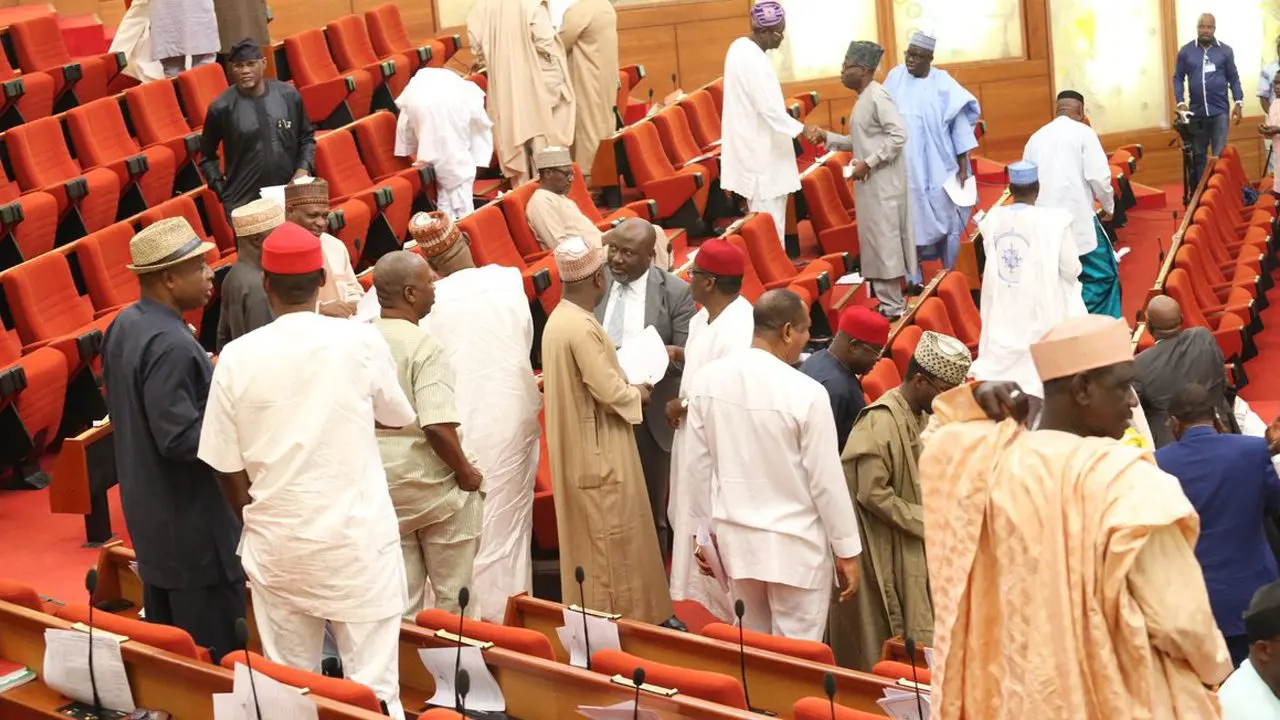
In March 2024 Senator Abdul Ningi alleged that about N3.7 trillion in Nigeria’s 2024 budget could not be traced to any project. The Senate suspended him for three months. This analysis argues that the row exposed how weakly Nigeria’s legislature guards public money, and that only open budgeting and stronger oversight will restore public trust.
Budget oversight is a foundation of democratic government. It is the legislature’s duty to scrutinise government budgets, so that public funds are allocated and spent efficiently and openly, and to guard against inefficiency, waste and corruption.
How Nigeria’s budget is made
Nigeria’s budget process has been dogged for years by allegations of budget padding, misuse of funds and a lack of transparency. These persistent problems have eroded public trust in government institutions.
The Nigerian Constitution gives the National Assembly, made up of the Senate and the House of Representatives, the power to approve and oversee the national budget. The executive drafts the proposal, gathering submissions from ministries, departments and agencies (MDAs) into a single draft through the Ministry of Finance, and presents it to the National Assembly, which scrutinises, amends and approves it. The Senate must review the proposal thoroughly, identify discrepancies and align spending with national priorities. It is at the amendment stage, when the Assembly’s committees rework the draft, that padding is alleged to occur.
How the scandal unfolded
Ningi, then chairman of the Northern Senators Forum, made his claim in an interview with BBC Hausa. He said that about N3.7 trillion in the 2024 budget was “not traceable to any project”. He later said he had been quoted out of context, but maintained that a consultant he engaged had found that the sum could not be linked to projects or locations. His claims suggested that the Senate, the body charged with overseeing the budget, had itself had a hand in inflating it.
The response was swift. On 12 March 2024 the Senate suspended him for three months by voice vote. Senator Jimoh Ibrahim had moved for a 12-month suspension over what he called criminal misinformation and breach of the peace, and Senate President Godswill Akpabio called the offences “grievous”. The Senate recalled him on 28 May 2024, about two weeks before the suspension was due to end. The suspension raised questions about how the chamber handles allegations this serious.
In the debate, Senator Solomon Adeola Olamilekan, chairman of the Senate Committee on Appropriations, rejected Ningi’s claims as false and stressed that he had worked on the budget himself. Other senators, among them Sani Musa and Ali Ndume, objected to the way the allegations had been made public and called for the dispute to be settled respectfully.
Constituency projects and the gap in delivery
Lawmakers have long been accused of padding the budget by inserting extra projects, often called constituency projects. These are usually justified as a way to direct federal money to specific needs in their constituencies. Their execution is a growing concern, because money can be allocated, and supposedly released, for projects that are never completed or are built to a poor standard. The practice distorts the national budget and raises questions about the proper use of public money.
The cost of that gap falls on the public. Roads that are budgeted for but never built raise transport costs and cut people off from markets and services. Schools that are promised but left half-built overcrowd existing ones and leave more children out of school. Hospitals and clinics that exist only on paper limit access to medical care. Each broken promise deepens public mistrust of state institutions and weakens the social contract.
What reform requires
Nigeria’s path towards fiscal transparency has been hard. There has been some progress, such as the adoption of open government platforms and the publication of budget proposals and financial statements, but serious obstacles remain.
The row has shown how badly Nigeria needs reform that strengthens oversight, opens up every stage of the budget process and actively encourages public participation. That means open budgeting practices that make the process transparent and accessible, so that government spending follows the public’s needs and priorities, and better public access to detailed budget information, so that citizens can see how public money is allocated and spent.
The problem did not end with the 2024 budget. In May 2025 the civic group BudgIT reported that the National Assembly had inserted 11,122 projects worth N6.93 trillion into the 2025 budget, a budget of N54.99 trillion. BudgIT said it wrote to the Presidency, the Budget Office and the National Assembly about its findings and received no response.



