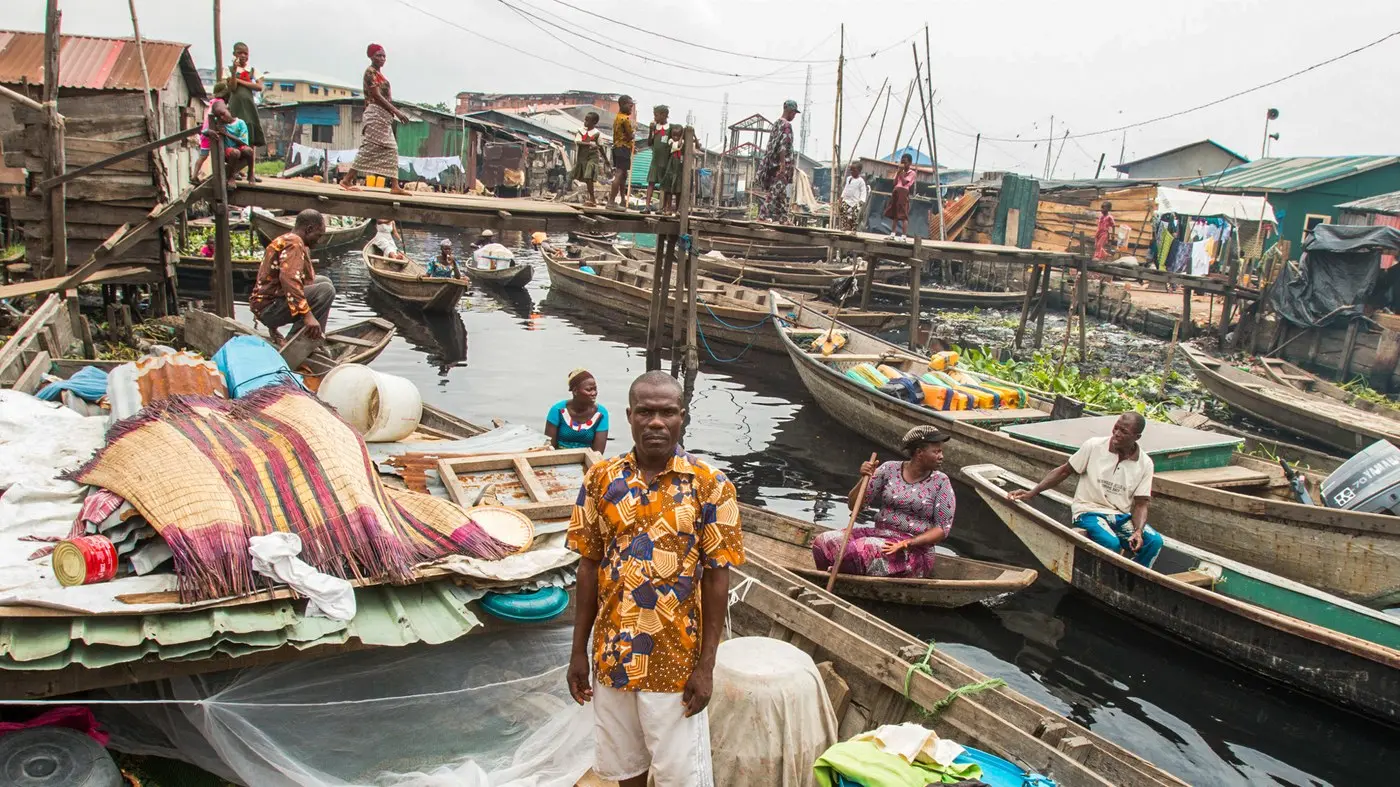
Nigeria’s population problem is not its size but the country’s failure to educate, house and care for the people it has. With an estimated 200 million people, Nigeria is the most populous of Africa’s 54 countries and among the ten most populous in the world, and it has been estimated that by 2050 it will overtake the United States to become the third most populous country in the world, behind India and China. This analysis argues that smaller families, compulsory schooling and real investment in infrastructure are the way out.
Population growth need not be a problem in itself. It becomes one when a country lacks the resources to meet its people’s needs. Nigeria is rich in natural endowments, but the sustained waste of our collective resources, a lack of adequate education on family planning and the government’s negligence of, or indifference to, the impending crisis have left it unable to meet those needs.
A large but poor population
Some argue that a growing population is Nigeria’s strength as a country. But a large population can only be a strength if public infrastructure and development grow with it. Development goes beyond marginal increases in GDP. It also covers how far the general population enjoys the dividends of that growth, measured in a high standard of living, infrastructure, good education, access to good health care and high life expectancy. In Nigeria’s case, about 98 million people have been estimated by the UNDP to live in multidimensional poverty. Multidimensional poverty covers poor education, poor or no public health services, inadequate living standards, the threat of violence and more.
The economy also rests on a single commodity. Its over-reliance on crude oil leaves it exposed to volatile oil prices, which is why it slid into recession in the 1980s and again in 2016.
On top of this, the country is unstable, with terrorism, banditry, armed robbery and the conflict between farmers and herders leaving many Nigerians economically incapacitated. With Boko Haram’s attacks in the north-east, the number of internally displaced persons (IDPs) is rising. According to the Internal Displacement Monitoring Centre (IDMC), Nigeria had about 3.3 million internally displaced persons in 2013, people who could otherwise have contributed to the country’s development.
The search for opportunity has driven many Nigerians abroad, and some into the slave markets reported in Libya. The Nigeria Immigration Service reported that no fewer than 10,000 Nigerians died between January and May 2017 while trying to reach Europe illegally across the Mediterranean Sea and the desert.
Education lags too. Nigeria had an adult literacy rate of about 58% in 2016, which means that only about 58 in every 100 adults can read and write, while countries such as Cuba and South Africa can boast much better results. An educated population is essential to a nation’s prosperity. Japan, though poor in resources, has enjoyed decades of economic development thanks to massive investment in human capital, shown in its first-class education system.
Policies that missed their targets
So while population growth can be an advantage, the living conditions of citizens and whether they are educated matter far more. Successive Nigerian governments, though aware of the problem, have failed to implement policies on population growth and national development effectively.
Nigeria has tried before. Under Ibrahim Babangida’s military government, Nigeria adopted a national population policy in 1988 that set a target of four children per woman. Traditional and religious establishments criticised the idea heavily, and it died a natural death.
In 2004 the Federal Government adopted the National Policy on Population for Sustainable Development, with the aim of raising Nigerians’ standard of living and quality of life. Fifteen years after its adoption, most of its key targets have not been met. The policy said that before 2015 the national population growth rate would be reduced to 2% or lower. Yet in 2019 the growth rate is still above the 2% target, at 2.43% as of 2017. It also said the country would achieve sustainable universal basic primary and secondary education, at 100 per cent, by 2015. After 15 years, the country is struggling to keep basic education at about 59% for primary and 49% for secondary. Nigerian governments have not come to terms with the challenge of population growth without matching growth in public infrastructure and living standards.
Cities, environment and health under strain
Without planning for population, schools, hospitals and housing cannot cope, and economic development stalls. About 375 million Nigerians, on current UN projections, will by 2050 have to live crowded into a land area roughly the size of Arizona, New Mexico and Nevada. Major cities such as Lagos are already congested, with all that follows: falling living standards, environmental pollution, traffic jams and a poor quality of life.
Nigeria’s environment and natural resources are also being degraded ever faster as the population grows. The country already faces land degradation, waste disposal problems, water, soil and air pollution, and desertification.
The health sector is documented to be unstable, with too few health facilities and health workers to serve the Nigerian people. On WHO data, Nigeria had fewer than four doctors for every 10,000 people in 2018, or roughly one for every 2,600. A ratio of one doctor to 600 patients is often quoted in Nigeria as a World Health Organization (WHO) recommendation, but the WHO sets no such ratio, as Africa Check has reported. Although the country’s tertiary institutions produce about 3000 doctors a year, according to the Nigerian Medical Association, the health system lacks the capacity and facilities to absorb them all. Amid this shortage, Nigerian doctors are leaving the country in large numbers for greener pastures.
This again shows the problem of capacity. The issue is less the size of Nigeria’s population than the country’s lack of the means and the facilities to meet its needs.
Faith, family size and the limits of a child policy
The preference for large families in Nigeria is rooted in culture and religion, two sensitive subjects for Nigerians, and these beliefs have limited the success of campaigns for family planning and contraception. The former president, Goodluck Jonathan, acknowledged how attached Nigerians are to their faith in June 2012: “We are extremely religious people… Both Christians and Muslims, and even traditionalist and all the other religions, believe that children are God’s gifts to man.” It is, he said, “difficult for you to tell any Nigerian to number their children” because “it is not expected to reject God’s gifts.”
The current administration has begun working with religious leaders instead. Vice President Yemi Osinbajo set out the stakes at a forum with Muslim religious leaders in Abuja on 13 September 2018, according to the published text of his speech:
“Relevant demographics show the prospects and potentials of a prosperous future for Nigeria, if appropriate and timely actions are in place. Nigeria’s population size is currently estimated at over 198 million, the largest in Africa. About 63 percent of the population is under the age of 25 years, 33 percent between 10 and 24, and 54.8 percent of working age (15-64). 51 percent of the female population are in their reproductive ages (ages 15-49). And it is estimated that by 2050 Nigeria will be the 3rd most populous country in the world, after India and China. Of course, the reverse side of Nigeria’s rich demographic potential is the much-talked-about “population time bomb,” or as some would say demographic threats. Total Fertility Rate (TFR) has remained high over the last three decades and currently stand at 5.5 births per woman; modern Contraceptive Prevalence Rate (CPRm) is very low at 10 percent with 16 percent unmet need for Family Planning (FP). Twenty-three percent of our adolescents (ages 15-19 years) have commenced childbearing and Child Marriage still persists at 18 percent. These figures vary across the North and the South, for example, Total Fertility Rate is lowest in the South West (4.5) and highest in the North East (6.3) and North West (6.7), respectively with Bauchi at 8.1 and Sokoto at 7.0. To avoid the time-bomb scenario, we must act with urgency to build an economy that can support that population, provide jobs and economic opportunity, education and healthcare, hope and optimism.”
That is a good start, and those words now need to be acted on. A hard limit on births is not the answer. China advocated a one-child policy from 1979 before enforcing it nationwide from 1980. Fertility had already fallen sharply in the 1970s, from more than five births per woman to 2.8 by 1979, and by 2011 it was close to 1.4. China replaced the policy with a two-child limit from 1 January 2016, raised it to three children in May 2021 and lifted all limits in July 2021, according to the record of the one-child policy. Such a policy would be hard to sustain in Nigeria, where a far milder target was abandoned in the 1980s. Politics is a game of numbers, and political self-interest would be likely to undermine any limit on births.
Smaller families and compulsory education
These trends set a heavy task for the current government and its successors. At the current rate of population growth, the government cannot keep up, though it is trying to build infrastructure. A comprehensive population policy that makes the case for smaller families, without compulsion, is therefore needed. Nigerian women now have an average of 5.5 children, and this could be brought down to about 3.5 per woman so that the population grows at a sustainable pace relative to the facilities and resources available.
The government must also do more to tackle regional differences in population growth. According to the 2013 Nigeria Demographic and Health Survey, women in the three southern zones had on average between 4.3 and 4.7 children, while in the North West the figure was still 6.7. Rural campaigns on family planning and contraception are part of the answer.
The government also needs to focus on educating Nigeria’s children, which will go a long way towards slowing population growth in the long run. On average, the more educated a woman is, the fewer children she is likely to have. Education therefore leads to lower birth rates and, in time, slower population growth. It has also been said that a more educated workforce makes poverty eradication and economic growth easier to achieve. The Nigerian government must, as a matter of urgency, enforce rules and policies that make education compulsory for all children and teenagers. This will not only discourage child marriage, which also contributes to population growth, but also give the country the educated population its prosperity depends on.
Of all the remedies, the best contraceptive is economic development. Investing in people through good education and sound healthcare, and raising productivity, is the only way to turn Nigeria’s numbers from a burden into a dividend.
What happened next
Fertility has fallen since this article was written, but slowly and unevenly. The Nigeria Demographic and Health Survey 2023–24 put the average at 4.8 children per woman, down from 5.5 in 2013, and found that only 15% of married women used a modern method of contraception. Fertility ranged from 3.3 in the South South to 6.1 in the North East and 5.9 in the North West (figures from the Nigeria DHS). Poverty, meanwhile, has deepened. The National Bureau of Statistics’ 2022 Multidimensional Poverty Index found that “63% of persons living within Nigeria (133 million people) are multidimensionally poor” (NBS).
The UN Population Fund puts Nigeria’s population at 237.5 million in 2025. The UN’s latest projections, in World Population Prospects 2024, still expect Nigeria to grow beyond 2054 and eventually to overtake the United States.



