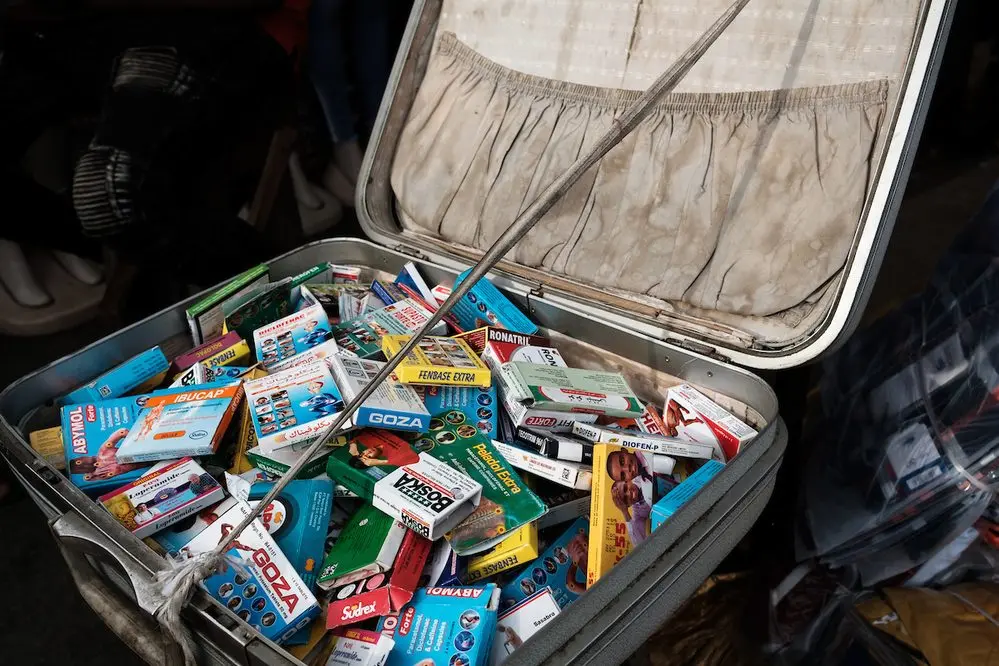
Drug use among young people in Africa has become a serious problem, and cheap opioids are driving much of it. In Nigeria, the first national drug use survey found that 14.4% of people aged 15 to 64 had used drugs in the past year, more than twice the global average. Treatment is scarce, and this piece argues that governments must do far more.
The UN’s drug agency estimates that there were more than 34 million cannabis users and 1.8 million cocaine users in West and Central Africa in 2016. Unlike expensive narcotics such as cocaine, opioids like codeine and tramadol are easy to get, mostly costing less than $5. Users also mix drugs in dangerous ways to make them stronger and make the high last longer.
The UN agency also estimates that only one in 18 drug users with addiction problems on the continent has access to proper medical treatment.
Why more young people are taking drugs
In the author’s view, countries on the continent have failed their young people. A self-perpetuating cycle of poverty and unemployment is fanning the flames of drug abuse. Many young people have no work, or too little of it, and some seek comfort in drugs. The lack of proper care facilities for users has also played a large part in how fast the problem has taken hold.
The main drugs abused in Africa
Cannabis, known by many street names including marijuana and weed, is the most widely used drug in Africa and in the world, and it is cheap. It is illegal in most African countries.
Opioids are the family of drugs that includes opiates such as morphine and heroin and the synthetic substances that act like them. In medicine they are used to relieve acute and chronic pain and as anaesthetics in surgery. They bind to opioid receptors in the brain and block the sensation of pain. They also release large amounts of dopamine, which produces the high and is one of the main causes of addiction.
At low doses opioids make people drowsy. At high doses they slow breathing and heart rate, which can kill. According to the UNODC World Drug Report 2019, opioids were behind two thirds of the deaths attributed to drug use disorders in 2017, a year in which some 585,000 people died as a result of drug use.
Several West African countries report that tramadol, codeine and morphine are among the most widely abused drugs in this family.
Tramadol and codeine
Tramadol was first developed and sold under the brand name Tramal by Grünenthal, a German drugmaker. Once the original patent expired, Indian generic manufacturers began making the drug on a large scale for the African market, and Chinese makers followed.
Ghana’s food and drugs regulator has tried to control tramadol imports. How well that works depends on closing transit routes through neighbouring Benin, named by the US State Department as the second-largest destination for Indian tramadol in 2016. Benin borders Nigeria, where officials seized over half a billion tramadol tablets in November 2018 in two high-profile raids at the country’s biggest port. The flood is not limited to Nigeria. According to the United Nations Office on Drugs and Crime (UNODC), West, North and Central Africa together account for 87% of all pharmaceutical opioids seized worldwide.
The drug goes by local names and serves local purposes, Quartz reported. In Ghana, where it is known as “Tramore”, it is taken to boost sexual performance. In Gabon it is called “Kobolo” and is popular with students, who take it during exams in the belief that it helps them perform. In Sudan, labourers drop a tablet into their tea to help them get through heavy physical work.
Codeine, another opioid, is found in cough syrup and is widely abused. Before Nigeria banned codeine cough syrup in May 2018, the Senate estimated that about 3 million bottles were drunk every day in Kano and Jigawa states alone. Users often mix the syrup with soft drinks, and some drink it neat.
What drug abuse does to the body and to society
Over time, drug abuse changes the brain and erodes the user’s ability to make free choices. Persistent users face social problems as well as health problems, which fall on their families and communities too. The health consequences include memory loss, anxiety, depression, mental illness, organ damage, stroke, cancer, fertility problems, and respiratory and gastrointestinal disease. In the end, an overdose or years of use can kill.
Illicit drugs also endanger pregnant women and their babies. Drug use in pregnancy can harm the foetus and lead to premature birth or low birth weight. Babies may be born with withdrawal symptoms, sometimes called neonatal abstinence syndrome, or with birth defects, and may develop learning and behavioural problems later in life.
The dangerous mixtures
The more often a drug is taken, the weaker its effect. To get a faster, stronger high, users rarely take a drug on its own. They combine it with other drugs, synthetic or natural, or with alcohol. In Nigeria, a “science student” is someone who mixes intoxicants of all kinds to reach an intense high and adjusts the recipe to taste.
These are some of the lethal mixtures common on the continent.
- Monkey tail is very popular in Nigeria. It is made by steeping igbo (cannabis leaves, stems, roots or seeds) in ogogoro, the local gin, for a few days or longer, and its strength varies from batch to batch. It is sometimes flavoured with fruit concentrate.
- Lean, common in South Africa, is a home-made mix of codeine cough medicine, Sprite, sweets and sometimes alcohol, usually sipped from stacked plastic cups.
- Nyaope, also found in South Africa, has a fearsome reputation. It is often said to contain rat poison and antiretroviral drugs, but laboratory analysis of police samples, reported by Spotlight in 2024, found it is mostly high-grade heroin. That makes it no less deadly.
- Scooshes, a Nigerian blend of zobo, cannabis, codeine and local rum, is served in bars and even sold in smart packaging at upmarket clubs and drinking spots across Lagos.
- Paraga, also from Nigeria, is made from herbs soaked in alcohol, with no fixed recipe. Drinkers believe it cures ailments such as fever, back pain, dysentery and piles, and some take it for weak erections.
- Gutter water, also common in Nigeria, mixes codeine, tramadol, Rohypnol and cannabis with water or juice.
Some users who cannot afford these drugs turn to crude alternatives, such as smoking lizard dung or inhaling solvents such as petrol, ethanol and methylated spirit, glue, sewage and urine.
Many mixtures have no name at all, as young users experiment with whatever they can find to get high. One popular Nigerian cocktail is methylated spirit mixed with soft drinks.
A problem outpacing the response
The figures above describe a problem that is outpacing the response: opioid tablets seized by the hundreds of millions, and proper treatment for only one addicted user in 18. Governments must do more before more of this generation is lost to it.
What happened next
Since this article was written, a new and deadlier drug has spread along the West African coast. Kush, sold in Sierra Leone and its neighbours, was long described as cannabis laced with synthetic drugs. In June 2024 the Global Initiative Against Transnational Organized Crime found nitazenes, synthetic opioids some of which can be up to 100 times more potent than heroin, in 83% of kush samples tested in Sierra Leone and 55% of those tested in Guinea-Bissau. It was the first sign that nitazenes had reached Africa’s retail drug markets, the Associated Press reported.



