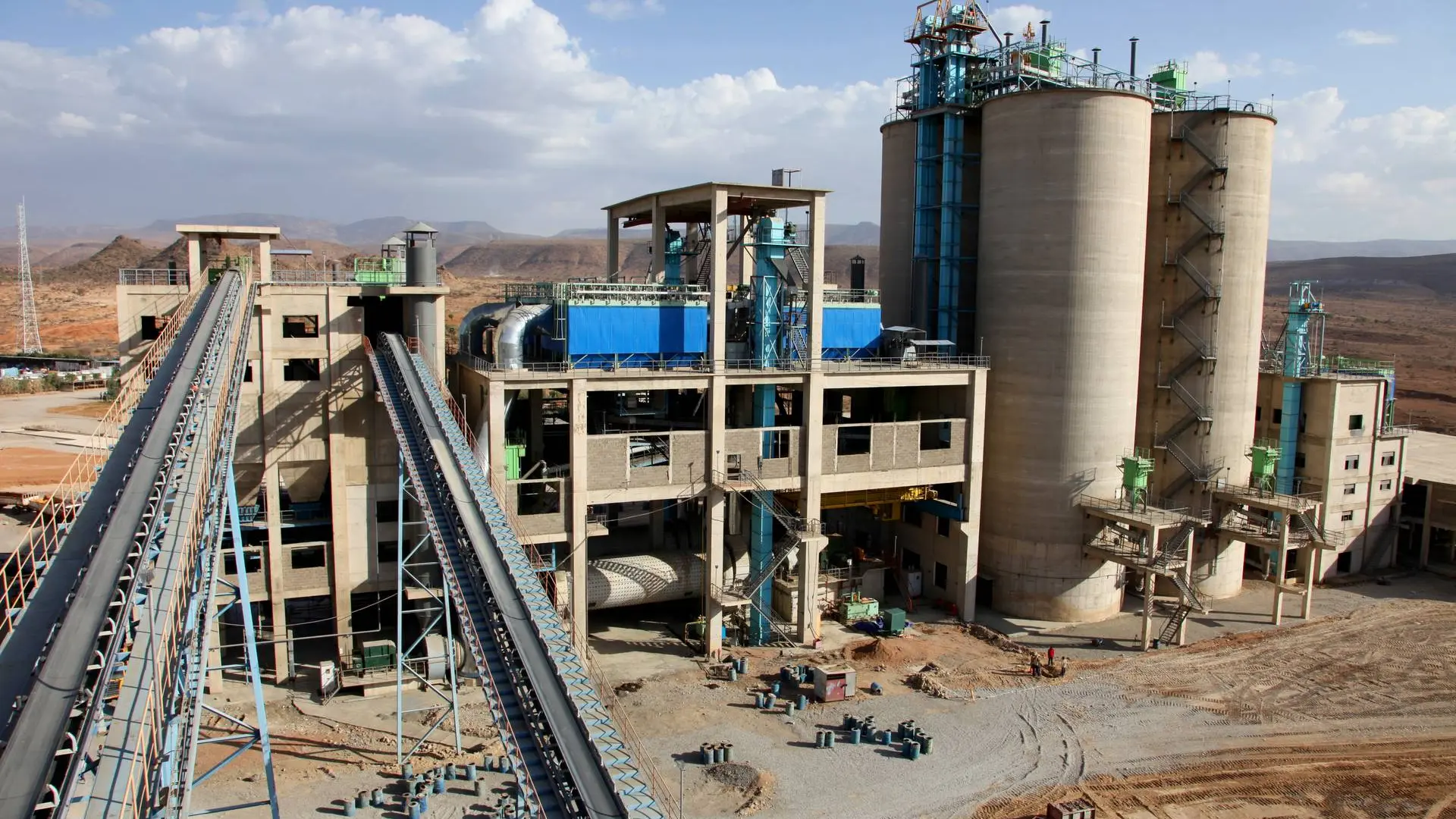
No country has grown rich without factories. Industrialisation remade the United States, the United Kingdom, France, Germany and Japan, and a later wave of it turned China into one of the world’s fastest-growing economies and helped India shed its place as home to the world’s largest number of very poor people. A strong manufacturing base cuts imports, widens the range of exports and leaves a country less exposed to the swings of commodity prices.
Africa has not taken that path. Farming and services still dominate its economies, and they rest on exports of raw commodities. Even where the continent does manufacture, it mostly processes its own resources, which account for roughly half of its manufacturing value added and manufacturing exports, according to UNCTAD. Manufacturing contributes only about 10% of Africa’s GDP, the lowest share among developing regions, and on both value added and exports the continent trails every other region. This piece argues that the free trade area and foreign investment can help Africa industrialise only if governments protect local firms, fix power and skills, and cut the cost of doing business.
The free trade area and its promise
African manufacturing has grown faster than the global average, yet the gap with the industrialised world remains wide. Governments and regional bodies have tried to close it by removing trade barriers, reforming finance and spending public money on transport, power and internet networks. Their largest bet is the African Continental Free Trade Area (AfCFTA), which entered into force on 30 May 2019 and includes nearly every country on the continent. It was billed at the time as one of the world’s largest free trade areas by number of members, covering more than 1.2 billion people and over $4 trillion in consumer and business spending.
The agreement aims at a single continental market for goods and services, a customs union, and free movement of capital and business travellers. Lower tariffs would let firms sell across a continent rather than a single country and so reach the scale that makes factories pay. That should make African manufacturers more competitive and economies less dependent on one or two exports.
The projections were large. Landry Signé of the Brookings Institution projected in June 2019 that, if the AfCFTA succeeded, African manufacturing output would reach $1 trillion a year by 2025 and create more than 14 million jobs. The McKinsey Global Institute had put output at about $500 billion in 2015, so the target meant roughly doubling it. The UN Economic Commission for Africa estimated that the agreement could raise intra-African trade by about 52 per cent, with manufactured exports among the gains. The potential for structural change and for cutting poverty is real, and there is ample room for African factories to grow by selling to African buyers.
Delivery has been slower. Trading under the agreement only began on 1 January 2021, after delays caused by Covid-19. By 4 September 2026, according to the trade law centre tralac, 50 countries had deposited their instruments of ratification. The 2025 target has come and gone without the doubling. In May 2025, Africa.com reported that the African Development Bank now put output above $1 trillion only by 2030.
Chinese and other foreign investment
Africa needs investment above all, and foreign direct investment (FDI) is usually credited with bringing capital, jobs and industrial know-how. Foreign investment in manufacturing rose quickly in the years before this article was written.
China drew most of the attention. EY’s Africa Attractiveness report counted 106 per cent more Chinese investment projects in 2016 than in the year before. China had direct investment in more than 50 African countries, and its investment stock on the continent grew by almost 150%, from US$16.2 billion in 2011 to US$39.9 billion in 2016, according to CARI’s data. The driver was China’s own hunger for resources and markets. Chinese money went into construction, mining, manufacturing, finance, telecoms and software, but construction and mining remained the main targets.
The flows have since slowed. The China Africa Research Initiative records Chinese FDI flows to Africa of US$3.37 billion in 2024, 15% lower than the year before and well below the 2008 peak of US$5.5 billion.
The author’s reading of the evidence is that this wave of investment has not industrialised Africa. Governments that welcome foreign investors therefore have to make sure local industries are not crushed by the money and technology those investors bring. They also have to supply reliable electricity, without which no factory, local or foreign, can work.
What African governments must fix
Africa still has cheap labour and abundant raw materials, advantages that in the author’s view put a manufacturing boom within reach.
Many African leaders now see manufacturing as the route to the next stage of development and are competing to attract investors. Their tools include targeted infrastructure spending, closer regional integration and special economic zones for priority industries, such as the Lekki Free Trade Zone in Lagos State, Nigeria. The African Union has made manufacturing a central goal of its Agenda 2063. But the structural barriers that have kept African manufacturing small, and prevented the kind of modernisation seen in other developing regions, still have to be removed.
The first is skills. Much of Africa’s growth comes from its large working-age population, and factories need workers who are healthy, capable and trained. Education systems should do far more to teach science, technology, engineering, mathematics and entrepreneurship, alongside vocational and on-the-job training.
The second is cost. Doing business in Africa is expensive because of unreliable energy, poor roads and ports, insecurity, scarce finance, red tape, corruption, weak dispute settlement and insecure property rights. Leaders must reform all of these. Some already were. The World Bank’s Doing Business 2019 report found that five of the ten most improved economies were African, and that one-third of all the reforms it recorded were in sub-Saharan Africa. The World Bank discontinued the Doing Business report in September 2021 after data irregularities in its 2018 and 2020 editions, so no later ranking exists to measure progress the same way.
The third is support for local firms. Governments should offer tax incentives, above all to local companies that lack the deep pockets of foreign ones, so that they can hire and raise household incomes. Policies that encourage people to buy locally made goods would help too.
The fourth is finance. Small-scale industry is the backbone of industrial development in poorer countries, yet small and medium-sized firms in Africa cannot get the credit they need to grow and innovate. Policymakers must open up access to it.
The next China
Africa could be the next decade’s China. It has the ingredients, if its leaders adopt the right policies. The continent has minerals, rivers, forests and fisheries in vast quantities. It also has wide access to mobile technology and a young, enterprising population. With those advantages, Africa could leapfrog into the Fourth Industrial Revolution and stand at its centre.



