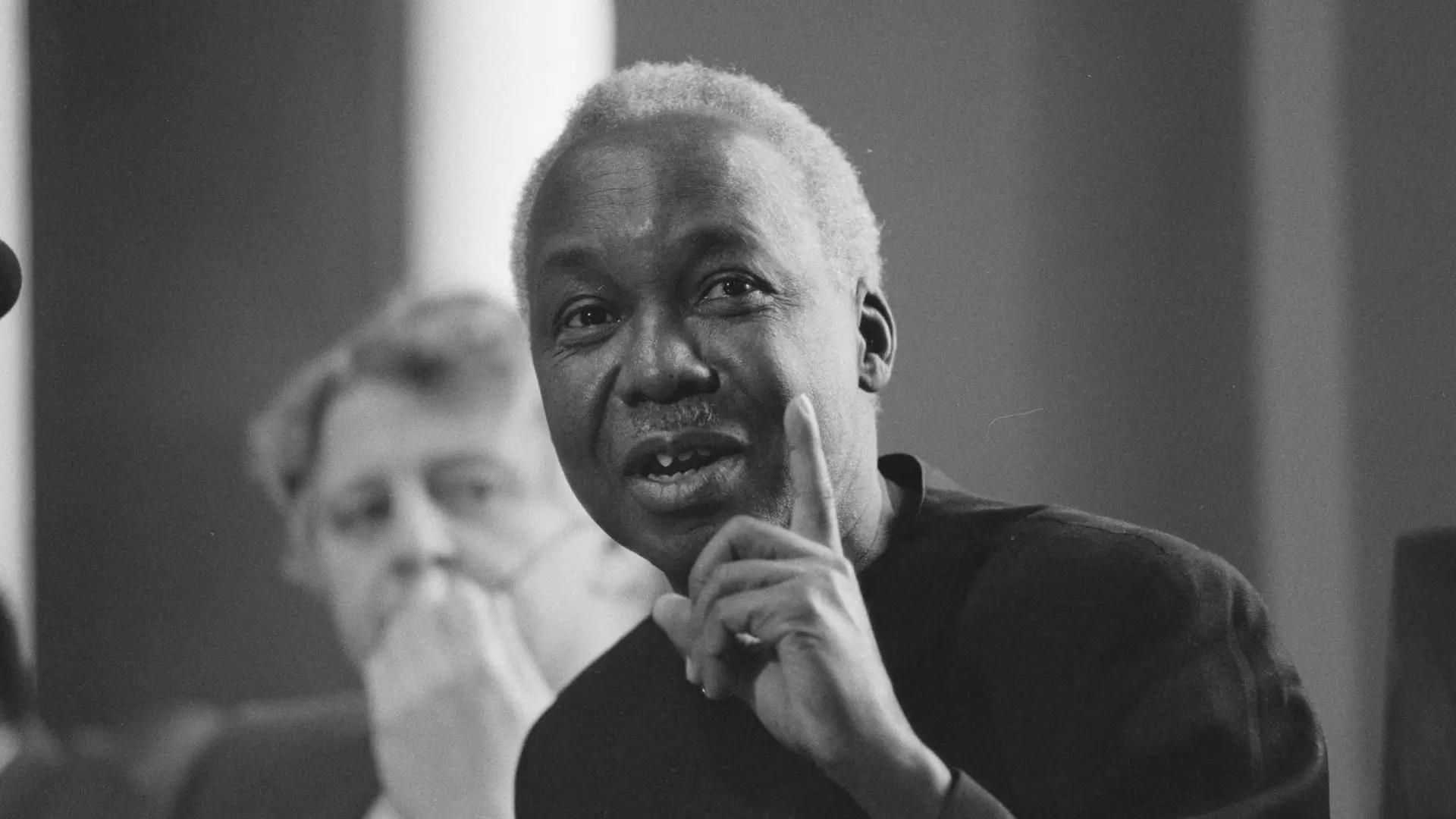
Few African leaders combined national founding with continental ambition as Julius Nyerere did. He led Tanganyika to independence, held a nation of many ethnic groups together around one language, and lent his country’s weight to liberation struggles across southern Africa. Long after he left office, he was still telling a new generation that Africa had no future without unity.
From Butiama to Edinburgh
Nyerere was born on 13 April 1922 in Butiama, a village near Lake Victoria in what was then the British-ruled territory of Tanganyika. His father, Nyerere Burito, was a chief of the Zanaki people, and his mother, Mugaya Nyang’ombe, was the fifth of Burito’s 22 wives. He was educated at Tabora Government School and then at Makerere College in Uganda, where he trained as a teacher and earned a diploma in education in 1946. He went back to Tabora to teach.
In 1949 he won a place at the University of Edinburgh to study history and economics. He came home in 1952 with a Master of Arts and took up a teaching post at Pugu, near Dar es Salaam.
Leading Tanganyika to independence
Back home, he joined the Tanganyika African Association, and in 1954 he turned it into the Tanganyika African National Union (TANU), the nationalist party he led as president. By 1958 he had a seat in the Legislative Council. He became prime minister of a self-governing Tanganyika in May 1961, and the country won independence from Britain in December 1961. In 1962 he was elected the first president of the new state. In 1964 Tanganyika joined Zanzibar to form the United Republic of Tanzania.
Nyerere did not want to build the country simply by copying Western strategies and ideologies. He devised an African socialist path called Ujamaa, a Swahili word for familyhood or brotherhood. The idea was to revive local traditions of working, producing and holding land in common. Land and companies were nationalised, and new forms of workers’ organisation were promoted. Abroad, Tanzania joined the Non-Aligned Movement.
Alongside Kwame Nkrumah, he was one of the leading thinkers behind the Organisation of African Unity (OAU). His government’s support was vital to the liberation movements of southern Africa, including those in Angola, Mozambique and South Africa. In 1985, after 23 years as president, he stepped down voluntarily. He went on to an international career as an African thinker and statesman, working on projects concerned with the developing world, and from 1996 until his death in 1999 he mediated in the peace talks on Burundi’s civil war.
A pan-African legacy
He is remembered as a leading figure of the pan-African movement, who worked to free Africa and, in time, to unite it.
His influence is still felt in Tanzanian politics. Leaders who want their actions accepted invoke Mwalimu, “the teacher”, and claim to be following his example. The Catholic Church is considering him for sainthood.
Mwalimu was known for the simplicity of his personal life. He built a cohesive and peaceful Tanzania out of more than 120 ethnic groups, who share one language, Kiswahili.
From the 1950s to the 1990s he campaigned against colonialism, racism and ethnic division, in the hope of a free and united Africa.
A call to the next generation
Even in retirement, he still believed in the pan-African dream of unity. He held that a pan-Africanism that delivered a united Africa was the only weapon that could free the continent from economic bondage.
Speaking in Accra on 6 March 1997, at the celebrations for the fortieth anniversary of Ghana’s independence, he urged African leaders to take up the challenge of pan-Africanism and work for unity. “My generation led Africa to political freedom. The current generation of leaders and peoples of Africa must pick up the flickering torch of African freedom, refuel it with their enthusiasm and determination, and carry it forward to unity,” he said.
“A new generation of self-respecting Africans should spit in the face of anybody who suggests that our continent should remain divided and fossilised in the shame of colonialism in order to satisfy the national pride of our former colonial masters. Africa must unite! That call is more urgent today than ever before, for each one of us is so weak in isolation. So, this is my plea to the new generation of African leaders and African peoples: Work for unity with the firm conviction that without unity, there is no future for Africa,” he added.
He ended the speech with these words: “Together, we the people of Africa will be incomparably stronger internationally than we are now with our multiplicity of unviable states. Unity will not make us rich, but it can make it difficult for Africa and the African people to be disregarded and humiliated and it will, therefore, increase the effectiveness of the decisions we make and try to implement for our development.”
Among the leaders of the Frontline States, Mwalimu stood out for his determination to free the whole of southern Africa.
Nyerere died of leukaemia on 14 October 1999 at St Thomas’ Hospital in London, and was buried in his home village of Butiama.
He did not live to see a united states of Africa, but his case for it is still invoked. Tanzania marks Nyerere Memorial Day on 14 October every year, a day to remember his legacy and his commitment to African unity.



