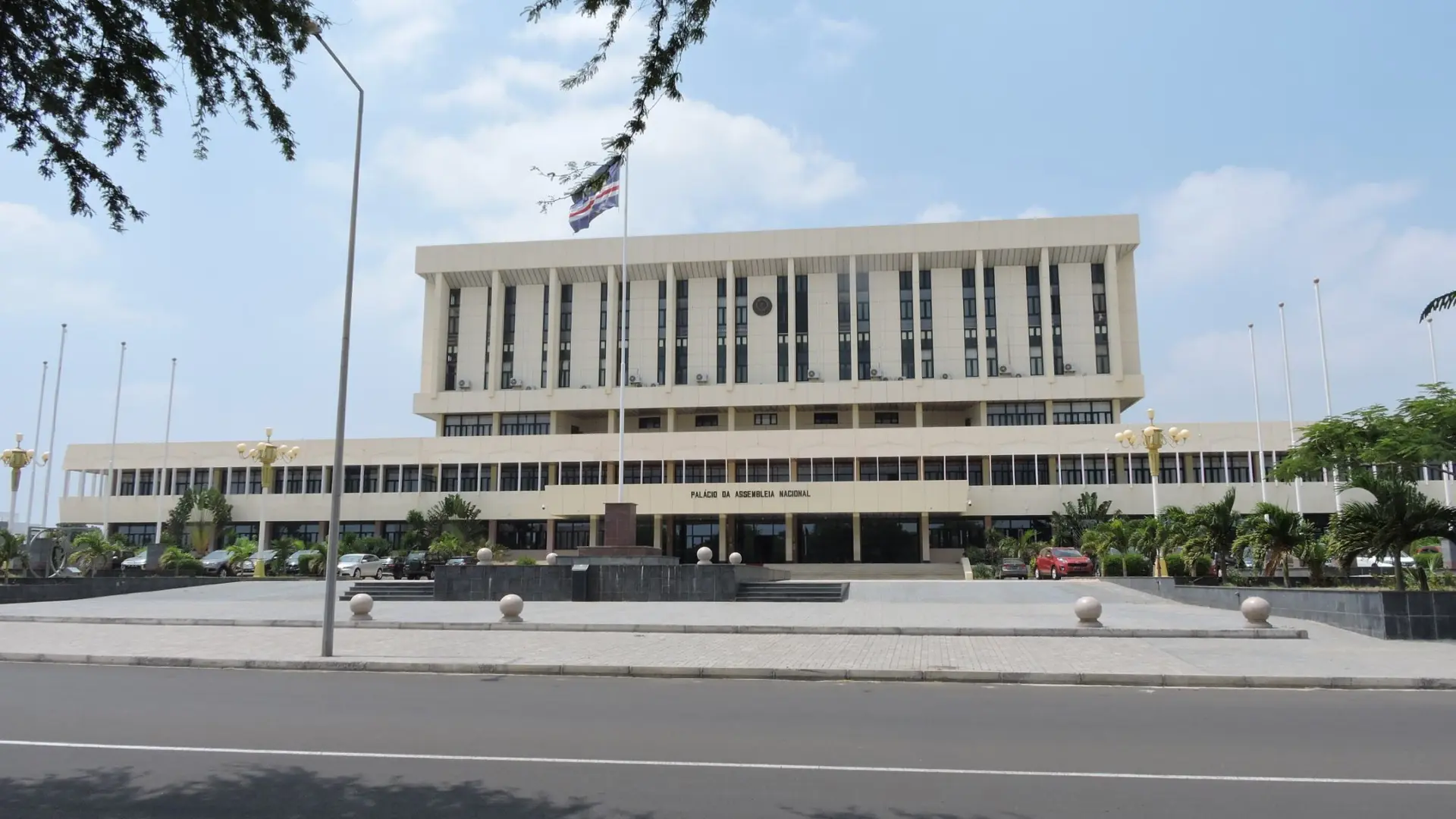
Sub-Saharan Africa is too often reported only through famine, war and dictatorship. Cabo Verde, a small Atlantic archipelago with no natural resources, has never had a coup, hands power peacefully between parties and has climbed out of the UN’s list of the world’s poorest countries. It rarely makes the news, and that is part of the point.
From slave-trade waystation to independent state
The Republic of Cabo Verde is spread across ten volcanic islands and eight islets in the central Atlantic. Its capital is Praia and its official language is Portuguese. Its 2021 census counted 491,233 people.
No one lived on the islands until Portuguese navigators reached them in the 15th century and colonised them. Their position on the Atlantic sea lanes made them a hub of the slave trade, and in the 16th and 17th centuries that trade brought wealth, along with merchants, privateers and pirates. When slavery ended in the 19th century, the economy declined and many islanders emigrated, until the archipelago found a new role as a commercial centre and a stopover for shipping. Independence came peacefully in 1975.
Since the early 1990s, Cabo Verde has been a stable representative democracy, and it remains one of the most developed and democratic countries in Africa. With no natural resources to rely on, its economy runs mainly on services, with growing attention to tourism and foreign investment.
A democracy that works
Few countries have ever graduated from the UN’s least developed countries category. Cabo Verde did so in December 2007, only the second after Botswana. Its democracy functions, with government passing between different parties. The Economist Intelligence Unit counted it among the most stable countries in Africa, and free and democratic elections are a large part of the reason. In 2016 it held parliamentary elections, followed by local and presidential polls. Cabo Verde has never suffered a coup d’état; in West Africa, only Senegal shares that record.
Freedom House’s Freedom in the World 2017 report, covering 2016, rated Cabo Verde free, scoring it 37 out of 40 for political rights and 53 out of 60 for civil liberties, an aggregate score of 90 out of 100. In the 2015 Ibrahim Index of African Governance, Cabo Verde ranked second in Africa, behind Mauritius and ahead of Botswana. In 2015, it came 122nd out of 188 countries on the UNDP Human Development Index; in the index for 2023 it ranked 135th. Life expectancy is among the highest in sub-Saharan Africa. World Bank data put it at 76.2 years in 2024, behind only Seychelles in the region.
A president stepped down after two terms because the constitution required it, and the opposition criticises the government freely. That pattern has held. Jorge Carlos Fonseca, elected in 2011 and re-elected in 2016, was succeeded by José Maria Neves, who won the October 2021 election for the opposition PAICV.
In early January 2018, the government announced that the minimum wage would rise from 11,000 CVE to 13,000 CVE (about €118) a month from mid-January 2018. It has since risen further, to 15,000 CVE in January 2024 and to 17,000 CVE a month in the private sector from 1 January 2025.
Cabo Verde also outscores many EU countries in Transparency International’s Corruption Perceptions Index. In the 2025 index it scored 62 and ranked 35th, ahead of EU members including Portugal, Spain, Italy, Greece, Romania, Hungary and Bulgaria.
Not a paradise
The sheer volume of bad news from sub-Saharan Africa leads outsiders to make sweeping assumptions about everyone who lives there. That is not a reason to paint a naively one-sided picture. Cabo Verde is no paradise. Poverty persists, and its human development ranking leaves it well behind the world’s richest countries.
Even so, the country has come a long way in a short time. In the first half of the 20th century, famines killed tens of thousands of its people. Today it is a stable democracy with prospects, and with less bad news than most.



