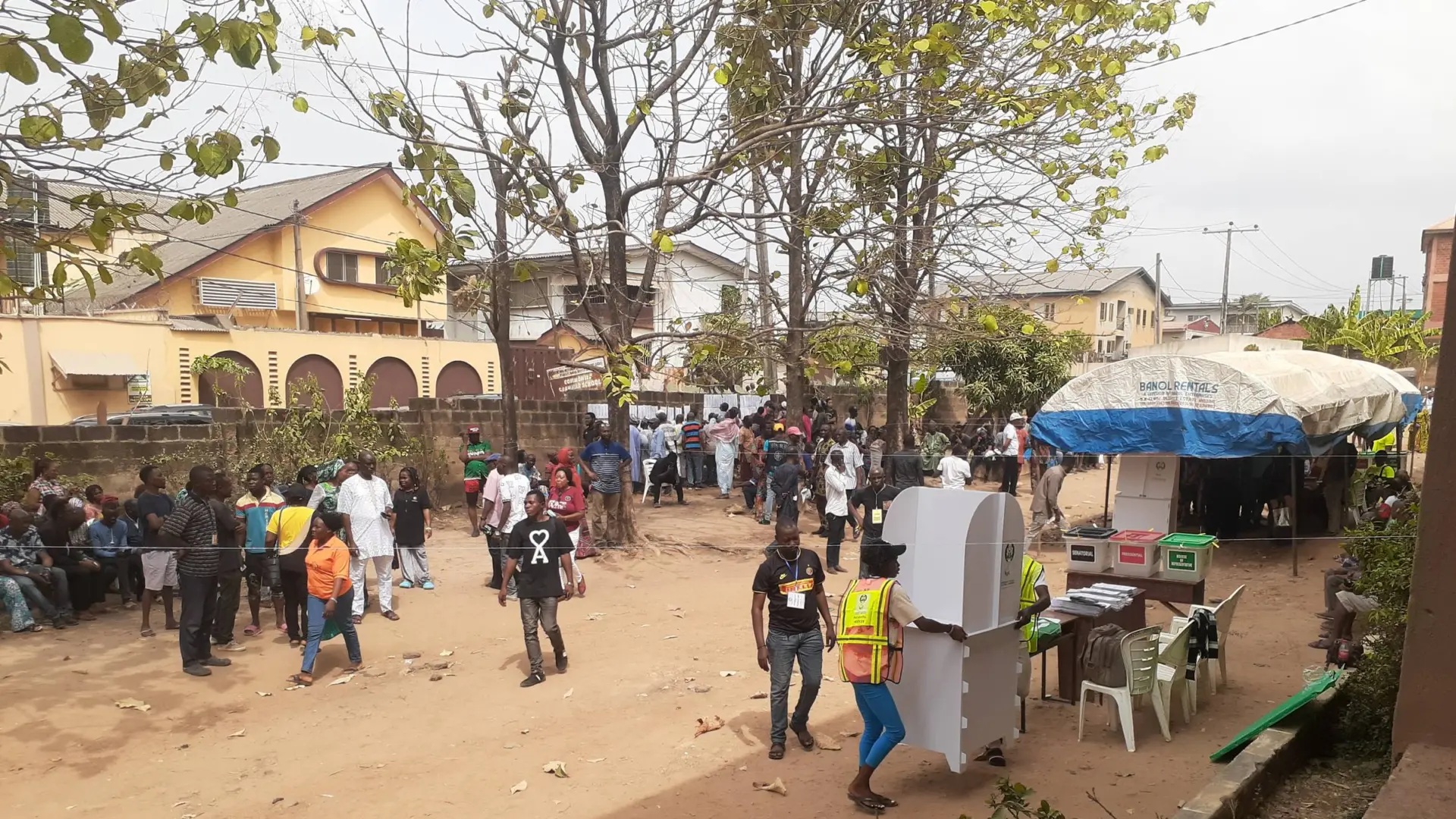
Nigeria’s 2019 general election offered a real opening for younger candidates. Money politics and vote buying, which have long stained Nigerian elections, threatened to close it. This piece argues that poverty and the cost of party nomination forms feed that threat, and that it will not be beaten without voter education, enforcement and a serious attack on poverty.
The contest for the presidency is the main concern, but the election is also a struggle between the old and the new. The old political class still wields more power. This period may nonetheless mark the start of its gradual replacement.
Younger candidates and Not Too Young To Run
Earlier elections were dominated by older politicians and familiar names. In 2019, younger candidates are showing interest in politics and especially in governance.
Before this election, the Not Too Young To Run bill was signed into law. In essence, it seeks to change the story of Nigerian politics and open the field to young people.
The law altered sections 65, 106, 131 and 177 of the 1999 Constitution of the Federal Republic of Nigeria (as amended). It reduced the minimum age for the office of President from 40 to 35, and for the House of Representatives and State Houses of Assembly from 30 to 25. The age limits for senators and governors were not reduced, as President Buhari himself noted when he signed the bill on 31 May 2018. The challenge now is to get capable young people to take part.
The two main presidential contenders, President Buhari of the All Progressives Congress (APC) and Atiku Abubakar of the Peoples Democratic Party (PDP), are both over 70. Even so, Nigeria’s leadership may be moving towards a positive turn, especially if citizens engage and young people, who make up most of the population, take an active part.
The threat of money politics
Money politics and electoral corruption together still threaten to undermine that change. Many would say, if derisively, that the easiest way to lose an election in Nigeria is to have no money. The 2018 Ekiti governorship election painted a squalid picture of widespread vote buying, popularised as ‘see and buy’ or ‘Dibò kò sebè’, in which voters were paid to vote for a particular party.
The high cost of nomination forms in the two major parties has also deepened inequality in the country’s politics, with forms costing from N600,000 for a PDP State House of Assembly ticket to N45 million for the APC presidential ticket. A Premium Times report has revealed how the APC made over N6.9 billion from the sale of forms to aspirants.
Vote buying has become the bane of Nigerian democracy. Voters who trade their votes for money and other material things give up their power to choose, and that badly distorts the idea of a free and fair election, in which voters choose the leaders they think fit to rule them.
The role of poverty in electoral corruption
Discussions of vote buying keep returning to the rise of poverty in Nigeria. Many argue that growing poverty is the root cause of its spread. That may be close to the truth.
According to data from the World Poverty Clock, Nigeria now has about 87 million people living in extreme poverty out of a population of about 200 million, the highest number of any country. It has overtaken India, which had held that position and has 73 million people in extreme poverty out of a population of about 1.324 billion, according to the Brookings researchers behind the clock. The same researchers found that “extreme poverty in Nigeria is growing by six people every minute, while poverty in India continues to fall”.
Many government workers routinely receive half of their salaries, or are paid after long delays. Unemployment is high, and what others earn from menial jobs goes on housing, transport and food. Under that pressure, many accept money from politicians.
Others sell their votes so as not to waste them. Many Nigerians do want to part ways with the old political elite. But convinced that only candidates from the APC or the PDP can win, they sell their votes to the higher of the two bidders.
Curbing this calls for more practical efforts by the Independent National Electoral Commission (INEC) and by civil society: widespread voter education and strict measures against vote buying, because unchecked it will hamper a successful democratic process. Most important of all, the ruling elite must act quickly and effectively to reduce poverty in Nigeria.
What happened next
Buhari won re-election in February 2019, defeating Atiku Abubakar by more than 3 million votes, according to his biography.
Poverty has deepened since. According to the World Bank, 50.8% of Nigerians, about 123 million people, lived in extreme poverty in 2025.
The cost of party forms has also risen. For the 2027 election cycle, the APC priced its presidential nomination forms at N100 million and its governorship forms at N50 million, and raised more than N20 billion from form sales, Leadership reported in May 2026.



