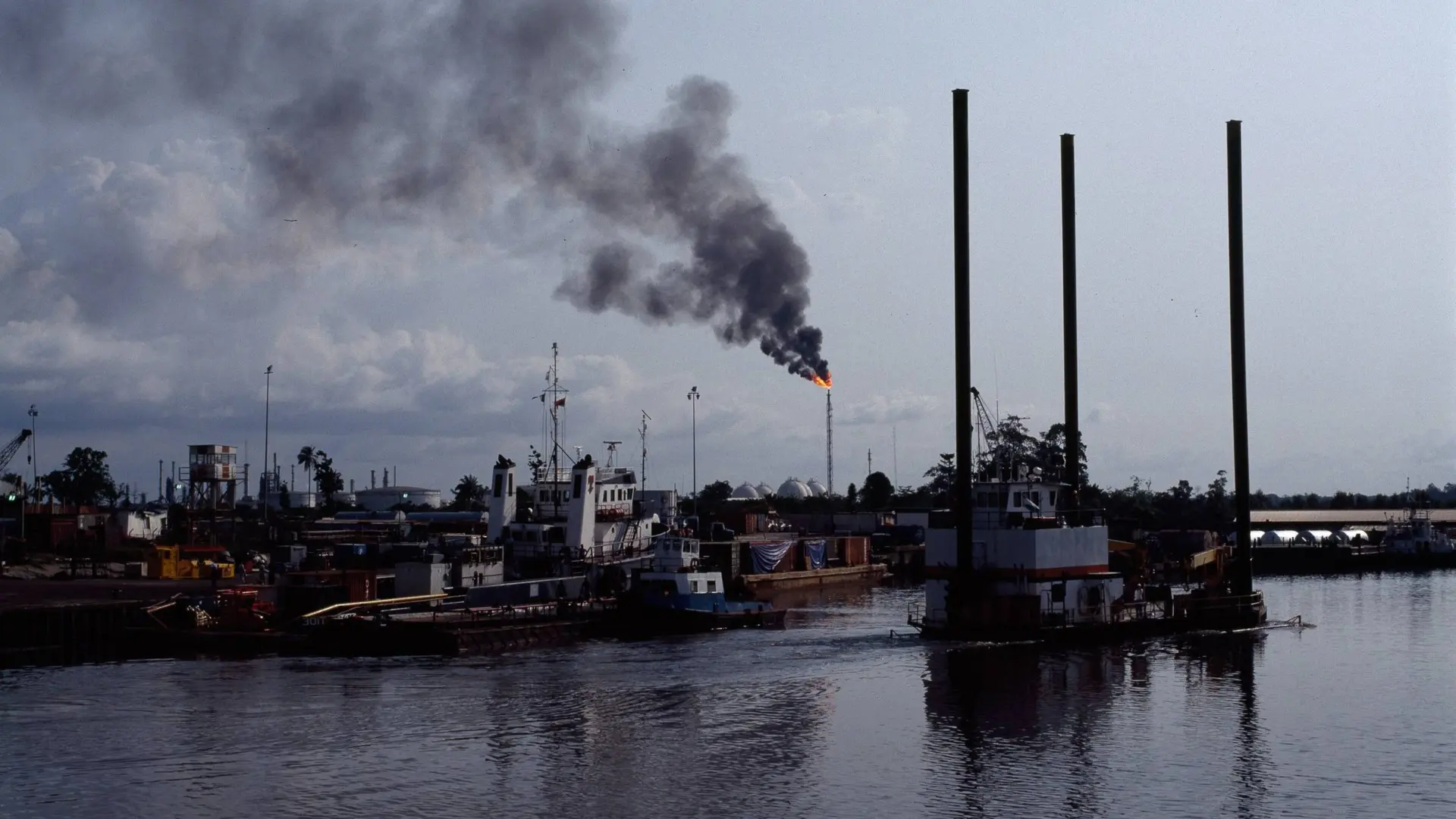
Port Harcourt residents began reporting black soot coating homes, cars and windows in 2016. The pollution’s main sources are well known, yet the soot has persisted. This analysis argues that Port Harcourt’s soot is a failure of environmental enforcement: authorities have not brought those sources under control or agreed a coordinated response.
Soot forms through incomplete combustion and can contain carbon and other harmful substances. Fine particulate matter, or PM2.5, refers to particles generally 2.5 micrometres or smaller, rather than particles of one fixed size. The US Environmental Protection Agency links exposure to fine particles with serious respiratory and cardiovascular harm.
Known sources, divided responsibility
The primary sources are not obscure. Illegal oil refining continues across the region, and gas flaring, a long-standing problem throughout the Niger Delta, adds to the contamination. The federal government grants operating licences to many of the industries at the heart of the pollution, while the effects fall on Rivers State and its residents. That division of responsibility between federal and state authorities has complicated a coordinated response.
The crisis forms part of the Niger Delta’s wider pollution burden. Oil spills, flaring and other industrial emissions can harm land, waterways and livelihoods. Measuring the specific contribution of soot to illness and economic losses in Port Harcourt requires local monitoring and health data.
Protest without policy
Civil society has tried to fill the gap. In April 2018, Port Harcourt residents and advocacy groups took to the streets demanding accountability and urgent action. That march generated headlines. It did not generate policy. There is still no coordinated strategy at state or federal level that unites environmental agencies, regulators and local communities around enforceable standards.
What enforcement would require
Addressing the soot requires political will that Nigeria has not yet shown in the Niger Delta, and a willingness to treat environmental harm as a governance failure rather than an inconvenience. Stricter enforcement of environmental regulations, investment in cleaner technologies and a decisive crackdown on illegal refining are the technical requirements. The political requirement is harder: recognition that a region cannot continue to be extracted from without being governed for. Port Harcourt’s black veil is not a natural disaster. It is the cumulative result of decisions by the institutions responsible for the region.



