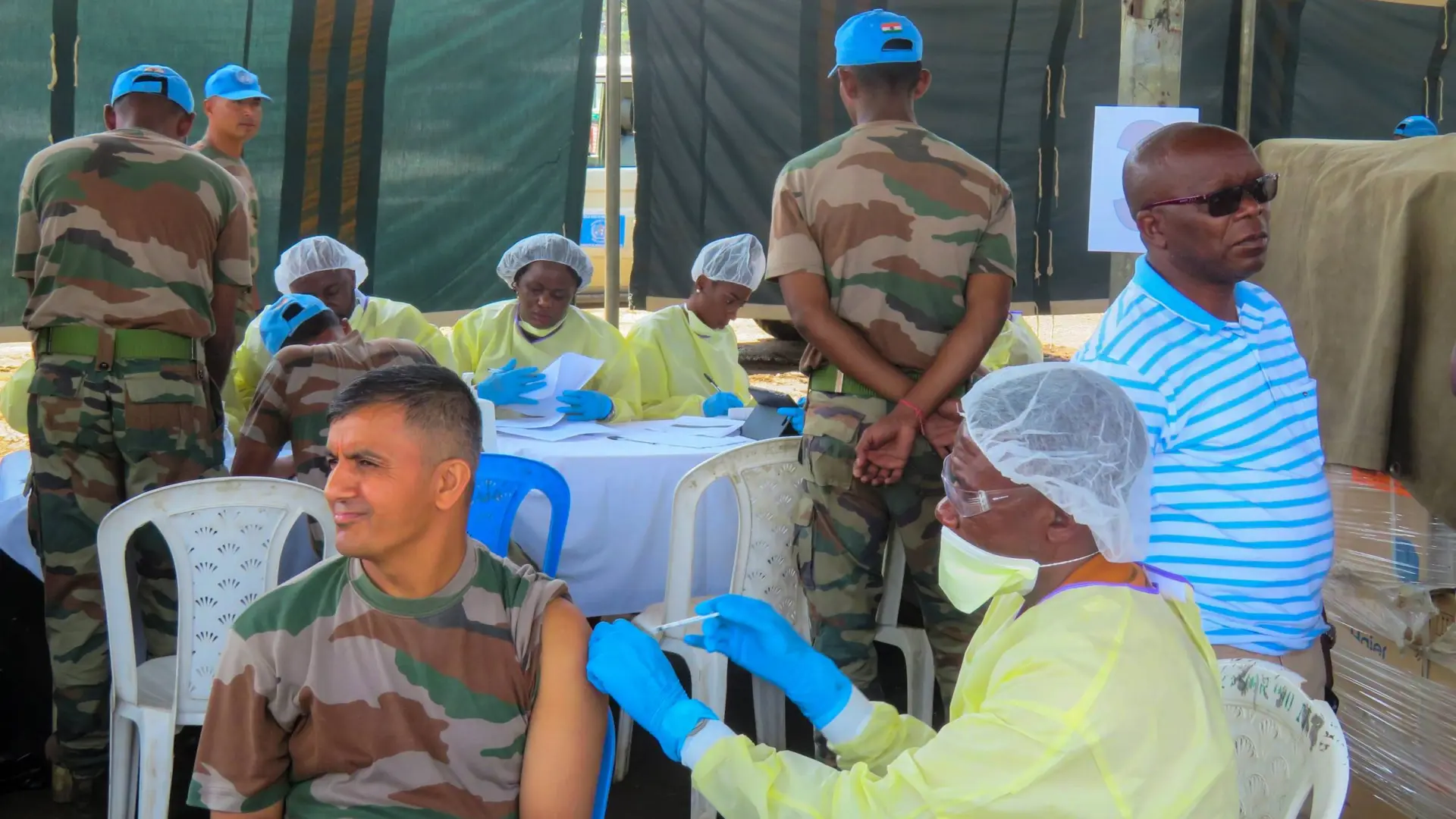
The international vaccine coordinating group allocated 70,000 Ervebo doses to the Democratic Republic of Congo in August 2026. Ervebo is licensed for Ebola virus disease associated with the virus formerly called Zaire ebolavirus. The current outbreak was caused by Bundibugyo virus. In its 20 August announcement, WHO said protection in humans against Bundibugyo was unknown, although laboratory and animal findings suggested possible benefit.
The allocation included 20,000 doses for a Phase 3 clinical trial and 50,000 for frontline and health workers. The split combines an attempt to protect exposed workers with research intended to determine whether the vaccine protects against Bundibugyo, and it exposes a gap in preparedness for ebolaviruses other than the one the licensed vaccine targets.
The staff figures explain why nobody waited. Julien Harneis, the United Nations senior Ebola coordinator, reported more than 160 health workers infected and 40 dead, against 5,021 cases and 2,325 deaths in figures published on 20 August. Health workers are not incidental casualties in an Ebola outbreak. They are the response capacity itself, and each infection removes a trained person from a system that has very few, while adding a treatment bed and a contact-tracing chain. Forty deaths among responders is a subtraction the response cannot make up while the emergency is running.
Health workers are not incidental casualties in an Ebola outbreak. They are the response capacity itself.
A stockpile reflects the diseases and vaccine development programmes for which licensed products are available. Ervebo’s established indication does not answer whether it protects humans against Bundibugyo. That uncertainty explains the role of the trial.
Bundibugyo has caused outbreaks before, but a licensed countermeasure remained unavailable when this outbreak began. The gap raises questions about research priorities, funding and the obstacles to developing and testing vaccines between epidemics.
The trial could inform future use of the stockpile if it establishes useful protection against Bundibugyo. A negative or inconclusive result would also matter for policy. The answer must come from clinical evidence, including safety and effectiveness, rather than an assumption that protection against one ebolavirus automatically extends to another.
The allocation is a response to uncertainty during an emergency. WHO stressed that people offered vaccination, in the trial or otherwise, should receive information about risks, potential benefits and limitations so they can give informed consent. The longer-term question is how research and preparedness can reduce the need to resolve those uncertainties during an outbreak.