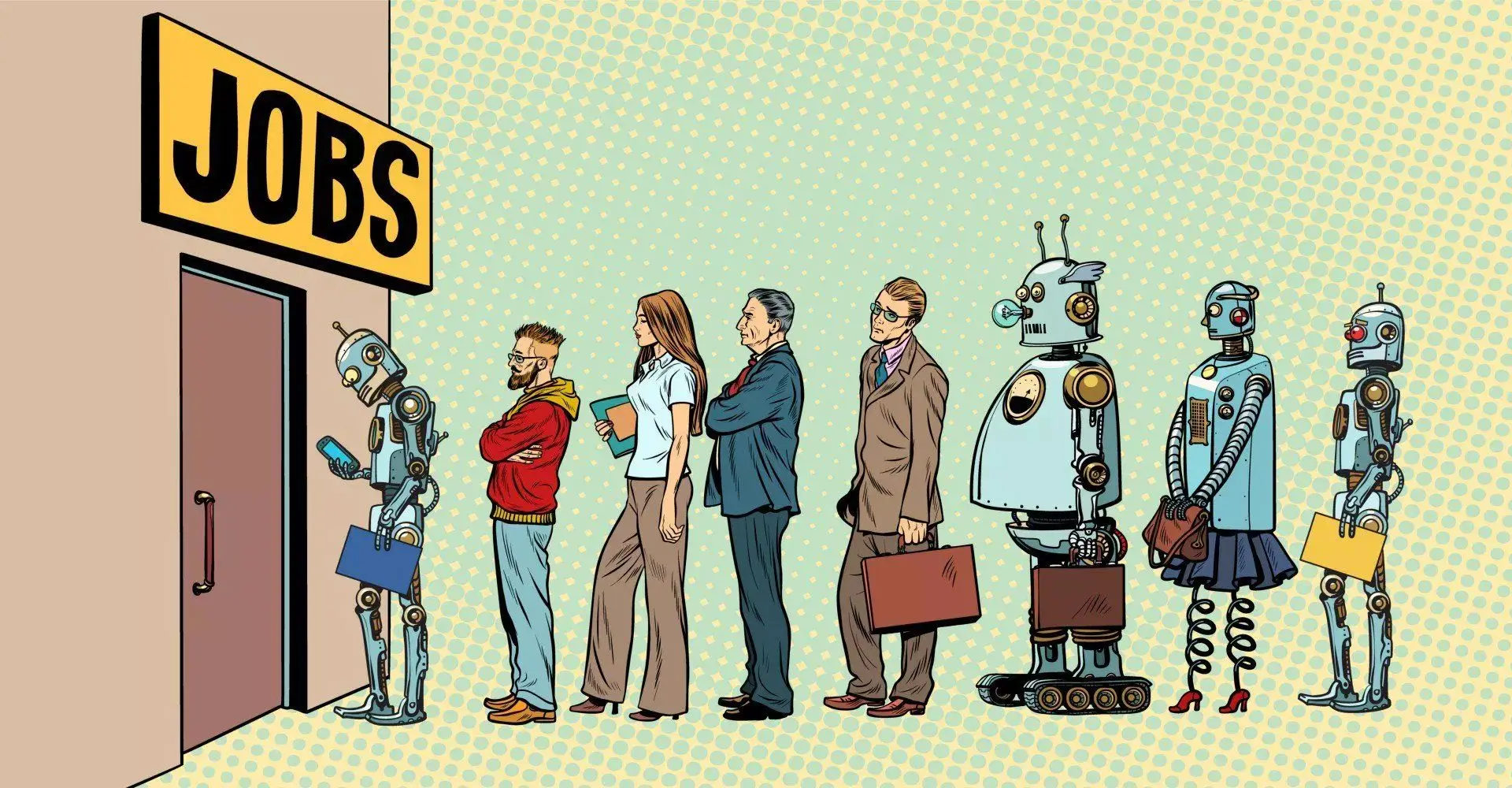
A few weeks ago, I attended a focus group discussion on employment in a global world. The coordinator showed us the ten skills employers most want, as identified by the World Economic Forum’s survey of businesses. Not one of my skills was on the list. I am one of many thousands of graduates who do not yet grasp how fast the workplace is changing. I knew technology moved quickly. I had not understood that I would need a new set of skills for the role I want.
One thing is constant, and it is “change”. Every industrial revolution has brought it, and the latest is no different. The world of work is changing, and Africa is not ready. The change threatens joblessness on a continent that already struggles with it, and it could widen inequality unless schools, businesses and governments act.
Four industrial revolutions
The fourth industrial revolution describes how technologies such as artificial intelligence (AI), autonomous vehicles and the internet of things (IoT) are merging with people’s physical lives. These changes are altering how individuals, companies and governments work. They will transform society as earlier industrial revolutions did, changing the way we live, work and relate to one another.
Each earlier revolution rested on new technology. The first began in Britain around 1760, when the steam engine made new manufacturing processes possible and gave rise to the factory. The second, between 1870 and 1914, brought mass production in new industries such as steel, oil and electricity, along with the light bulb, the telephone and the internal combustion engine. The third began in the 1960s. It was the digital revolution of the semiconductor, the personal computer and the internet.
The fourth rests on a wider range of technologies, with good and bad effects. They include the following:
- Artificial intelligence, which lets computers recognise complex patterns, process information, reach conclusions and make recommendations, much as a person would.
- Blockchain, a way to record and share data securely and openly without a middleman. Bitcoin is its best-known use, but it can also trace supply chains, protect medical records and help guard against voter fraud.
- New computing techniques that let networks handle huge amounts of data faster than before, while cloud storage lets businesses reach their information from anywhere, at any time.
- Virtual reality (VR), which uses computers to place users inside a simulated three-dimensional world they can see, hear and even touch, instead of watching a screen. Related tools are already in shops. L’Oréal’s make-up app, for example, lets customers try products virtually before they buy.
- Biotechnology, which uses cellular and biomolecular processes to make new medicines and materials, more efficient industrial processes and cleaner energy.
- Robotics, with robots used in manufacturing, health and safety, and personal assistance.
- 3D printing, which lets manufacturers print their own parts with less tooling, more cheaply and more quickly than before, and customise designs for a perfect fit.
- Energy capture, storage and transmission, a growing market made possible by cheaper renewable energy and better batteries.
What employers expect
Companies want to use these technologies to produce more efficiently, reach new markets and compete with powerful rivals. The World Economic Forum’s Future of Jobs Report 2018 found that four advances would dominate the period to 2022 as drivers of business growth. They are ubiquitous high-speed mobile internet, artificial intelligence, widespread big data analytics and cloud technology.
By 2022, the report said, companies were likely to have expanded their use of big data analytics on users and entities. Large shares also expected to adopt the internet of things, app- and web-enabled markets, machine learning and virtual reality, and to make extensive use of cloud computing. Nearly 50% of the companies surveyed expected automation to bring some reduction in their full-time workforce by 2022. As many jobs are automated, new kinds of work are appearing to replace them. The forum’s 2016 report even repeated “one popular estimate” that 65% of children entering primary school would end up in job types that do not yet exist.
New kinds of roles are already appearing, and the demand for people with the right skills is growing. So whose job is it to tell future employees about these changes, and to teach them the skills they will need to stay useful in their careers and keep pace with technology?
The role of business and education
Building a workforce for this revolution needs effort above all from educational institutions and businesses.
Businesses can create economic opportunity for millions of people by investing in education and training for current and future employees. Companies are great universities for the workforce of the future. They train employees, interns and apprentices to drive growth and innovation, often through specialised instruction and hands-on experience.
School and university curricula should be flexible enough to keep up with the workplace. They must be practical and encourage critical and innovative thinking. Educational institutions should develop people who actively apply knowledge to solving problems together.
Africa and the fourth industrial revolution
One major risk of the fourth industrial revolution is joblessness. Many African countries already struggle with it, and poor governance and weak institutions can make it worse. New technologies can also amplify existing inequality.
That happens when only the wealthy have access to better technology, and the rich keep getting richer. Rising inequality can breed social problems. To avoid this, Africa needs to speed up the provision of major public services such as electricity and education, and to adopt new technologies early.
Education with the right materials
Education is the way out of many of Africa’s problems, but it must be good education, not just more of it. Some African countries can boast of schools and educated young people. Yet as the psychologist Herbert Gerjuoy put it, in words quoted by Alvin Toffler in Future Shock (1970), “Tomorrow’s illiterate will not be the man who can’t read; he will be the man who has not learned how to learn.” The tools, curricula and methods used for decades must change to fit a changing world. That change cannot stop at schools for the rich. It must reach public schools too. African leaders must treat education as a public good whose quality is open to rich and poor alike.
African governments must build strategies to benefit from the fourth industrial revolution, or it will create serious problems for the continent. It comes down to using our numbers more productively.
Since 2019
The pace of change has not slowed. The World Economic Forum’s Future of Jobs Report 2025 expects, as People Matters reported, 170 million new jobs to be created and 92 million displaced by 2030, a net gain of 78 million, and workers to see 39% of their existing skills transformed or outdated by 2030.



