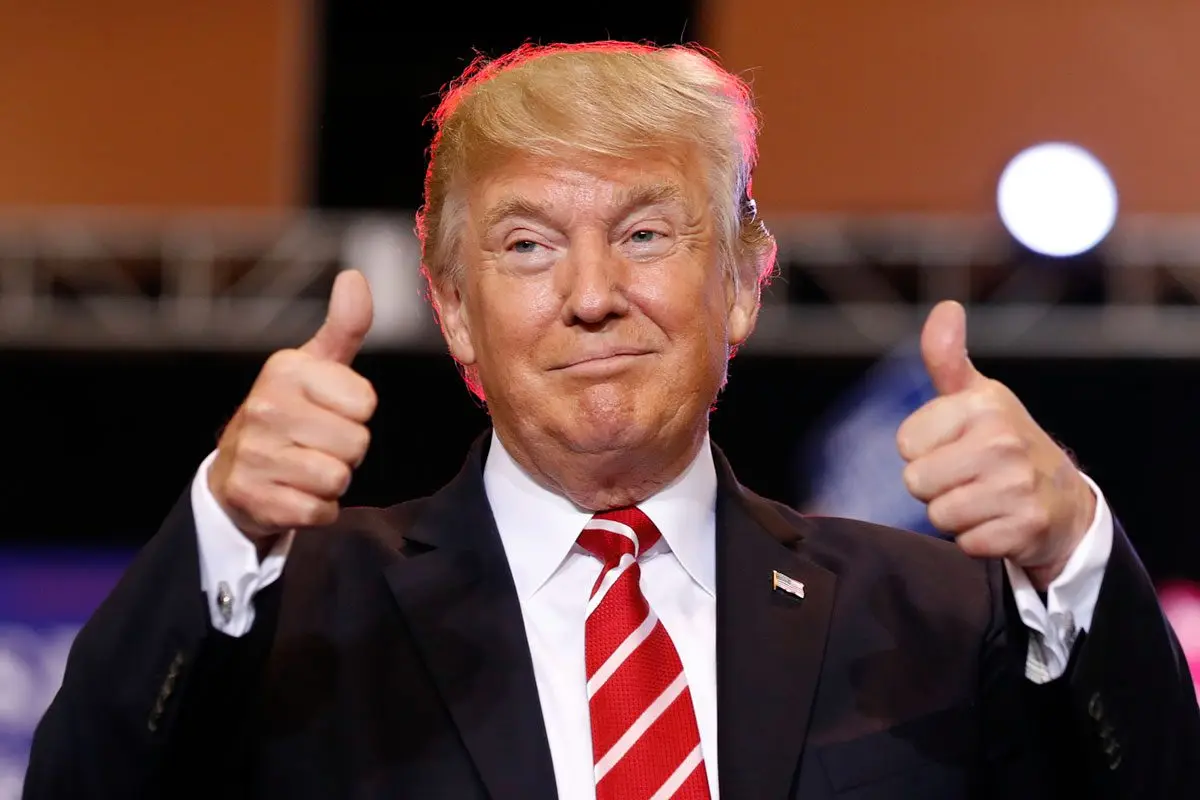
US economic influence in Africa has been waning for years, driven by a steep fall in American imports of African crude oil as the US shale boom took hold. The divide widened when Donald Trump became president with his “America First” agenda. China, which aims to rival the United States economically and politically, saw the vacuum. It moved in, courting African leaders with development assistance and loans.
Before China became the largest trading partner of African countries, that role belonged to the United States. Western leaders now accuse Beijing of trying to recolonise the region by pushing it into a “debt trap”. That may be true. This analysis argues, however, that Washington is moved less by concern for Africa’s future than by the threat to its own position, and that its belated push to win the continent back may come too late.
How China built its position
China’s domestic growth surged at the end of the last century, and with it came demand for resources. China looked abroad for markets and found a willing partner in Africa, a continent in need of infrastructure. It forged relationships with virtually every country on the continent. The results can be seen in the roads, hydroelectric dams, railways, airports, fibre-optic cables, stadiums, ports, high-rise buildings and factories that Chinese firms have built across Africa.
China has invested billions of dollars in African infrastructure. Much of it falls under the Belt and Road Initiative, a plan estimated at 1 trillion dollars to link China with the rest of the world, and African countries with one another, through new trade routes. Even the African Union headquarters in Addis Ababa, Ethiopia, was a gift from the Chinese government.
What drives China’s investment
On its path to economic dominance, China wants a secure supply of raw materials for its fast-growing economy. Africa has them in abundance. By widely cited estimates, the continent holds up to 90% of the world’s platinum and 40% of its gold, and the DRC and Rwanda together produce half of the world’s tantalum, refined from coltan.
Mining and oil remain the main focus of Chinese investment. It is no surprise, then, that in January 2018 the government of Edo State in Nigeria signed a memorandum of understanding with a Chinese consortium, led by a subsidiary of the state oil giant Sinopec, to build a 5,500 barrel-a-day modular refinery, Oil & Gas Journal reported. China has also invested in a special economic zone in the Republic of Congo, which Congo’s minister for special economic zones called a “direct investment”. Next door, the Democratic Republic of the Congo holds about 55% of the world’s cobalt reserves, as well as vast deposits of high-grade copper, tantalum and tin.
China’s motives are political too. It wants to expand its global presence and influence, and Africa’s developing countries offer a prime opportunity. Its heavy investment in African infrastructure reveals the nature of that ambition. If China comes to control essential parts of African economies, such as utilities and telecommunications, while also building military influence, it will hold considerable political sway in those nations.
Trump’s message to Africa
While China sought to deepen its ties with African countries, the Trump administration sent a clear message that Africa was no longer a priority.
Trump touted his America First policy even before he took office. His travel ban covered several Muslim-majority countries, including some in Africa. African countries are usually beneficiaries of US aid, and Trump’s 2020 budget proposal would have cut economic and development aid to sub-Saharan Africa by more than half, although Congress had largely ignored his earlier requests for such cuts. He also cut funding for peacekeeping missions and the UN Population Fund, and withdrew the United States from the UN Human Rights Council, UNESCO and the Paris climate agreement. All this made the message even clearer: his government was pursuing American interests and nothing more.
His delay in appointing an assistant secretary of state for African affairs did not go unnoticed. It suggested Africa had no place in his government. Tibor Nagy was confirmed by the Senate only on 28 June 2018 and took up the post in July, 18 months into Trump’s term.
In September 2017, Trump hosted a working lunch for leaders from nine African countries on the margins of the UN General Assembly. He mistakenly called Namibia “Nambia”. He then awkwardly acknowledged the continent’s growing economic prospects: “Africa has tremendous business potential. I have so many friends going to your countries, trying to get rich. I congratulate you.” The steel industries of South Africa and Egypt were hit by his protective tariffs. Nor did it help when his administration suspended Rwanda’s duty-free access for clothing under the African Growth and Opportunity Act in 2018, after Rwanda raised tariffs on second-hand clothes from America.
Trump’s reported remarks about the continent did not help either. In January 2018, the Associated Press, citing people briefed on an Oval Office meeting on immigration, reported that he had called African nations “shithole countries”. Trump denied it, writing that “this was not the language used”.
A new Africa strategy
As China pursued ties with African countries, US engagement with the continent fell sharply under Trump, and so did US political influence. Waking up to the loss of influence in Africa, both bilaterally and multilaterally, the administration launched a new Africa strategy.
Unveiling it at the Heritage Foundation on 13 December 2018, National Security Adviser John Bolton took aim at China and Russia. He said China used bribes, opaque agreements and debt to hold African states captive to Beijing’s demands, and that its investment ventures were riddled with corruption and fell short of American environmental and ethical standards. Russia, he said, was seeking influence in the region through corrupt economic dealings.
In Bolton’s account, the two powers’ practices held back African growth and threatened the financial independence of African nations. They also, he said, shut out US investment, interfered with US military operations and posed a significant threat to US national security.
Africa has also been caught up in the trade war between the United States and China, and investment on the continent has featured in their negotiations. The US campaign against Huawei matters here too. Huawei has built, and is still building, much of the continent’s telecommunications backbone. If sanctions cripple it, Africa’s technology and communications firms will suffer as well.
Tibor Nagy has also warned that African nations running up debts they cannot repay should not expect to be bailed out by western-sponsored debt relief. It can also be read as a warning against Chinese loans.
There may be some truth in what the United States says, as about 20% of African governments’ external debt is owed to China. The larger motive, however, is that Washington feels threatened by the China–Africa relationship and wants to regain its place as Africa’s largest trading partner. It may be a little too late.
What happened next
In his second term, Trump went further. On 10 March 2025, Secretary of State Marco Rubio said 83% of the programmes funded by the US Agency for International Development were being cancelled, around 5,200 contracts. On 1 July 2025, USAID ceased to implement foreign assistance, and the programmes that survived passed to the State Department.



