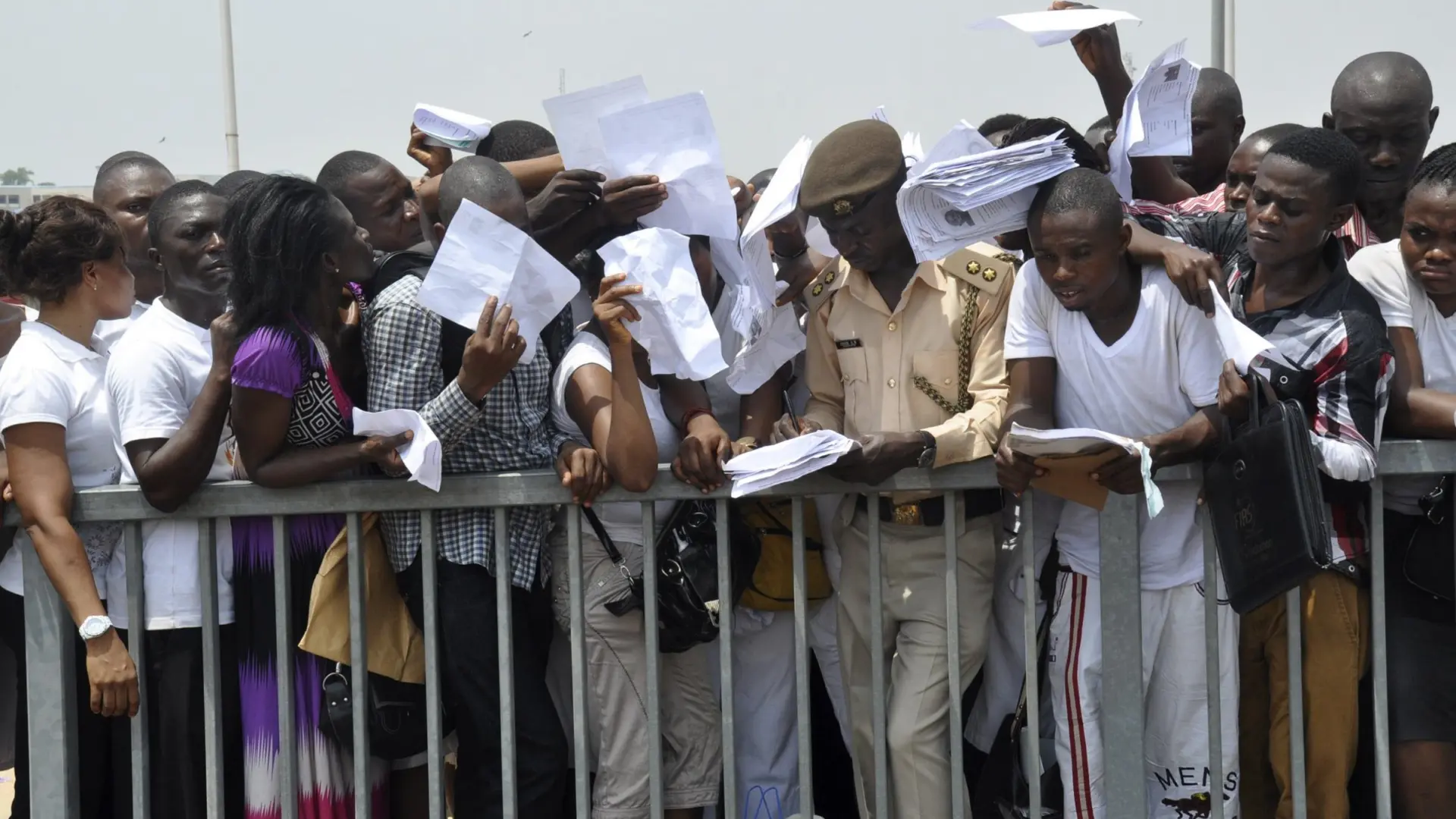
Nigeria’s young population is one of its great strengths, and young Nigerians around the world are doing remarkable things. Yet at home this generation carries the cost of a ruling class that enjoyed the country’s best years and left debt and decay behind. The youth have also failed themselves. For all their numbers, they have not stood up against misrule, and the author argues that only by organising and speaking with one voice can they reclaim their future.
Young Nigerians are poorly represented in the areas that shape their future, politics included, and are pushed to the sidelines on matters of their own development. Those who decide their fate have been at it for close to five decades, passing power from hand to hand like a relay team taking turns to finish a race.
What the old guard enjoyed
The young are denied what their rulers themselves enjoyed. Many of Nigeria’s present ruling class lived through the years when the country flowed with milk and honey. They went to school at the expense of regional governments or multinational companies, and left school to find jobs, housing, cars and other perks waiting for them. The author’s charge is that, having enjoyed the best Nigeria had to offer, they mismanaged its resources and denied the generations after them the same chances.
Young Nigerians have also been “systematically” declared unfit to rule. Since independence, “elder statesmen” have dictated who can and should hold power, when they are not holding it themselves. Some made way for their protégés, rotating between the Senate, the state houses of assembly, governorships and every other political seat, term after term. All the while, the young have been told that “children are the leaders of tomorrow”, and told to wait.
The bill for this falls on the young. Nigeria’s public debt reached N25.7trn at 30 June 2019, a rise of N3.3trn in one year. By 30 June 2026, according to the Debt Management Office, total public debt stood at about N166.79 trillion.
A life of struggle
The average young Nigerian struggles for everything. They struggle to gain admission, to fund themselves through school, to get the education they paid for amid repeated strikes, even to get mobilised for national service, and finally to find a job, make a living and start a family.
Life is also less safe. Children are kidnapped for going to school, and young people are harassed for speaking their minds. Education is in disarray, the few social amenities are deteriorating, and unemployment shows no sign of easing.
After their parents have given everything to educate them, many young people still depend on those parents to survive. This is not by choice, nor because they are lazy, as many Nigerians read President Buhari’s remarks in London in April 2018 to imply. It is because there are no jobs. As the musician African China sang in “Mr President”, “Many youth ready for work but as work no dey na how dey wan survive”. Desperation has pushed some into internet fraud, known as “Yahoo Yahoo”.
Those lucky enough to have jobs complain that the minimum wage is inadequate against an unsavoury mix of recession, rising debt and a steep fall in purchasing power. Those who have managed to become self-employed are frustrated daily by the cost of running a business, and many collapse under it.
Many are driven to depression by the challenges they face. Depression, once thought of as an “oyinbo” (white people’s) illness, has entered the Nigerian vocabulary, and suicides by young Nigerians who could no longer bear their circumstances have been reported in the news.
The silence of a generation
Yet the young seem resigned to accept mediocrity from their leaders. While young people in Sudan and Hong Kong have been on the streets protesting for a better future, young Nigerians, whether graduates, undergraduates, employed, unemployed or underemployed, have turned to social media as an escape. For over three months, the housemates of Big Brother Naija, a reality TV show, trended on Twitter, and the trend continued after the show ended. Money and emotion went into the housemates rather than into the causes that shape the viewers’ own future.
Nigeria’s youth have yet to speak with one voice against the wrongs done to them, and there is no shortage of causes. There is the new N30,000 minimum wage the government has been slow to implement, and the refusal of politicians to cut their own allowances. There is the small allocation to education. Only N48 billion was allocated to education and N112 billion to the Universal Basic Education Commission (UBEC) out of the N10.33 trillion 2020 budget proposal. There is the continued detention of the activist Omoyele Sowore by the Department of State Services (DSS), despite a court granting him bail in September. There is the FIRS jobs scandal, in which, according to a petition by the rights group SERAP, the Senate leadership allegedly received 100 employment slots at the agency to share among themselves while many deserving young people remain without work.
Fear, and the way out
Nigeria’s tragedy is not a natural disaster but a leadership disaster, and the youth have contributed to it through their inaction. Their silence is also enforced. Young people who voice their frustration in public risk arrest, as Sowore’s detention shows, and fear has kept many in submission. Divisions along ethnic and sectional lines, a legacy of colonial divide-and-rule, keep them apart.
The late Chinua Achebe put it this way: “People say that if you find water rising up to your ankle, that’s the time to do something about it, not when it’s around your neck.” The water is almost at our necks. Building the nation of our dreams needs a collective effort, and the longer young Nigerians stay silent, the more damage will be done. There is strength in their numbers. It is time the youth set their differences aside and spoke with one voice to reclaim their future.
Omoyele Sowore was released by the DSS on 24 December 2019, after a brief re-arrest earlier that month. Nigeria’s national minimum wage was raised to N70,000 a month in July 2024.



