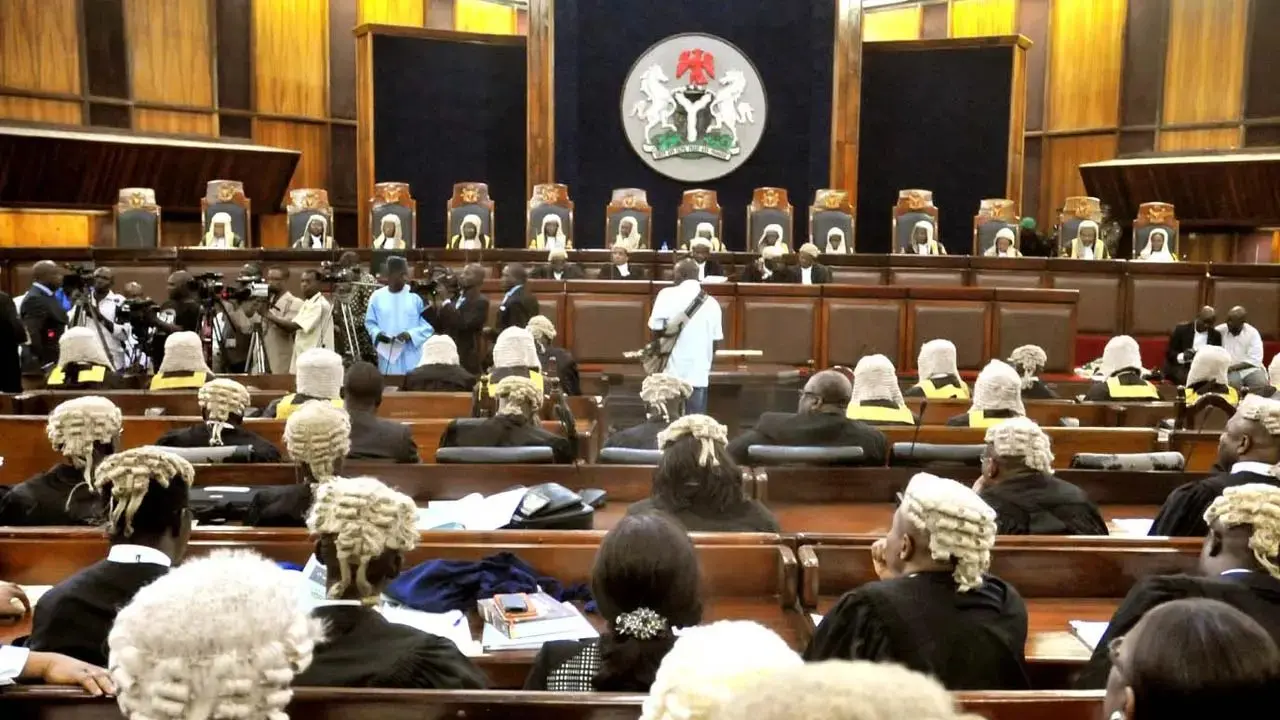
Nigeria’s Supreme Court ruled on 11 July 2024 in favour of the financial and administrative autonomy of the country’s 774 local government areas, striking down the practice of state governors withholding federal allocations and installing unelected caretaker committees in place of elected local councils. At the community level, where basic infrastructure, primary healthcare and primary education involve responsibilities shared across tiers of government, the ruling addressed a structural obstruction that has undermined service delivery for decades.
But Nigeria has a long record of landmark legal victories later absorbed into political business as usual. The architecture of gubernatorial control over local government did not emerge spontaneously; it was cultivated deliberately, over years, as a mechanism for controlling patronage networks and suppressing potential political threats from below. A Supreme Court ruling, however unambiguous, cannot dismantle an architecture by decree.
How state control works
Nigeria’s 1999 Constitution established a three-tier federal structure in which local governments represent the third tier, with defined revenue entitlements from the Federation Account and constitutionally protected autonomy. The reality that evolved bore little resemblance to this design. State governments routinely dissolved elected local councils before their tenures expired, replacing them with appointed caretaker committees loyal to the governor. Federal allocations were collected by state governments and disbursed selectively, often after substantial deductions for projects and programmes determined at the state level without local council input.
The cost to services
The councils that were supposed to respond to community-level needs, from primary healthcare to sanitation, lacked both the funds and the political independence to function as genuine local authorities. They became extensions of state government machinery rather than representative institutions in their own right.
A Supreme Court ruling, however unambiguous, cannot dismantle an architecture by decree.
What the ruling changes
The Supreme Court ordered that federal allocations to local governments be paid directly to democratically elected local councils, bypassing state government control. It declared that state governments have no constitutional authority to withhold or redirect these funds, and that caretaker arrangements, however dressed in legal language, cannot substitute for elected local councils as recipients of federal revenue.
This is a precise and enforceable directive, in principle. In practice, enforcement depends on compliance by 36 state governments, each of which has political incentives to resist. The federal government’s willingness to monitor compliance and sanction non-compliant states will determine whether the ruling has operational effect or remains a principle honoured in text and ignored in practice.
Local elections and accountability
Fiscal autonomy without electoral integrity produces a different but equally distorted outcome. Local government elections in Nigeria are conducted by State Independent Electoral Commissions, bodies appointed by and accountable to the same governors whose control over local councils the Supreme Court has just curtailed. Where SIEC elections have been held, the results have often mirrored the dominance of the state’s governing party. True local government autonomy requires not merely the direct payment of federal allocations but the conduct of credible local elections by an independent electoral process.
Nigeria’s governance deficit at the community level is not merely a resource allocation problem; it is a representation problem. Communities that cannot hold their local governments accountable cannot generate the political pressure required to improve service delivery. The Supreme Court ruling addresses one dimension of this structural failure. The deeper reform, transferring local electoral authority to an independent federal commission or at minimum subjecting SIEC processes to genuine oversight, remains politically untouchable in a system where state-level control of local elections is itself a resource.
Implications for federalism
The July 2024 ruling is important because it exposes what Nigerian federalism has become: a system in which constitutional allocations of authority are routinely subverted by the political economy of centralised control, and in which the judiciary periodically attempts to restore the constitutional design against the resistance of actors who profit from its distortion. The ruling is a correction, not a transformation. It restores a constitutional position that should never have been violated. That it required a Supreme Court intervention to do so reveals how thoroughly the system had normalised the violation.
For Nigeria’s 200 million-plus citizens, the question that follows the ruling is also political. Will the federal executive enforce the court’s directive against state governments with the same determination it employs to pursue other federal priorities? The answer will define whether the July 2024 ruling becomes a turning point in Nigerian governance, or a well-reasoned judgment that state executives quietly outlasted.



