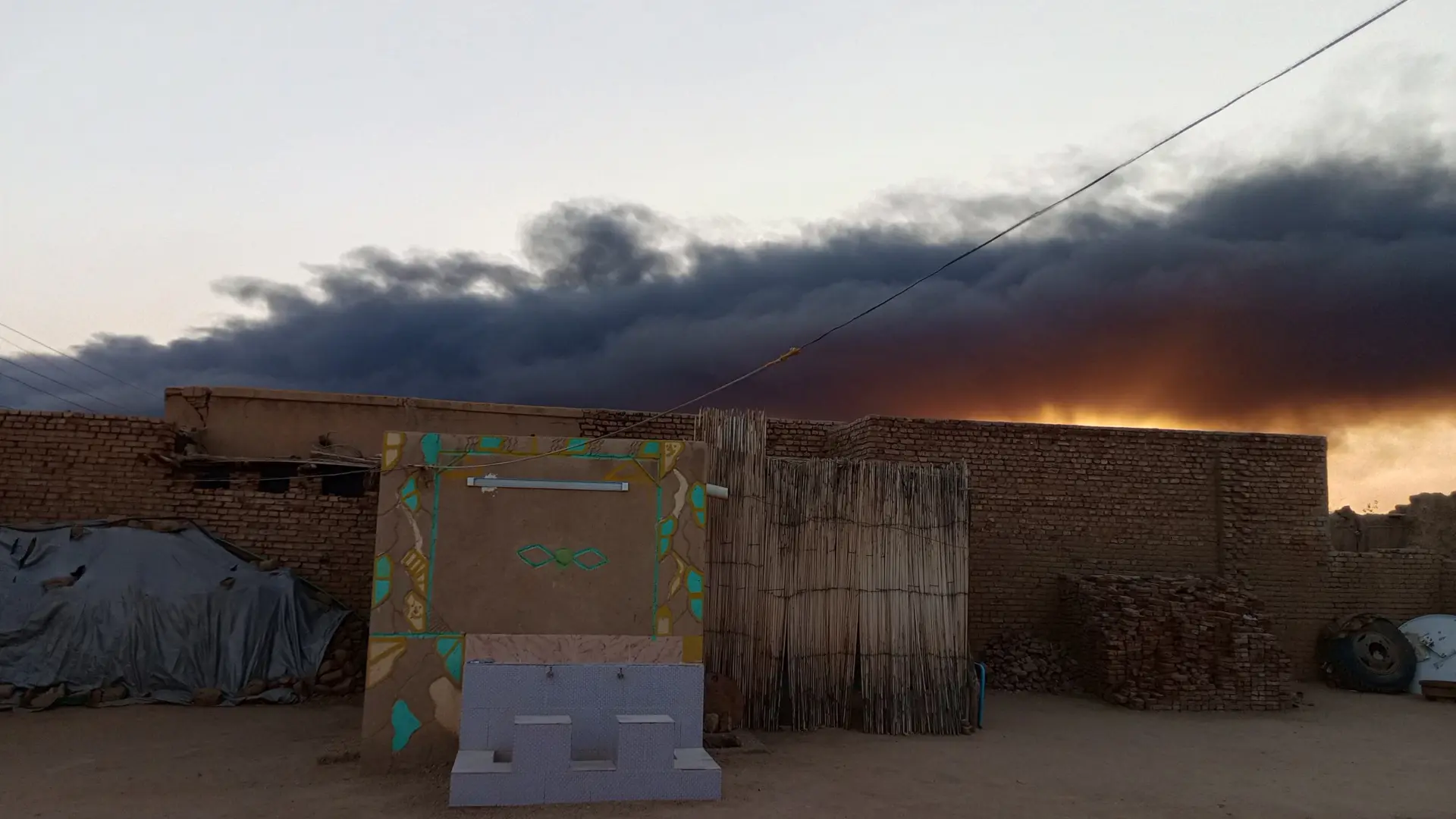
The Rapid Support Forces’ effort to build a parallel administration tests whether an externally backed armed group can turn territorial control into legitimacy by governing long enough. This analysis argues that it cannot. A claim to govern does not remove responsibility for atrocities, holding ground confers neither recognition nor a democratic mandate, and the attempt risks a de facto partition of Sudan.
The war that began in April 2023 between the RSF and the Sudanese Armed Forces (SAF) has produced the largest displacement crisis in the world and one of the most catastrophic humanitarian collapses in recent African history. Control of territory has shifted during the conflict; neither the SAF’s international position nor the RSF’s local control should be treated as a complete description of the country.
The question the rival government announcement forces is uncomfortable because it has no clean answer. Is the Dagalo doctrine (accumulate territory, establish civilian administration, erect the architecture of governance, then declare) the blueprint for a shadow state designed to entrench permanent fragmentation? Or is it, as the RSF claims, the political logic of a movement that, whatever its origins in the Janjaweed militias of Darfur, speaks for parts of Sudan’s western and southern populations who have never been governed well by Khartoum?
Origins and external support
The RSF’s origins are impossible to separate from its present ambitions. Hemedti built his organisation from the remnants of the Janjaweed, the Arab militia that carried out the Darfur genocide under Omar al-Bashir in the early 2000s. He accumulated wealth through gold mining operations in Jebel Amer, amassed a force estimated at well over a hundred thousand fighters, and positioned himself as a broker between Sudan’s military establishment and the Gulf states, particularly the UAE, widely reported to be his main external backer during the war. The atrocities the RSF has committed since April 2023, including mass rape, ethnic violence and the systematic destruction of civilian infrastructure, are documented and extensive. They cannot be footnoted away in any analysis that seeks to be accurate.
Yet the forces ranged against the RSF are not simple either. The SAF, under General Abdel Fattah al-Burhan, is the military establishment that ran the country under Bashir and then through the transitional period after his fall. The civilian coalition that briefly shared in governance between 2019 and 2021 was ousted by a coup that al-Burhan led. Egypt backs the SAF. The contest between these two armed formations is not simply good versus evil. It is a collision between two visions of extractive power, with Sudanese civilians paying the cost of both.
Control and legitimacy
The AU suspended Sudan following the October 2021 coup, so its position cannot be described as an endorsement of Burhan’s military rule. The separate dispute over a parallel administration must be judged through the AU’s actual decisions and the rights of Sudanese civilians.
The Dagalo doctrine, if it succeeds, will have demonstrated something that African and international actors have long feared: that a sufficiently resourced and externally backed armed group can convert military conquest into political standing by governing long enough that the alternative becomes worse. Its application in Sudan, with the AU watching and the international community issuing communiqués without consequence, tests the international order’s ability to enforce its own norms.
The risks of prolonged fragmentation
Sudan risks prolonged de facto partition rather than a settlement, one government holding the UN seat, another holding the territory, both extracting from the population they claim to serve and both outside the reach of accountability. Whether Hemedti calls that rescuing a nation or building a shadow state depends entirely on which side of Nyala you are standing on. For the civilians caught between them, the distinction has never mattered less.
Territorial endurance can affect political calculations, but it does not automatically confer recognition or legitimacy. Any settlement must address civilian protection, accountability and an inclusive political process rather than reward armed actors solely for holding ground.



