Democracy is valued for its tolerance of differing views. Yet in Rwanda, Zimbabwe, Nigeria and Uganda, governments that call themselves democratic have in recent months treated opposition figures and protest organisers as criminals. Opponents have disappeared, been abducted or been detained on charges of treason and terrorism. This opinion piece argues that these leaders are democrats in outward form whose treatment of dissent tells a different story.
Where is Eugène Ndereyimana?
In Rwanda, Joselyne Mwiseneza is waiting for the return of her husband, Eugène Ndereyimana, who has been missing for more than 30 days. Ndereyimana represented the opposition FDU-Inkingi party in the east of the country and was a leading opposition figure. He was reported missing on 15 July after failing to arrive at a meeting in Nyagatare, in Eastern Province, according to Human Rights Watch. The authorities have said nothing about his whereabouts.
His wife told the BBC she has lost hope of finding him. She said she could not tell whether he was dead or alive, since the authorities had given her no news of him.
“The children are too sad, they don’t know what’s going on, they keep asking me where dad is gone. It is too hard for me,” Mrs Mwiseneza said.
Her fears are not unfounded, given earlier events in Rwanda. As the leader of FDU-Inkingi, Victoire Ingabire, has pointed out, the man who held Ndereyimana’s post before him, Jean Damascène Habarugira, also went missing and was found dead, in May 2017, Amnesty International reported. Ingabire, a vocal critic of the government, also suffered a personal loss when her assistant, Anselme Mutuyimana, went missing on his way home in March 2019. His body was later found on the edge of the Gishwati forest in north-western Rwanda.
Amid these disappearances and deaths, the Rwandan government, whose duties include protecting its citizens’ right to life, has responded chiefly by denying that it persecutes the opposition.
Abductions in Zimbabwe before planned protests
In Zimbabwe, rights groups say at least six opposition and civil society members have been abducted and tortured. The Zimbabwe Human Rights NGO Forum said six people were abducted by suspected state agents on the nights of 13 and 14 August, AFP reported. One of them, the activist Tatenda Mombeyarara, was accused by his captors of helping to organise protests planned for 16 August, according to Amnesty International. The government has distanced itself from the abductions, as Rwanda’s did from the disappearances there.
The government spokesman, Nick Mangwana, said the government had “noted with concern and distress reports of alleged abductions and torture of citizens by unknown assailants”, and blamed “discharged and disgruntled former members of the old establishment” for trying to tarnish President Emmerson Mnangagwa’s image as a reformer.
President Mnangagwa has a real problem. With his country’s economy in deep crisis, he needs all the foreign goodwill he can get. But he appears to believe that legitimate protests against his policies will delegitimise his government in the eyes of the foreign friends he so badly needs. His government has since warned against any protest. Western governments, for their part, have spoken out. The US embassy in Harare said that “harassment and intimidation have no place in a democratic and pluralistic society”, and Britain urged the government to uphold the constitution and hold those responsible to account. Nigeria shows where that path can lead.
In Nigeria protest is treated as treason
In Nigeria, protest is close to being criminalised. Last week the government used a terrorism law passed a few years ago, the Terrorism (Prevention) Amendment Act, against a citizen who led a planned nationwide protest.
Omoyele Sowore, an online media publisher, is now held by the Department of State Services (DSS) on what the author regards as a phantom charge, which the government calls treason. By naming the planned protest “Revolution Now”, he has been treated by the government as a treasonable felon. On 8 August the DSS obtained a court order to keep him in custody for 45 days, so that it can investigate whether he is indeed a subversive, Global Voices reported.
The irony is that this government was itself made possible largely by a series of protests. Yet it seems unable to tolerate citizens expressing displeasure at some of its policies.
Opposition in hot water for wanting an end to Museveni’s 33-year rule
Uganda shows the same pattern. President Yoweri Museveni has been in power for more than three decades, and over that time the constitution has been altered to suit him and to prolong his rule.
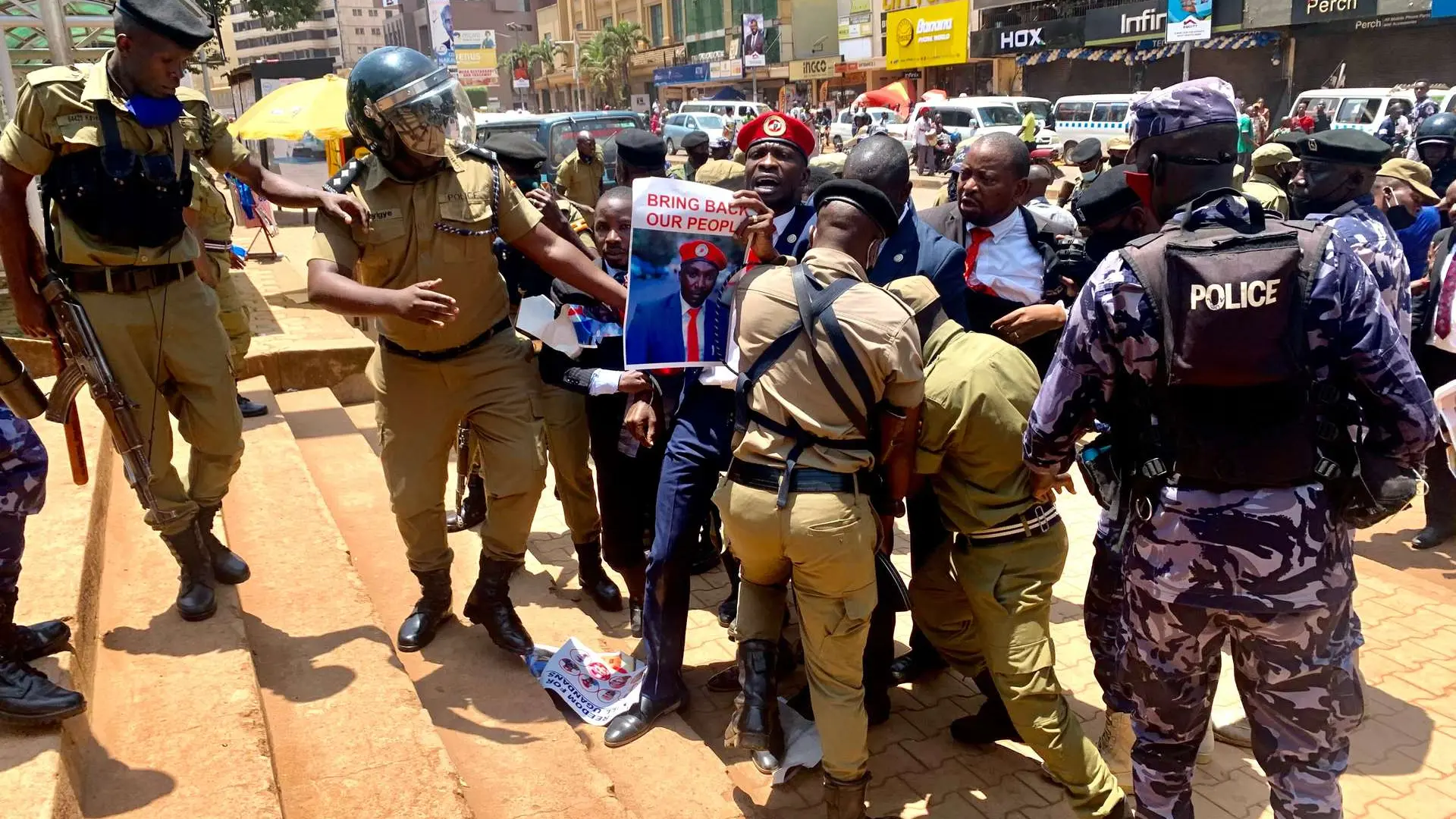
Those who challenge him run into trouble. One such person is the musician-turned-politician Bobi Wine, whose real name is Robert Kyagulanyi. Last year he was arrested and later charged with treason, on charges the author regards as absurd. His real offence appears to be that he leads movements determined to end Museveni’s open-ended rule. Only a few days ago, one of Kyagulanyi’s close associates, the musician Michael Kalinda, known as Ziggy Wine, died in hospital after he was reportedly abducted and tortured by unknown assailants. The police said he had been hit by a motorcycle, Africanews reported.
In each of these four countries, elections and constitutions give governments a democratic form, while the treatment of opponents and protesters belies it. Where democracy becomes cover for intolerance, citizens are denied the rewards it is supposed to bring.
What happened next
Sowore was charged in September 2019 with treason, money laundering and cyberstalking for allegedly insulting the president, Global Voices reported. He pleaded not guilty and was granted bail, but the DSS re-arrested him on 6 December 2019, less than a day after his release, ThisDay reported.
In Rwanda, Victoire Ingabire launched a new party, Development and Liberty for All (Dalfa Umurinzi), in November 2019, Human Rights Watch reported. She was arrested at her home in Kigali on 19 June 2025 and, after a court refused her bail, remained in detention, Amnesty International reported in September 2025. Amnesty says at least five members of FDU-Inkingi have died or been forcibly disappeared since 2017.
In Uganda, Museveni was declared the winner of a seventh term in January 2026 with 71.65% of the vote to Kyagulanyi’s 24.72%. African observers denounced “reports of intimidation, arrest and abductions” targeting the opposition and civil society, France 24 reported.



