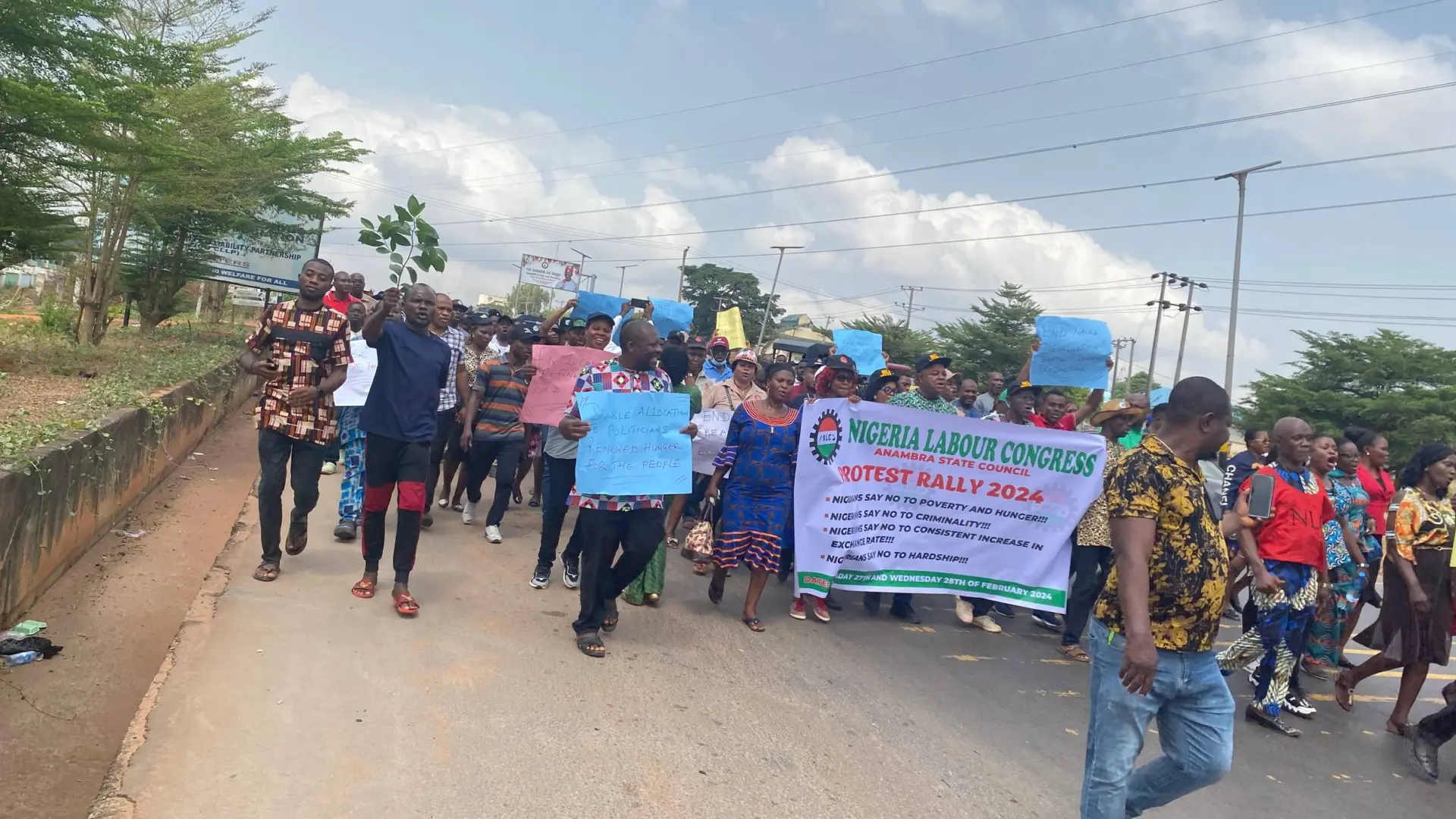
Nigeria’s labour disputes follow a recurring pattern, and it has become a structural feature of the country’s labour relations: wages eroded by inflation, unions mobilised, strikes called, courts invoked and agreements reached, until inflation erodes the settlement and the cycle restarts.
The NLC-led strikes of 2023 and 2024 did not emerge from an unusual moment of worker militancy. They emerged from an inflation rate that had climbed above 30 per cent, from fuel subsidy removal that sharply raised transport costs, and from a national minimum wage whose real value had been eroded by currency depreciation and price rises. A settlement that inflation erodes within months cannot break that cycle. Only structural reform of food, energy and employment policy can make wages hold their value.
Nigeria’s labour struggle is not merely a dispute between workers and employers. It is a visibility crisis for the structural forces (currency devaluation, import dependency, subsidy withdrawal and uneven growth) that have shifted the burden of adjustment onto wage earners. Each strike is, in effect, an unscheduled audit of economic policy. The audit results have been consistently unflattering.
Sources of inflation
Nigeria’s inflation is not a single phenomenon. It is a layered accumulation. Food inflation runs persistently above headline figures, driven by logistics costs, insecurity in agricultural belts and naira depreciation that repriced imported inputs. Energy inflation, compounded by the June 2023 subsidy removal and the uneven rollout of palliative support measures, fed through to virtually every production and distribution cost in the economy. Core inflation, stripping out food and energy, remained elevated enough to indicate that price pressures were not confined to commodity sectors.
Wage negotiations
Against this backdrop, a minimum wage of 30,000 naira a month (the rate that remained in force for years before the 2024 negotiations) was not merely inadequate. It was economically incoherent as a floor for human subsistence in an urban Nigerian context. The NLC’s demand for 494,000 naira per month was criticised by employer organisations as economically destabilising. The counter-offer of 60,000 naira from the federal government was received by unions as confirmation of the government’s distance from lived economic conditions on the ground. The eventual settlement (70,000 naira per month) satisfied neither standard.
Each strike is, in effect, an unscheduled audit of economic policy. The audit results have been consistently unflattering.
Strikes and public services
Labour action in Nigeria spans sectors whose service failures carry compounding consequences. Education unions (ASUU, SSANU, NASU) have accounted for some of the most prolonged industrial actions, with repeated strikes costing students in federal universities substantial academic time. Healthcare unions (JOHESU, NMA) have disrupted services in a healthcare system already operating well below capacity. The intersection of labour action and public service delivery creates a feedback loop. Failing institutions generate grievances that produce strikes that further degrade institutional function.
The private sector labour picture is more fragmented and less visible. Collective bargaining coverage is limited outside formal sector employment, and a large share of Nigeria’s workforce operates in informal arrangements where neither minimum wage legislation nor union representation applies. The formal sector labour struggles that generate headlines represent a fraction of Nigerian workers. The majority absorb economic pressure without institutional recourse.
Beyond the wage settlement
The Nigeria Labour Congress’s strike actions and minimum wage demands, while responses to deteriorating conditions, address the symptom rather than the underlying economic design. Nigeria’s inflation crisis is not primarily a wages problem. It is a structural vulnerability problem. An economy that imports significant shares of its food and manufacturing inputs, that prices energy at market rates while most citizens’ incomes have not adjusted for market-rate inflation, and that generates growth concentrated in sectors with limited employment multipliers will continue producing labour crises regardless of the minimum wage level set.
Economic justice in Nigeria requires engagement with the architecture of economic distribution, not merely its most visible failure points. It requires an agricultural policy capable of reducing food import dependency and stabilising domestic food prices. It requires an industrial policy that creates formal employment at sufficient scale to bring informal workers into wage protection frameworks. It requires fiscal discipline that does not place the full burden of structural adjustment on workers whose wages are the economy’s least flexible price.
Nigeria’s labour movement has demonstrated that it retains the organisational capacity to impose political costs on governments that ignore worker welfare. The question is whether that capacity can be directed not merely towards wage settlements that inflation will erode within months, but towards the structural reforms that would make those wages hold their value. Until then, the cycle of inflation, strike and settlement will keep repeating.



