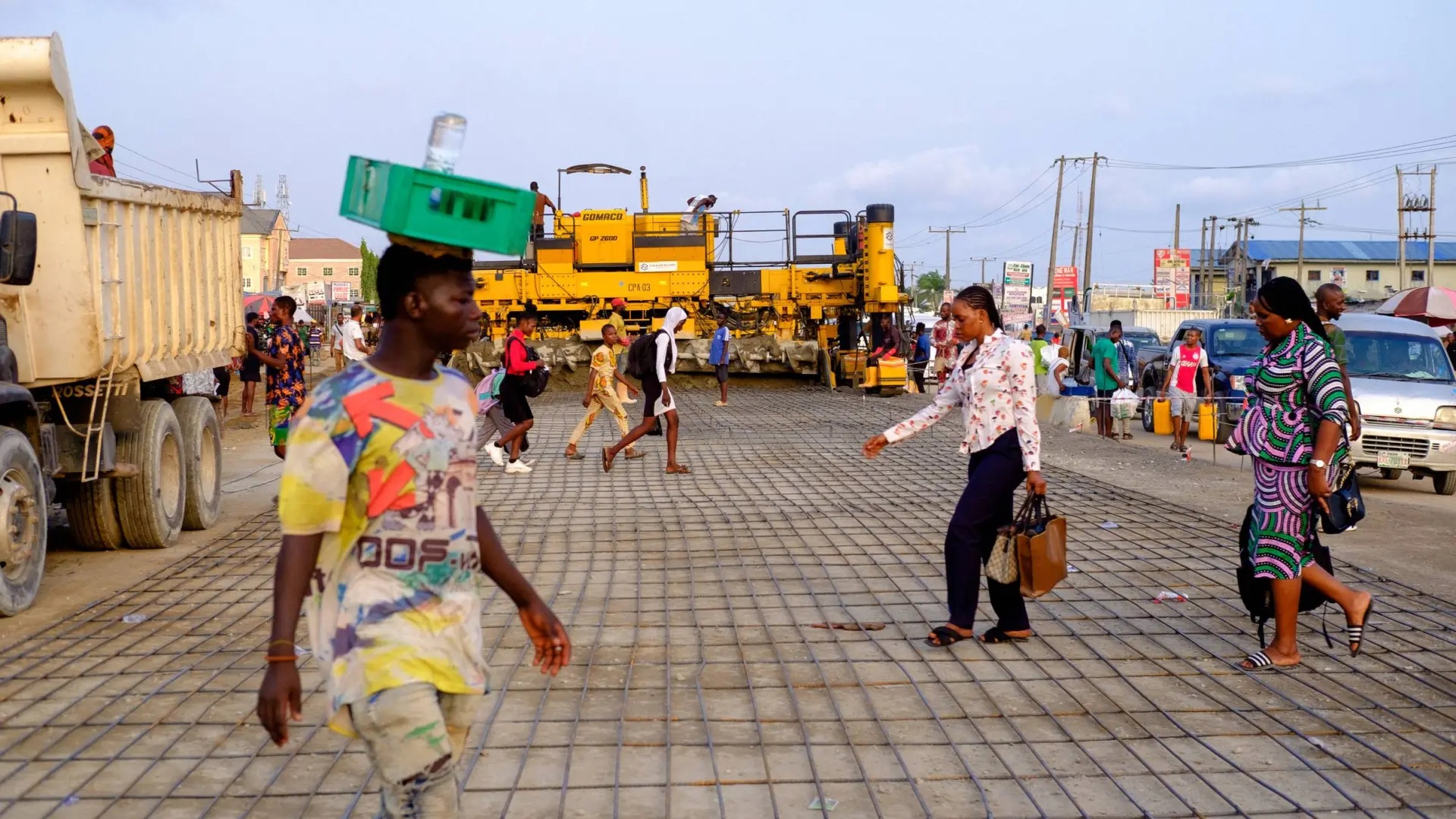
The Lagos-Calabar Coastal Highway, the current iteration of a long-discussed project, promises better connectivity along southern Nigeria. It received renewed attention under President Bola Tinubu, with contract awards announced in 2024 and groundbreaking ceremonies at several points along the route. This analysis argues that its value will be decided less by kilometres or ceremonies than by its governance and contract terms: whether it is delivered, whether affected communities share its benefits, and whether Nigeria ends up able to build the next road itself.
The government’s projections, roughly 700 kilometres at an estimated cost of more than $13 billion, make it one of the most ambitious single infrastructure projects in Nigerian history. They also make it one of the most demanding in financing, procurement integrity and construction management.
A record of delays
The history of large Nigerian infrastructure projects is not one of completion on time and on budget. The Abuja-Kaduna Standard Gauge Railway took years beyond its original schedule and opened at a cost substantially above initial estimates.
The Second Niger Bridge, a critical piece of national connectivity, took decades to move from first conception to opening. The pattern is consistent enough to point to a systemic problem rather than a series of isolated failures. Nigeria has repeatedly shown that the capacity to announce, fund through initial disbursement and begin major projects is not matched by the institutional capacity to see them through: to manage procurement across long construction periods and to sustain political attention and budget allocation through electoral cycles.
Payment schedules, variation orders and delay penalties can affect contractors’ incentives. Establishing whether delay is profitable on this project requires its actual contract terms and performance records.
The coastal route compounds the technical challenge. A highway along the Atlantic coast through the Niger Delta crosses some of the most ecologically sensitive and socially complex terrain in West Africa. Land acquisition in communities whose relationship to their land and water carries political and cultural weight that formal expropriation cannot simply override requires serious community engagement, and the announced timelines leave little visible room for it. The communities in the road’s path have interests that are not reducible to compensation schedules, and a delta that has spent decades watching its resources extracted with the benefits flowing elsewhere does not extend the state the benefit of the doubt.
The financing loop
Nigeria’s infrastructure financing has long operated within a loop worth naming directly. Physical assets decay because recurrent public spending is too thin, too often crowded out by debt service obligations that themselves emerged from earlier financing cycles. External capital arrives to fill the gap, structured by foreign guarantors and intermediated by international banks. How the financial benefits are distributed depends on the financing and procurement terms. Repeated across a generation, what accumulates is not just debt but a pattern of institutional dependency that each new project risks reinforcing rather than breaking.
The road gets built. The debt accumulates. The capacity to build the next road from domestic resources does not grow. That is the structural problem the Coastal Highway must confront, or it will simply become another instance of a very old pattern.
Capacity is in the contract
What distinguishes infrastructure that builds national capacity from infrastructure that merely moves goods is not technical complexity. It is contract design. Projects that mandate local content thresholds, require technology transfer to domestic engineering firms, build apprenticeships into construction timelines and link road corridors to export-processing zones create industrial depth alongside physical connectivity. Projects that do none of these things construct roads, but not the ecosystem that makes roads productive: the logistics operators, maintenance enterprises and engineering colleges whose graduates can extend what has been built without returning to the original contractor.
The prize is real. A fully operational coastal highway could give Nigeria a stronger position in regional trade, and that positioning carries leverage. It can improve the terms of future financing, attract manufacturers seeking alternative production bases and give Abuja more weight in continental infrastructure forums. Whether Nigeria captures that leverage or simply completes the road depends on contract clauses that rarely make headlines: technology transfer provisions, local contractor participation quotas, links to regional trade and industrial development, and maintenance agreements that build domestic capacity rather than lock in long-term external service contracts.
Governance and financing
None of this makes the project wrong. Nigeria needs the connectivity the coastal road would provide, and the economic case (lower transport costs, better port connectivity, access to agricultural hinterlands that cannot reach markets efficiently) is genuine. The argument here is structural. The gap between what Nigeria announces and what it builds involves governance as well as financing. Project management systems, procurement oversight and the insulation of infrastructure delivery from electoral pressures are the institutional requirements that make large projects deliverable, and they are what Nigeria’s infrastructure sector has persistently struggled to develop and sustain.
Any concession or financing arrangement should disclose who bears traffic risk, cost overruns and long-term payment obligations. Those terms should be established from the signed documents rather than inferred from the project’s scale or assumptions about the nationality of every contractor or financier.
The coastal road is a test of whether the Tinubu administration’s stated commitment to infrastructure delivery is matched by the institutional investment required to execute it. Groundbreakings are not roads. Contract awards are not tarmac. The measure that matters is not the ceremony at the beginning but the highway at the end, whether the communities that will live alongside it were consulted, compensated and included in its benefits from the start, and who is left capable of building the next one without asking permission. On that measure, the project has not yet earned its headlines.



