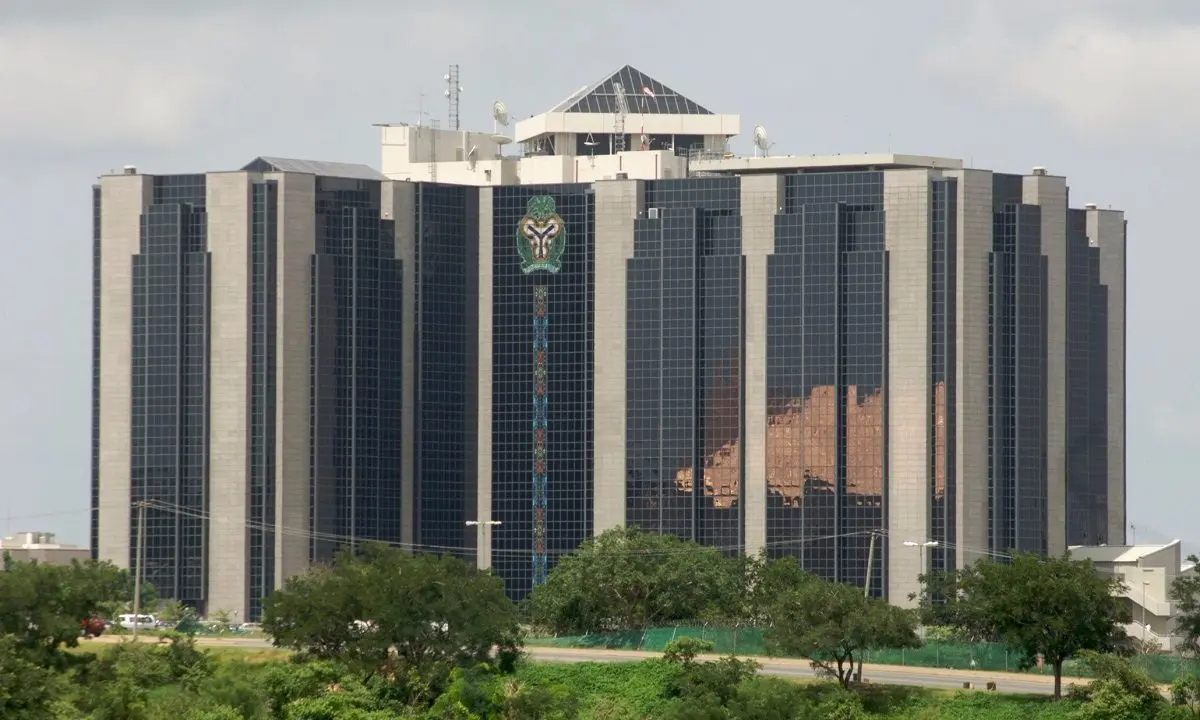
On Tuesday 17 September 2019, the Central Bank of Nigeria (CBN) set tongues wagging when it announced a punitive charge on people who deposit cash above a set threshold. The bank says the measure furthers the country’s cashless policy. It takes effect at once in six states and the Federal Capital Territory, and nationwide in March 2020. Its aims are sound, but its sudden introduction ignores the market traders and small businesses who will carry most of its cost.
The CBN’s circular to banks reads:
“Further to our circular ref BPS/DIR/GEN/CIR/04/004 we write to inform all Deposit Money Banks that the CBN has approved that: Charges on deposits shall apply in Lagos, Ogun, Kano, Abia, Anambra, Rivers states and the FCT, in addition to already existing charges on withdrawals, effective September 18, 2019.”
Under the policy, individual accounts pay a processing fee of 3 per cent on withdrawals above N500,000 and 2 per cent on deposits above that amount. Corporate accounts pay 5 per cent on withdrawals and 3 per cent on deposits above N3 million (GTBank notice to customers, 18 September 2019).
What the bank wants to achieve
According to the CBN, the policy will encourage Nigerians to handle less cash and use digital transactions instead. This should modernise payment systems, cut the cost of banking services and widen financial inclusion by offering more efficient ways to pay.
Other benefits claimed for the scheme include convenience, fewer cash-related crimes, and better access to credit and financial services. Above all, it should cut the huge cost of moving cash around the country, and it will help the CBN and the Nigerian Financial Intelligence Unit to track transactions.
Previous attempts
The move has caused a furore, but it is not new. A similar policy was announced in 2012, when charges applied only to transactions in Lagos. In 2013, the CBN extended it to Abia, Anambra, Kano, Ogun and Rivers states and Abuja (Cashless Policy (Nigeria), Wikipedia).
The policy went nationwide on 1 July 2014, but the bank postponed charges in the remaining 30 states until July 2015 to allow more publicity and the installation of the necessary infrastructure (Nairametrics). In April 2017, it suspended nationwide implementation and newly introduced deposit and withdrawal fees “until further notice” (ICIR).
A sound idea that burdens Nigerians
Many Nigerians would welcome the aim, but the timing leaves much to be desired. The suddenness of the CBN’s move raises many questions, even though the policy has been tried before.
Critics from business and public service say the notice is too short. Mr Timothy Olawale, Director-General of the Nigeria Employers’ Consultative Association (NECA), shares that view. He accepted the bank’s stated aims of moving the country towards a cashless economy and reducing cash-related crime, but questioned the timeframe (Business A.M.). He expects the greatest impact to fall on retail businesses and medium-scale retailers in the fast-moving consumer goods sector.
“Though the overall aim of reducing cash transactions is good, the policy will, however, increase the cost of doing business and force organisations and individuals to start multiple deposits and withdrawals in order to beat the charges,” he noted.
The way the policy was announced, by circular and without explanation, is at the heart of the reaction of Dr Joe Abah, a former Director-General of the Bureau of Public Service Reforms.
He wrote on Twitter, “Our Central Bank still thinks we are in the military era. If, for whatever reason, you are going to introduce charges for deposits, will you just issue a circular? No explanation? No justification? No sensitisation? You just issue a circular and call it cashless policy? Na waa o.”
The problem with the policy
The bank’s good intentions are not in doubt. What is in doubt is whether it has taken any steps to ease the burden on the small and medium-scale business owners who will carry most of it.
The circular sets out no plan for the market traders who take in far more than the N500,000 cap for their goods, then send their sons or daughters to deposit the money in the bank. The effect will be to discourage them from saving in banks. There is also the danger of more theft from homes if traders decide to keep their money there rather than pay the charges on lodgements. In its current form, in the author’s view, the policy is anti-masses.
What happened next
The CBN’s push against cash went much further. In October 2022 it announced a redesign of the N200, N500 and N1,000 notes, partly to promote digital payments such as the eNaira, and the new notes entered circulation on 15 December 2022. The result was a cash shortage and a black market for naira notes. Currency in circulation fell from about N3.3 trillion in October 2022 to N982 billion in February 2023, and the Carnegie Endowment reported that Nigerians who rely heavily on cash, petty traders among them, faced real economic hardship (Carnegie Endowment, January 2024). In November 2023, the CBN directed that the old notes would remain legal tender indefinitely.
The deposit charges themselves were put on hold. In December 2023 the CBN suspended the processing fees on large cash deposits (Nairametrics), and it later extended the suspension more than once, until at least 31 March 2025 (Nairametrics).



