Nigerian women have a long record of organised revolt against colonial rule, and it changed the country’s politics. The Aba Women’s War of 1929, the Abeokuta women’s tax revolt of the 1940s and Margaret Ekpo’s nationalist organising forced concessions from the British and opened political space for women. That history is too often overlooked.
Women played a major role in social and economic life even before colonisation. They were central to trade and had real opportunities to accumulate wealth and acquire titles; among the Yoruba, the most successful women rose to the prestigious position of “Iyalode”. Women also had a place in politics, though power was generally held by men.
The Aba Women’s Riot
The roots of the riot go back to 1 January 1914, when Lord Lugard, the first colonial governor of Nigeria, instituted the system of indirect rule in Southern Nigeria. The system narrowed the place women had held in governance before colonisation, and the policies that followed effectively shut them out of political power. That came on top of forced labour, increased school fees and corruption by local officers.
The warrant chiefs the British appointed soon grew oppressive. They seized property, imposed harsh local rules and jailed anyone who criticised them in public. The grievance deepened when colonial officials announced plans for special taxes on Igbo market women, who fed the growing towns of Calabar, Owerri and other Nigerian cities. A tax, they feared, would ruin many of them and cut off the food and other goods on which the towns depended.
On the morning of 18 November 1929, a man called Mark Emereuwa, on the orders of his boss, a warrant chief called Okugo, walked into the compound of a widow called Nwanyeruwa to take a census of her livestock and household. Nwanyeruwa knew that the census would determine how much she would be taxed by the British colonial government. She shouted angrily at Emereuwa, “was your widowed mother at home counted”, meaning that women did not pay tax in traditional Igbo culture. After an angry exchange, Nwanyeruwa rushed down to the town and mobilised other women, and with palm fronds still more women were mobilised.
What followed, the Aba Women’s Riot, was one of the largest rebellions against British colonial rule in Nigeria. About 25,000 women are estimated to have taken part, and the rebellion spread across six ethnic groups, namely the Igbo, Ibibio, Opobo, Andoni, Ogoni and Bonny.
The revolt was well organised. The women used song and dance to mock and denounce the chiefs, and forced some of them to resign. As the protests grew, they attacked and looted European-owned shops and banks, and the native courts run by British officials, some of which they burned down. The colonial police were finally called in and fired into the crowds. At least 50 women were shot dead and more were wounded, yet the women never seriously hurt any of the people they were protesting against.
The revolt compelled the colonial authorities to drop the planned taxes and to significantly clip the powers of the warrant chiefs. In some areas, women replaced the warrant chiefs and were appointed to serve on the native courts. The war inspired many movements in the 1930s, 1940s and 1950s.
The Abeokuta Women’s Revolt
This is also known as the “Egba Women’s Riot”. After the Egba lost their independence to the British in 1918, the system of taxation adopted by the Abeokuta Sole Native Authority under the king of Abeokuta, Alake Ladipo Ademola, was particularly strict and stifling. Women as young as fifteen had to pay, and wives were taxed separately from their husbands, whatever their income. Defaulters, women above all, were often beaten, stripped naked, detained and jailed, and their property was seized. It was widely alleged that women and girls held for unpaid tax were molested.
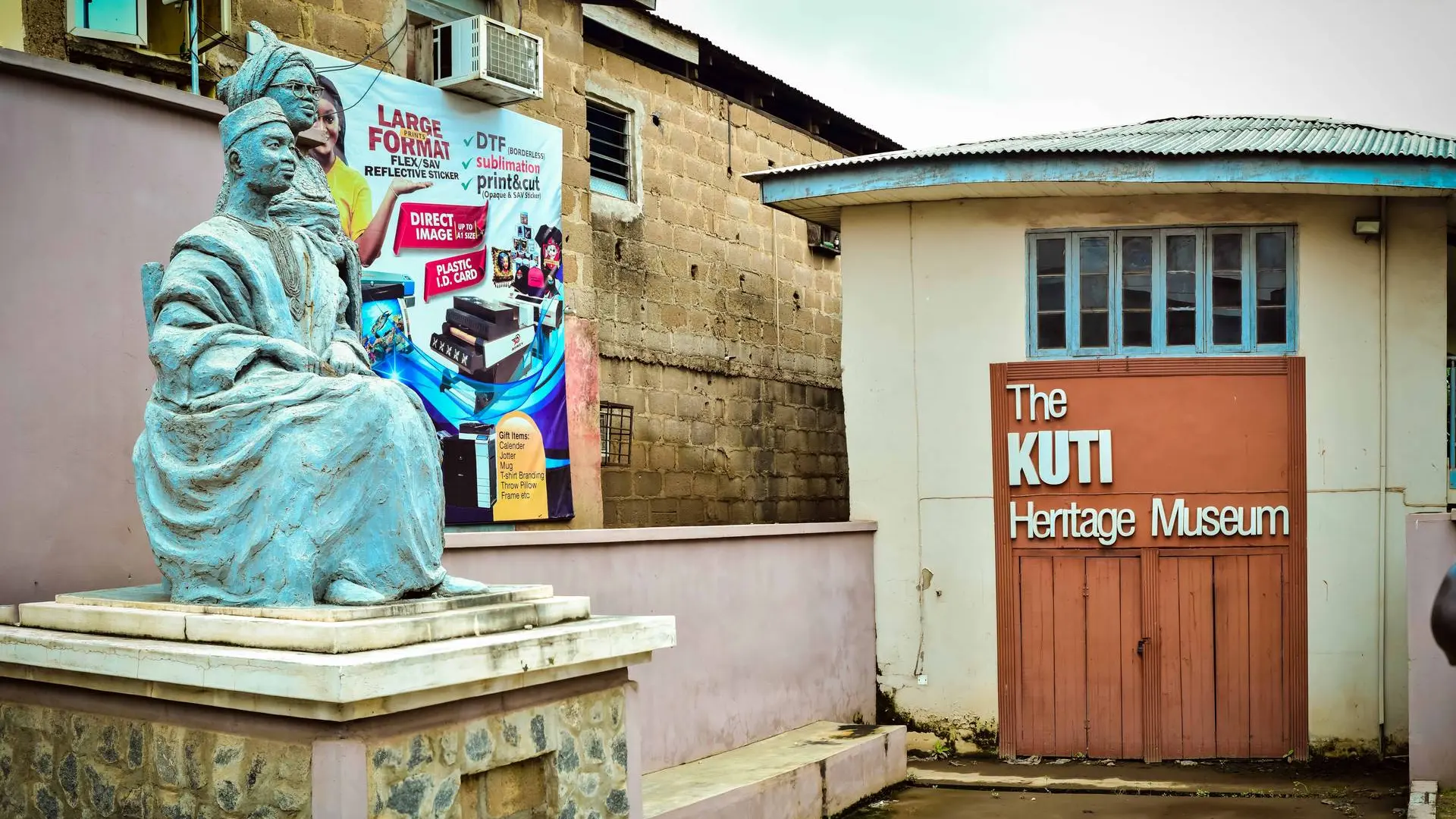
When the burden of taxation became unbearable, the women of Abeokuta decided to speak out under the leadership of Funmilayo Ransome-Kuti in 1946. Ransome-Kuti, a teacher and the mother of the celebrated musician Fela, headed the “Abeokuta Ladies Club”. She changed its name to the “Abeokuta Women’s Union” (AWU) and opened its membership to lower-class women, especially market traders. An estimated 20,000 members joined almost immediately.
The union openly demanded the abolition of taxes on women and proposed that the flat tax imposed on Abeokuta women be replaced with taxation of expatriate companies. It also demanded that the tax collected be invested in local initiatives and infrastructure, including transport and sanitation, and an end to the Abeokuta Sole Native Authority’s price controls on food, which ran against the women’s interests. To avoid the violence that had marked the Aba women’s riot 17 years earlier, the women organised peaceful protests in their thousands.
On a two-month visit to Britain, Ransome-Kuti told the British press how the colonial government exploited its Egba subjects through the Sole Native Authority. She wrote widely about the Abeokuta taxes in British newspapers, the Communist Party’s paper among them, and still found time to brief the Secretary of State for the Colonies, Arthur Creech Jones, on what was happening in Abeokuta. Back home, she led huge, long-running and peaceful demonstrations against the tax, some of them outside the palace of the Egba king, the Alake of Egbaland, Oba Ademola II.
During the protests, the women used songs such as the one translated below to ridicule the Alake:
“for a long time you have used your penis as a mark of authority that you are our husband. Today we shall reverse the order and use our vagina to play the role of husband on you… O you men, vagina’s head will seek vengeance.”
The protests went on for months, until the chiefs serving under King Ladipo Ademola came round to the union’s demands. In open defiance of the king, they passed a resolution that suspended taxation for women and gave women seats on the Egba Central Council. They accused him publicly of financial corruption and abuse of power, and finally rejected him as king of Abeokuta. Ladipo Ademola stepped down from his throne in January 1949.
The success of the protest led to the formation of the Nigerian Women’s Union, with Ransome-Kuti as its leader. She went on to serve as both a political leader and a titled chieftain in the twilight of the colonial era.
Margaret Ekpo
Margaret Ekpo is another trailblazer whose contribution to Nigerian politics cannot be overlooked. In a male-dominated drive towards Nigerian independence, she played a major role as a grassroots and nationalist politician in the Eastern Nigerian city of Aba.
Her way into politics ran through her husband. He was angered by the way British administrators treated Nigerian doctors at Aba General Hospital, but as a civil servant he could not attend the meetings where such cultural and racial grievances were taken up. Margaret Ekpo went in his place, the only woman in the room. There she heard Herbert Macaulay, Nnamdi Azikiwe and Mazi Mbonu Ojike urge Nigerians to claim their independence from Great Britain, and she joined the nationalist cause.
She knew that women abroad were already campaigning for civil rights and had more say in political and civil life than Nigerian women did. That spurred her to demand the same at home, and to fight the part colonial rule played in keeping women politically and civilly subordinate.
Her method for recruiting women was ingenious. To draw them into the “Aba Market Women Association”, she bought every bag of salt in the city at a time when salt was scarce and no household could do without it. She then sold it only to members. Husbands who had been unwilling to let their wives into politics now had little choice but to let them register. By the end of the 1940s the association had become a union for the city’s women that used their solidarity to defend their economic rights and widen their political ones.
She also joined the National Council of Nigeria and the Cameroons (NCNC), the party leading the push for decolonisation, and used it to speak for a group that had been pushed to the margins.
In 1949 she joined Funmilayo Ransome-Kuti in protesting against killings at an Enugu coal mine, where the dead were leaders of a protest against colonial practices at the mine. The two women organised a day of mourning that drew international attention. Ekpo spoke at it, and was arrested and threatened with deportation. She was freed only after the outraged women of Aba threatened to set the town ablaze. Working together, Ekpo and Ransome-Kuti agreed that women had to enter politics, and they toured the South Eastern region to persuade them.
In 1954 she founded the Aba Township Women’s Association. She won the trust of large numbers of women in the township and turned the association into a political pressure group. By 1955, women in Aba outnumbered men voters in a citywide election.
In January 1959 she was appointed a special member of the Eastern House of Chiefs, one of only two women in the chamber, according to Al Jazeera. Ekpo and Flora Nnamdi Azikiwe had founded the NCNC’s women’s wing together, with Azikiwe as its president. In 1960, when Azikiwe became First Lady, Ekpo succeeded her.
In 1961 she won a seat in the Eastern Regional House of Assembly, where she could take up the issues holding women back, above all in economic and political life. She was re-elected in 1963 and sat in the assembly until the military coup of January 1966. She was also the only woman delegate from the Eastern Region at the constitutional conferences held in London and Lagos.
A tradition of protest
Women have staged many more protests to press home their demands, and these have grown in recent times. One of the most prominent protests led by women is “Bring Back Our Girls” (BBOG), which gained worldwide recognition. One of its co-founders, Obiageli Ezekwesili, stood for president in the February 2019 election before withdrawing from the race in January 2019.
The role of women in Nigeria’s political history cannot be downplayed, and women have the potential and the right to contribute meaningfully to the country’s development. The Nigerian government should therefore work towards gender equality in democratic governance and increase women’s participation in, and access to, politics.



