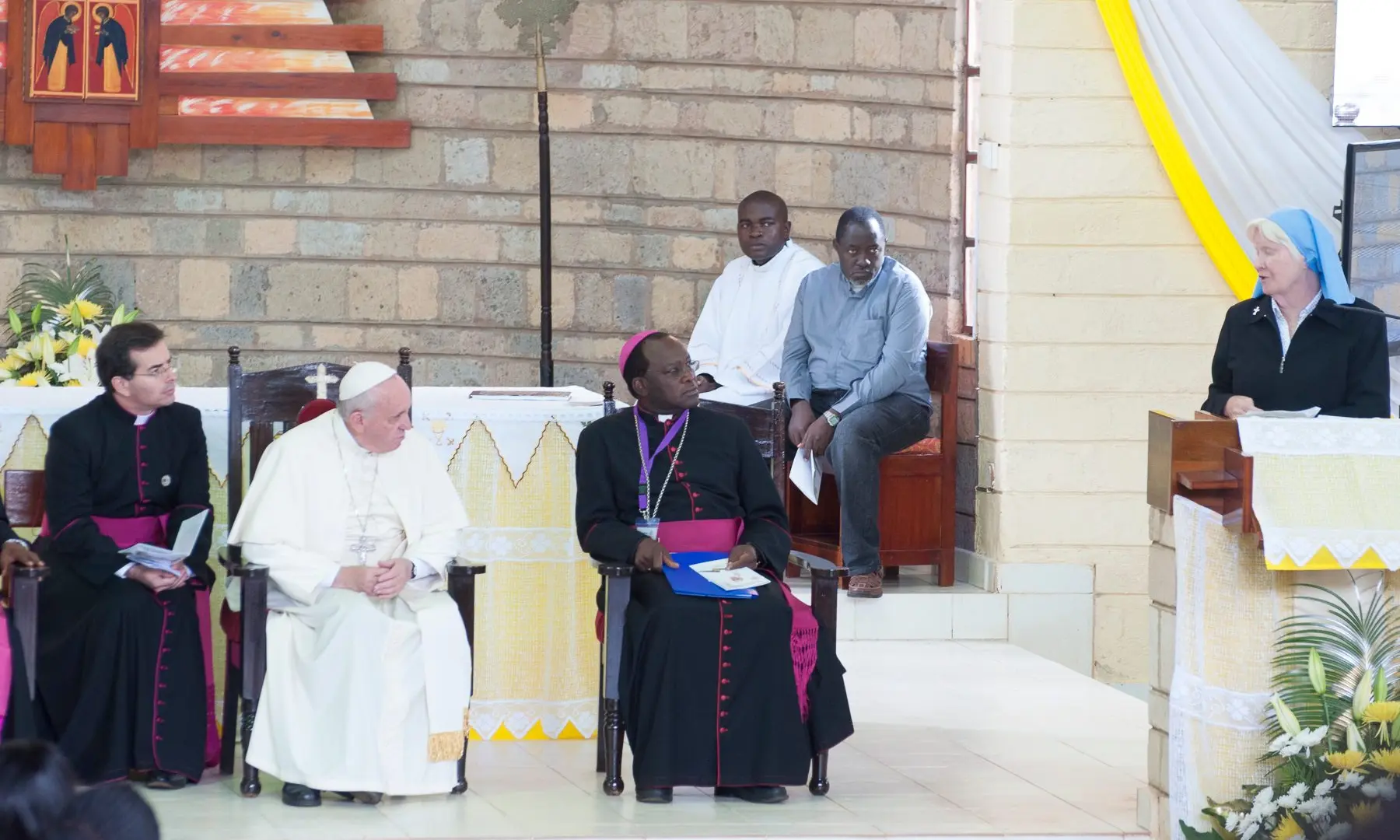
Africa’s Catholic population is the Church’s fastest-growing, yet its weight in numbers has not become weight in Rome. African cardinals remain a minority, and African dioceses depend on subventions from wealthier churches. Whether that changes will depend less on Rome than on whether African Catholics build institutional capacity of their own.
Pope Leo XIV was elected on 8 May 2025, settling the succession to Francis. The more consequential question for his papacy is whether Africa’s growing numerical weight within Catholicism will translate into institutional authority, doctrinal influence and resource allocation that reflect where the Church’s vitality actually lives.
Numbers without authority
Africa has approximately 280 million Catholics across sub-Saharan Africa and North Africa, according to the Pew Research Center (2023), with growth rates that consistently outpace every other region. The Church’s future demographic weight is African. Its current institutional authority is not. That gap, between where the membership is growing and where the power is concentrated, is a problem the Church has left unresolved for decades.
Leo’s election was conducted by a College of Cardinals whose composition reflected decades of papal appointments. As of 2024, African cardinals represented a minority of the voting body, despite Africa’s share of the global Catholic population. The mathematics of the conclave do not yet reflect the mathematics of the membership, and change in institutional Catholic time can take generations rather than decades.
Francis and the synod
Pope Francis’s rhetoric consistently placed Africa at the moral centre of the Church’s social justice commitments. His 2023 apostolic journey to the Democratic Republic of Congo and South Sudan was framed as both pastoral and political, an acknowledgement that African Catholics face specific structural challenges, including violence, poverty and political instability, that require specific pastoral attention.
The synodal process that Francis convened, the multi-year consultation of the global Church on questions of governance, inclusion and mission, sought wider participation, including African voices. Whether Leo’s papacy sustains it will be one of the most consequential decisions for African Catholicism’s structural weight within the institution.
Where the money sits
The financial architecture of the Catholic Church runs counter to Africa’s demographic position. The Vatican’s finances, the major Catholic charitable institutions, the media infrastructure and the educational endowments are concentrated in Europe and North America. African dioceses, which host the fastest growth, are among the institution’s most financially dependent, relying on subventions from wealthier churches in a patron-client pattern that mirrors, uncomfortably closely, the development finance relationships the Church itself critiques in its social teaching. An institution whose financial centre of gravity lies in declining demographic regions while its growth lies in dependent ones has a long-term sustainability problem it has not yet addressed.
Africa’s choice
African Catholic leadership, both episcopal and lay, faces a strategic choice about this gap. Quiet patience, which has been the dominant mode, maintains good institutional relations but produces incremental rather than structural change. More assertive collective advocacy, in synodal processes, in Vatican financial discussions and in the appointment conversations that precede consistories, risks the accusation of politicising the Church’s sacred processes.
The Church’s fastest-growing flock is not waiting for Rome to resolve this question on its behalf. African Christianity, Catholic and otherwise, is developing its own institutional forms, its own theological voices and its own pastoral models. Whether Rome keeps faith with Africa is, ultimately, less about whether Rome acts and more about whether African Catholics build enough institutional capacity to make the transformation of the Church on their terms an unavoidable outcome rather than a merely desirable one. The alternative is change on terms negotiated by institutions that have benefited from the current arrangement.



