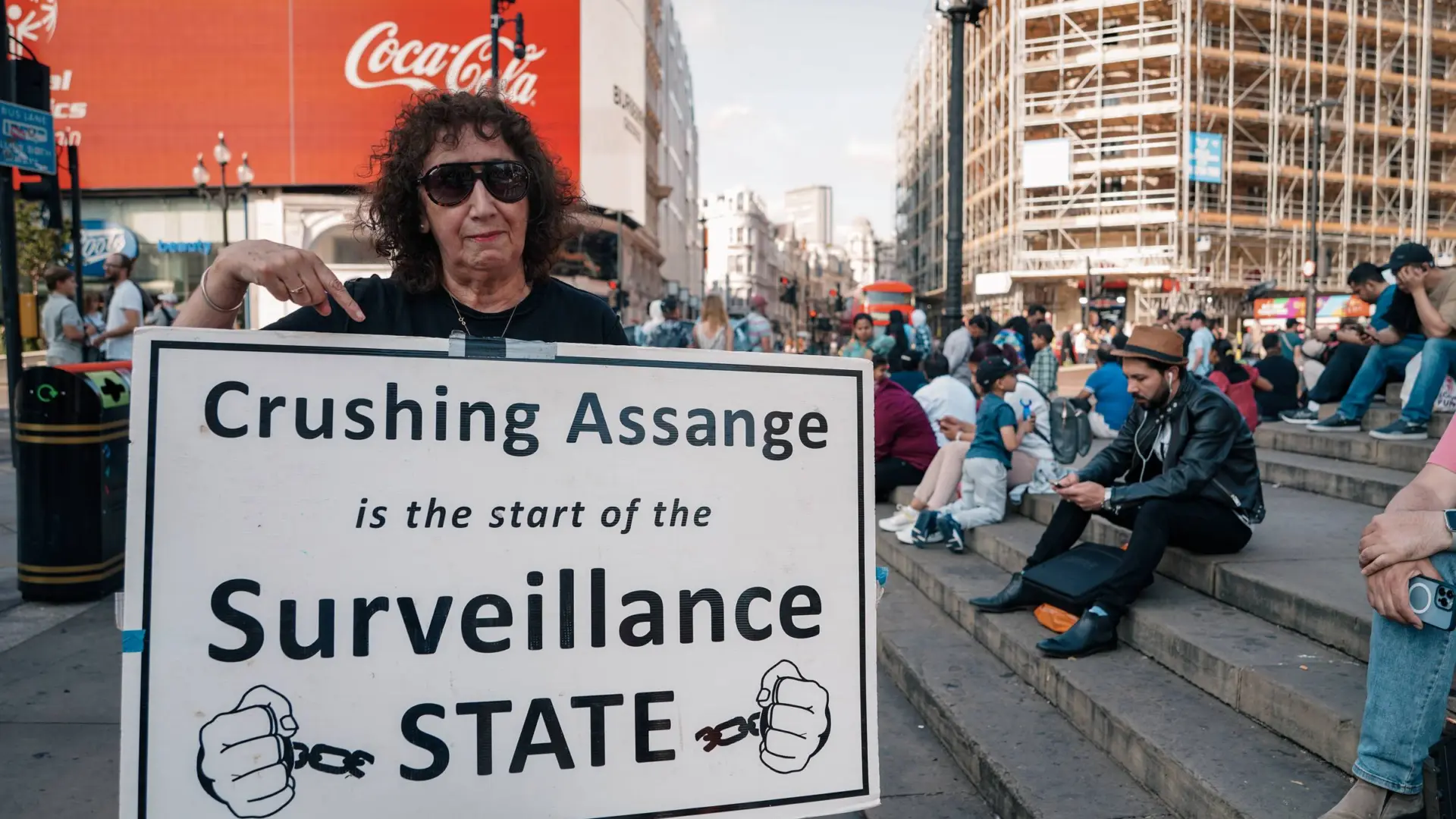
On 26 June 2024, in the US District Court for the Northern Mariana Islands in Saipan, Julian Assange pleaded guilty to a single count of conspiring to obtain and disclose classified national defence information under the Espionage Act. Chief Judge Ramona Manglona sentenced him to 62 months, the time he had already served in Belmarsh prison in London, and he left the court a free man. The plea closed his individual case after more than a decade of legal proceedings. It did not close the question his prosecution raised: what a conviction obtained by plea, with no appellate ruling on the legal theory behind it, means for journalists, editors and publishers who handle leaked state information, including those in African countries whose governments already jail reporters.
What Julian Assange pleaded guilty to
The count covered obtaining as well as disclosing classified material, and the prosecution’s account went beyond passive receipt. In the 18-count superseding indictment returned in the Eastern District of Virginia on 23 May 2019, prosecutors alleged that Assange solicited classified databases from Chelsea Manning, then a US Army intelligence analyst; that he agreed to help crack a password hash stored on a Defense Department computer so that her identity would be harder to trace; and that he published unredacted documents naming confidential human sources in Iraq, Afghanistan and elsewhere, placing those people at risk. A second superseding indictment followed in June 2020.
Press-freedom groups read the case differently. The Committee to Protect Journalists and Reporters Without Borders warned that an Espionage Act prosecution of a publisher could reach ordinary investigative reporting, which routinely involves seeking and publishing information that governments want kept secret. WikiLeaks published authentic military and diplomatic documents, including material on the Iraq and Afghanistan wars. Authenticity does not settle every question. The public interest in publication and the risk to named sources have to be weighed separately.
Press freedom applied selectively
The case makes a pattern visible. Western governments praise investigative journalism that exposes the abuses of adversaries. Their response hardens when reporting exposes their own conduct: the Iraq and Afghanistan wars and the diplomatic cables that WikiLeaks published, or the mass-surveillance programmes of the US National Security Agency that Edward Snowden disclosed through The Guardian and The Washington Post in June 2013.
The same selectivity shapes Western dealings with African governments that imprison reporters. The Committee to Protect Journalists’ annual prison census has repeatedly placed Egypt and Eritrea among the world’s worst jailers of journalists; in 2021 Egypt ranked third worldwide, with 25 journalists behind bars. Ethiopia and Cameroon appear on the census year after year, typically holding between five and nine journalists. Rwanda, often grouped with them, does not fit this measure: its census count has usually been one to three, although it prosecutes individual commentators. Many of these governments receive Western development assistance, security cooperation or diplomatic support, and press-freedom cases have seldom been allowed to interrupt those relationships. Press freedom is pressed hard against adversaries and handled quietly with partners. That is less casual hypocrisy than consistent policy.
Press freedom is pressed hard against adversaries and handled quietly with partners.
African governments do not need a precedent from Virginia to police their own press. Their crackdowns follow domestic regime-security calculations, from Ethiopia’s broad use of anti-terrorism charges during its internal conflicts to Cameroon’s prosecution of reporters covering the Anglophone crisis in military courts. Interpreting their conduct mainly as a response to Western example would misread their motives.
The burden of prolonged proceedings
The proceedings imposed a cost before any verdict. Swedish prosecutors let several lesser allegations lapse under the statute of limitations in August 2015, discontinued the remaining rape investigation in May 2017, reopened it after Assange’s arrest in 2019 and formally discontinued it on 19 November 2019, saying that the evidence had weakened over time. Assange lived in Ecuador’s London embassy from 19 June 2012 to 11 April 2019. He and his supporters argued that he stayed there to avoid onward extradition to the United States.
From his arrest on 11 April 2019 until his release on bail on 24 June 2024, he was held in Belmarsh while the British courts heard the US extradition request. On 4 January 2021 District Judge Vanessa Baraitser at Westminster Magistrates’ Court refused extradition on grounds of his mental health and risk of suicide. On 10 December 2021 the High Court overturned that refusal after accepting US assurances on his conditions of detention. On 20 May 2024 the High Court granted him leave to appeal on free-speech grounds, the ruling that preceded the plea negotiations. His 62 months in Belmarsh were comparable to or longer than the custodial terms in other US national-security leak cases: Reality Winner received 63 months and Daniel Hale 45. Delay, complexity and attrition worked as a penalty in their own right.
An untested precedent
The plea resolved Assange’s case without resolving the legal theory behind it. The US government obtained a conviction without risking an appellate ruling on the constitutional questions a contested trial would have raised. The result is a guilty plea by a publisher for obtaining and publishing classified government documents, sitting in American legal history with no definitive ruling on whether that theory is constitutional. It can be cited in future cases while its constitutional status remains untested.
For African journalists the message is specific. Press freedom is not absolute; it is managed, and states do the managing. Governments that imprison journalists can point to the Assange prosecution as evidence that the societies preaching press freedom also prosecute publishers when their own interests are threatened. Africa 360° found no record in alerts from the Committee to Protect Journalists, Reporters Without Borders or the Media Foundation for West Africa of an African official citing the case to justify a jailing. The argument would be poor jurisprudence. It would still work as political rhetoric.
The case belongs to a wider debate about legal pressure on journalism, which this site has followed from Tunisia’s Decree-Law 54 to the longer contest between African presidents and their press. Its implications should be weighed alongside safeguards for reporting, source protection and the specific conduct the plea addressed, not treated as permission for any government to repress reporters. The risk for African journalists is quieter: a precedent no court has tested, available to anyone who chooses to use it.



