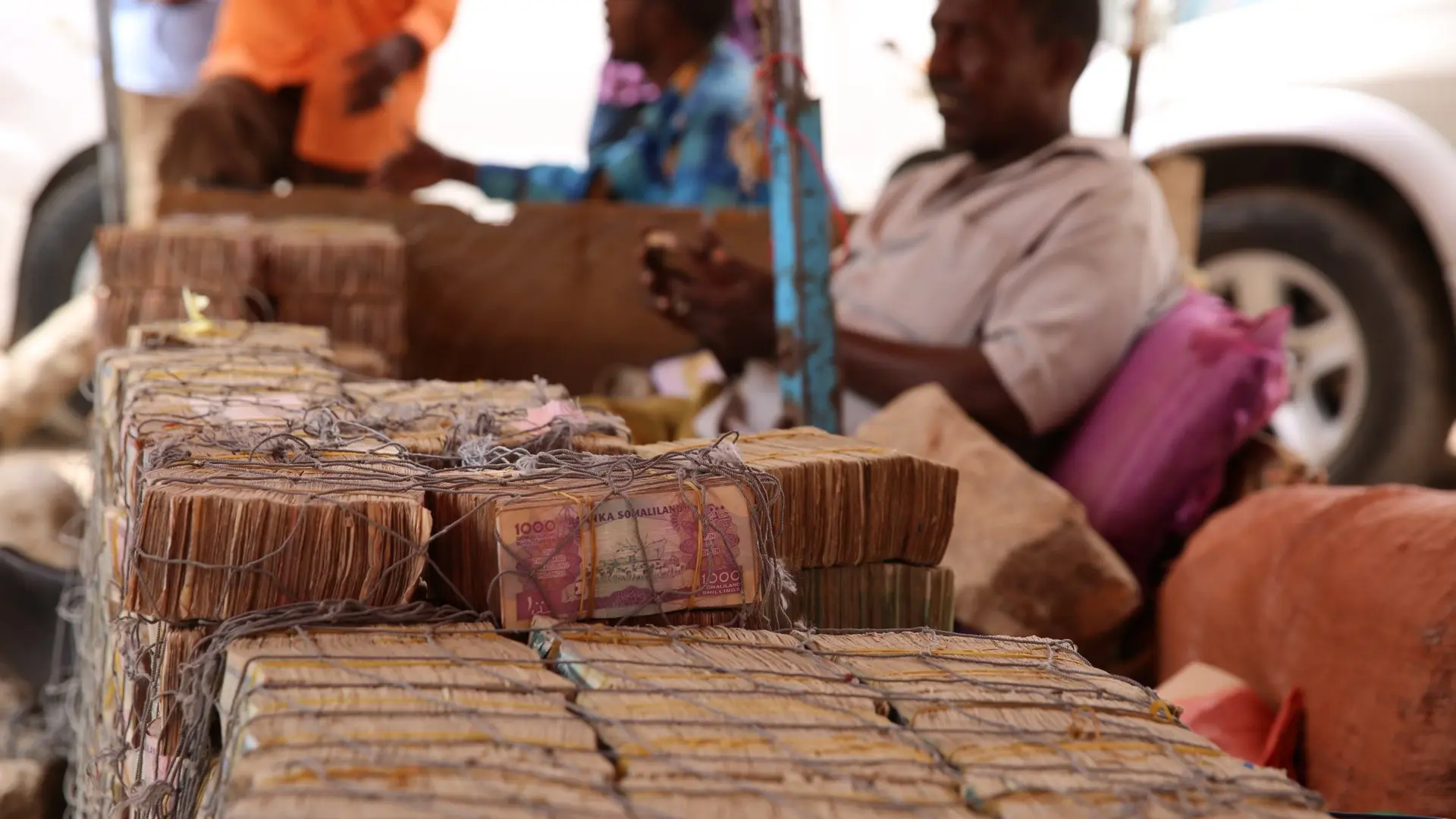
Somaliland has governed itself for more than three decades without international recognition. In August 2025, when US Senator Ted Cruz urged President Donald Trump to extend formal recognition to Somaliland, the question acquired a geopolitical frame that the African Union had long preferred to keep in the background. This analysis argues that the case tests whether the AU’s commitment to inherited colonial borders is a permanent settlement or a provisional one, and that keeping the question unanswered carries a cost.
Somaliland declared independence in 1991 after the collapse of Somalia’s central government. It developed de facto institutions and held competitive elections, while Somalia’s federal authorities continued to assert sovereignty over the territory.
The territorial question
The African Union’s doctrine of territorial integrity, adopted to prevent the cascade of secession claims its founding generation feared, is what holds recognition back. The logic was always instrumental. The colonial borders, however arbitrary, were the only available frame for state-building in newly independent Africa, and opening them to revision risked not self-determination but endless fragmentation. That logic has never been wrong exactly. It has aged badly in the specific case of Somaliland, where the facts of governance have persistently diverged from the theory of borders.
Somalia’s federal model, which assigns significant autonomy to regional states including Puntland and Jubaland, has not resolved the Somaliland question. It has deferred it. Mogadishu insists that Somaliland is a federal member state with special grievances, not a separate sovereign entity. Hargeisa insists the opposite with equal firmness. The positions are incompatible, and no mediation process has found a way to move them. Somaliland has meanwhile deepened its de facto international engagement, establishing trade relations, operating ports and airports that serve regional commerce and signing a contentious memorandum of understanding with Ethiopia in early 2024 that granted Addis Ababa sea access in exchange for a commitment to explore recognition. That MoU drew furious opposition from Mogadishu, which views it as a violation of its sovereignty, and placed Ethiopia, Somalia and Somaliland in a triangle of competing interests that the AU has struggled to manage.
Ethiopia’s interests
Ethiopia’s interest adds a regional-security dimension. Landlocked Ethiopia has a structural need for sea access, which it lost with Eritrean independence in 1993. Somaliland’s port at Berbera, developed with UAE investment, offers a viable corridor. If Addis Ababa formally recognised Hargeisa in exchange for that access, it would not be acting out of idealism about self-determination. It would be making a strategic calculation, and one with consequences for alignments across the Horn of Africa.
The AU’s policy dilemma
The question underneath all of this is one the African Union has not yet asked directly. Should the OAU’s commitment to inherited borders, affirmed in its 1964 Cairo resolution, be treated as a permanent settlement or as a provisional arrangement that was always meant to evolve as African states matured? The OAU and AU have accepted exceptions (Eritrea’s independence from Ethiopia in 1993 and South Sudan’s independence from Sudan in 2011, both ratified through referenda), but have resisted treating them as precedents. Somaliland’s advocates argue that is precisely what they should be. If the principle is self-determination through demonstrated governance, not permission from Somalia’s federal authorities, then Somaliland qualifies. The AU’s counter-argument is that principles applied selectively become no principles at all.
The cost of an unanswered question
What makes the Somaliland case uncomfortable is not its complexity but its clarity. The arguments on both sides are well understood. The governance record is publicly available. The diplomatic consequences of action can be calculated. Somaliland’s supporters and Somalia’s federal authorities advance different legal and historical claims, and a durable approach requires weighing each rather than assuming governance performance alone settles statehood. What has been missing is the political will to do that weighing in the open. The AU, individual member states and global partners have not been willing to accept that the colonial border settlement, for all its strategic utility, has a cost. That cost is being paid by Somaliland’s residents, in Hargeisa and beyond, who live under a government the international system does not recognise.



