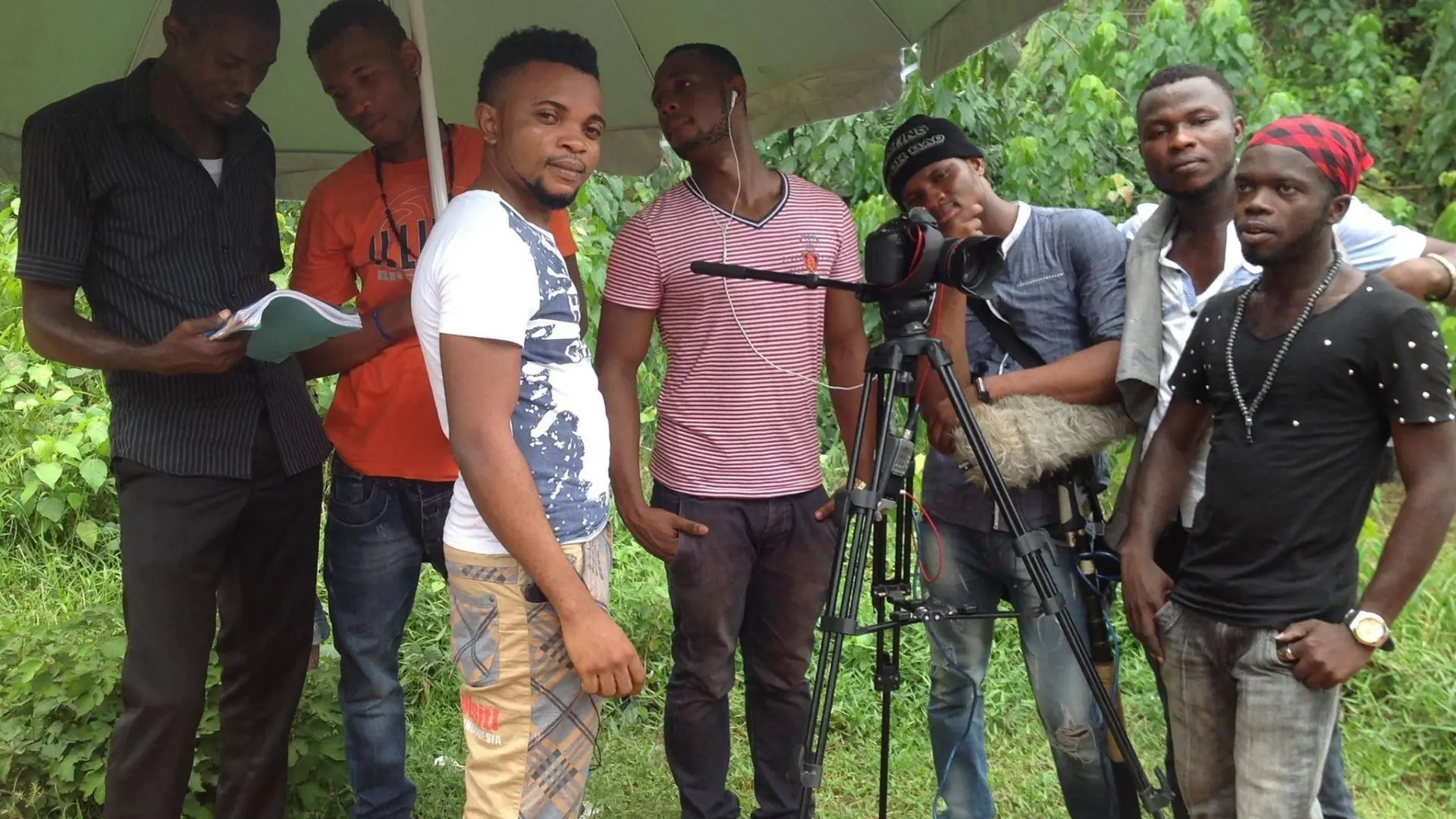
Nollywood is one of the most prolific film industries in the world. That still surprises audiences who encounter it only through the small, curated slice that appears on their Netflix homepage. Thousands of Nigerian productions are made every year, on modest budgets, and distributed through a market that built its own supply chain (direct-to-DVD sellers, informal cinema circuits, YouTube channels) outside the studio system the rest of the world associates with commercial filmmaking. That is genuine African industrial capacity, built with little state support and considerable ingenuity. What it has not yet produced is control over how the world encounters it.
Production and visibility
Global streaming changed Nollywood’s economics before it changed its power. In recent years Netflix, Amazon Prime Video and other platforms began licensing and commissioning Nigerian films and series. They offered production budgets and international polish that transformed what a Nollywood film could look like. Films like “Lionheart” and a slate of Netflix-commissioned Nigerian originals reached international audiences that the industry’s DVD and cinema networks could never have reached on their own. The visibility is real. The terms depend on negotiations between rights holders and platforms.
Under a licensing deal, a platform pays a production company for streaming rights. If the fee is fixed, the film’s later performance, whether it is watched by ten thousand people or ten million, does not change what the Nigerian producer receives. The viewership data that would show a film’s value sits with the platform, and the producer typically does not see it. Nollywood supplies the content. Netflix keeps an important influence on how viewers discover a film through the data, and the algorithm built on it.
Nollywood supplies the content. Netflix keeps an important influence on how viewers discover a film through the data, and the algorithm built on it.
How recommendations affect discovery
Whether a given Nigerian film reaches a South African, Brazilian or British subscriber depends on a recommendation system whose logic the platforms do not disclose and the producers cannot audit. Placement in a national row rather than a global one is a platform decision, not a neutral reflection of quality, and African producers have no seat in designing the system that makes it. The gatekeeping that once ran through cinema distributors and DVD wholesalers has not disappeared. It has moved into a recommendation engine owned by a company headquartered in California.
What distribution ownership could change
South Korea offers a contrast. Its film and television industry benefited from state-backed investment in production infrastructure and export promotion that treated cultural exports as strategic industry rather than informal enterprise. Nollywood has achieved its scale with little such support, which is why the gap is a policy failure rather than a talent gap. Nigeria has the content. It does not yet have the domestic platform infrastructure, the data leverage or the state investment that would let its own industry, rather than a foreign licensing partner, decide what global success looks like and who captures the value when a film travels.
None of this diminishes what Nollywood has built. It created a Nigerian and pan-African audience for Nigerian stories before any foreign platform noticed it existed. That audience is the one asset the streaming platforms did not create and cannot easily replicate. The unfinished work is converting that leverage into ownership of distribution, not just supply of content, so that the next decade of Nollywood’s global rise can be negotiated from a position that reflects the size of the industry. Owning the pipeline that decides who watches is the part still being negotiated, film by film, on someone else’s terms.



