President Muhammadu Buhari has told the Central Bank of Nigeria (CBN) to stop providing foreign exchange for food imports. “Don’t give a cent to anybody to import food into the country,” he said, in a statement issued by his Senior Special Assistant on Media and Publicity, Mr Garba Shehu, on 13 August 2019. The reason he gave was that Nigeria had solved its food problem. “We have achieved food security, and for physical security we are not doing badly,” he said, as the presidency’s statement reported.
If the claim is wrong, the policy will make food dearer for millions of poor Nigerians. This article argues that, given the country’s poverty and insecurity, the claim does not hold, and that the poor will pay for the policy.
The directive does not ban food imports. It means that any businessman or businesswoman who uses foreign currency (yuan, dollars, pounds and so on) to import food will have to find it elsewhere, because the official market will no longer supply it. The president also urged the states to key into his government’s agricultural policies to secure further food supply.
What food security means
Food security is not hard to define. It means that food is available and that people can get it. A household is food secure if its members do not live in hunger or fear of starvation. The UN Food and Agriculture Organization (FAO) defines food security as the situation when all people, at all times, have physical and economic access to sufficient, safe and nutritious food that meets their dietary needs and food preferences for an active and healthy life. Food security therefore covers physical access to food and affordability, meaning that people can pay for the food that is available.
That makes food security quite different from food sufficiency. It is not clear whether the government has done well on sufficiency. Its record on food security is easier to judge, and the data show that it still has a great deal to do. The FAO estimates that 46.1 million Nigerians, roughly one in four, were severely food insecure between 2015 and 2017, ICIR reported. According to the FAO and the World Food Programme, about 2.3 million people faced acute food insecurity in Borno, Yobe and Adamawa states in March to May 2018.
In the 2018 Global Hunger Index, Nigeria ranked 103rd of the 119 countries covered, evidence that many Nigerians go hungry. The United Nations Development Programme’s 2018 report put Nigeria 157th of 189 countries on the Human Development Index. Nigeria has more than 200 million people, and agriculture is one of the mainstays of its economy. Yet hunger and poverty remain widespread, and they are worst in rural areas.
Most farmers practise subsistence agriculture, growing food for their households with little left to sell. An FAO-backed assessment of food and nutrition security in 16 states in 2016 found considerable food insecurity and vulnerability.
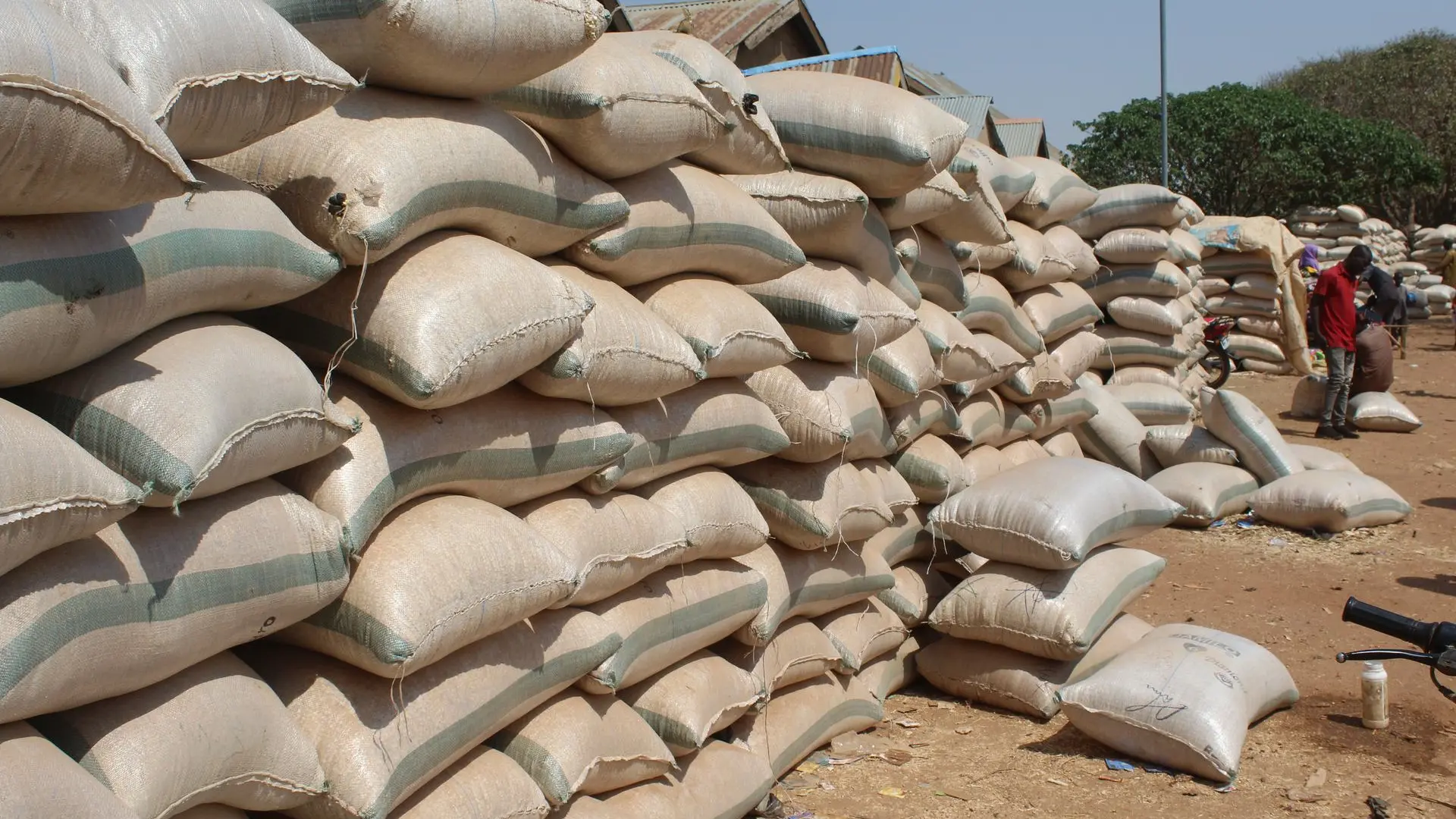
The evidence suggests that Nigeria has focused on food sufficiency and neglected the more important goal of food security. As a result, food is neither physically available nor affordable for many who need it. Take rice. Nigeria’s rice production has risen sharply in recent years, but not enough to meet demand. Nigeria needs between 6.3 and 7 million tonnes of rice a year, according to figures cited by ICIR, while Dubawa put domestic supply at only 2.3 million tonnes. Vice-President Yemi Osinbajo himself said in July 2019 that Nigeria was approaching self-sufficiency in paddy rice but had “not come to the extent of self-sufficiency in processed rice”.
Poverty and insecurity, where the president missed the point
In the author’s view, President Buhari has oversold his record in office. His directive, made on the belief that Nigeria is food secure and self-sufficient, is the latest of several claims by his government that the evidence does not support. It is hard to say exactly how food secure Nigeria is, but the available evidence shows that much remains to be done.
Without official foreign exchange for imports, Nigerians will pay more for many foods. Rice already costs more to produce in Nigeria than abroad, so imported rice is cheaper than local rice. Mr Osinbajo said as much on 14 July 2019. “We used to import about $5million of rice daily,” he said, adding, “But local rice is still more expensive.” The first effect of the directive will therefore be scarcity of some foods, followed by higher prices.
This is why many commentators call the directive insensitive to the plight of the poor. According to the World Poverty Clock, about 94 million Nigerians live in extreme poverty. It is hard to see how they will cope with higher prices for staples such as rice, garri and tomatoes. The government may disagree, but Nigeria as it stands lacks the capability and capacity to meet its people’s food needs.
Alongside affordability is the question of whether Nigerians can physically reach food even when they can pay for it. Insecurity has made it harder to produce and distribute food. For years, ethno-religious conflict and terrorism have devastated food production. In March 2018 the FAO listed Nigeria among 37 countries needing external food assistance, with conflict a main driver.
Besides the Boko Haram crisis, conflict between farmers and herders is driving farmers off their land, with direct effects on food production. A survey by the National Bureau of Statistics (NBS) and the World Bank of food insecurity in conflict-affected regions, carried out in 2017, found that the average household in the North East, North Central and South South was highly food insecure. Cutting meals or portion sizes was the most important way of coping. High food prices were the main source of food insecurity in all three regions, and conflict made matters worse by cutting production and disrupting markets.
This is where President Buhari missed the point when he said Nigeria had achieved “food security” and was not doing badly on “physical security”. A country can hardly be food secure without a reasonable level of physical security, so that food can reach every part of the country unhindered. Insecurity in Nigeria, from Boko Haram in the north to farmer and herder clashes in the South South, North Central and South West, and banditry and kidnapping across the country, has made food security hard to achieve.
Is the foreign exchange directive in the people’s interest?
The directive continues the government’s economic policy. Soon after taking office in 2015, President Buhari voiced his dissatisfaction with Nigeria’s heavy reliance on imports. In June 2015 the CBN barred 41 product categories, rice among them, from the official foreign exchange market. Since then, domestic output of these staples has not kept up with growing demand, and prices have risen, a burden on ordinary Nigerians.
The aim is sound, but agriculture’s failure to raise output has made the policy unpopular. With the new directive, farmers will have to produce more, or the people will suffer more. The directive will only work once food production has risen enough across the country. With insecurity spreading, output is unlikely to rise far enough to spare Nigerians the effects of the forex withdrawal.
It is hard for Nigerians to share their government’s view when they bear most of the burden of its policies.
Since 2019
The evidence since then has not supported the 2019 claim. In the 2026 Global Hunger Index, Nigeria ranks 117th of 122 countries, with a score of 34.3, a serious level of hunger. The Cadre Harmonisé analysis of November 2025 projected that about 34.7 million people in 27 states and the Federal Capital Territory would face crisis-level food insecurity or worse between June and August 2026, including about 2.8 million in Borno, 1.6 million in Yobe and 1.4 million in Adamawa. In October 2023 the CBN lifted the foreign exchange restrictions on the 43 items then on its list.



