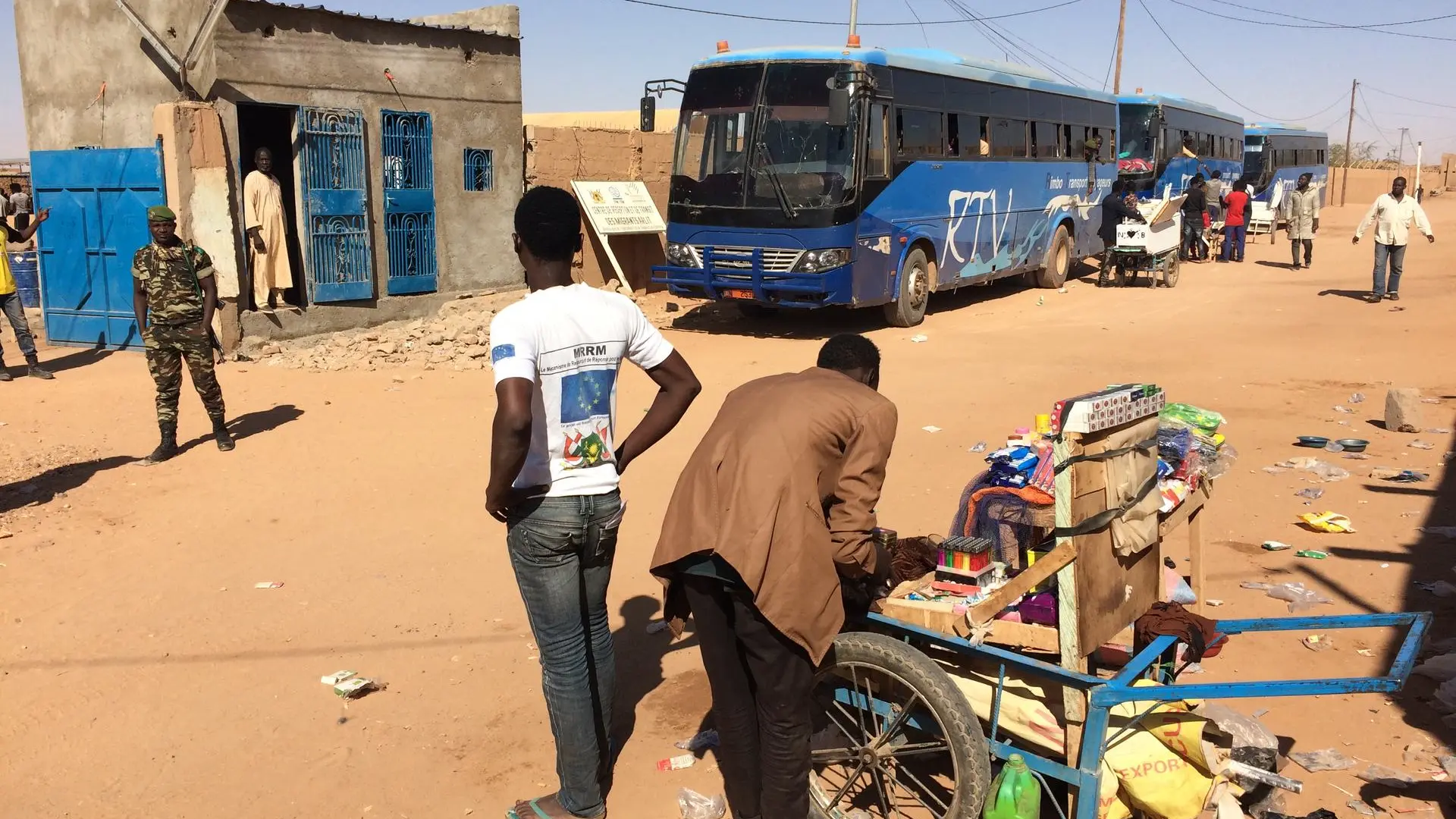
A UN report in 2018 made the case for the benefits of migration, and noted that most African migrants move within the continent. In this author’s view, that is no reason for Africa’s leaders to celebrate. The insecurity, poverty and lack of opportunity that push people to leave, legally or illegally, are not going away, and they are what leaders should be addressing.
What the UN report says
The UN Conference on Trade and Development (UNCTAD) has launched its Economic Development in Africa Report 2018: Migration for Structural Transformation. At the launch, UNCTAD’s Secretary-General, Mukhisa Kituyi, said that “contrary to some perceptions, most migration in Africa today is taking place within the continent.” According to the report, in 2017, 19 million migrants moved within Africa while 17 million Africans left the continent. Africa is also a migration destination for 5.5 million people from outside the continent.
Kituyi also said that population movements across borders often offer individuals “a chance for a better life”, with the social and economic benefits extending to both source and destination countries, as well as to future generations.
Kituyi, a Kenyan who once served as his country’s trade minister, believes public debate on African migration is “rife with misconceptions that have become part of a divisive, misleading and harmful narrative.” The human toll of the journey is not a misconception. Since 2014, 22,500 migrants have reportedly died or disappeared globally, according to the IOM’s Fatal Journeys report, more than half of them in their attempt to cross the Mediterranean. African migrants were being sold in Sabha, one of Libya’s smuggling hubs, for $200 or $500 and held on average for two to three months, as the IOM reported in April 2017.
The cost of leaving
It is good news that so much African migration stays on the continent and that Africa also draws migrants from elsewhere. It does not change the fact that lives are still lost in the bid to leave.
The toll has kept rising. By November 2026 the International Organization for Migration’s Missing Migrants Project had recorded 86,671 people dead or missing on migration routes worldwide since 2014, 35,707 of them in the Mediterranean, figures it describes as minimum estimates.
Migration is no doubt a great tool for economic development. It brings remittances and helps transfer skills. But in the author’s view the benefits are not sustainable while the conditions at home stay as they are. Businesses set up with remittances and returning skills struggle where there is still poverty, where basic infrastructure such as electricity and transport networks is lacking, and where wars, environmental disasters, insecurity and a shortage of jobs persist. These push factors are what make Africa less attractive to its own people and to others.
The root causes must be addressed
Pointing to the benefits of migration, instead of getting to its root causes, leaves Africa where it is. The UNCTAD report is no reason for self-congratulation. People should not have to leave their homes because of harsh conditions in the first place, and the core reasons behind the movement must be addressed.



