What now for the region
The oil may not last. In the last week of June 2017 the Minister of State for Petroleum Resources, Dr Ibe Kachikwu, speaking for President Muhammadu Buhari at a labour conference in Abuja, said: “Our oil estimate as per reserve is at best about 25 to 30 years, while gas estimate is over 60 years”.
If fifty years of oil did not bring the Niger Delta development, there is little reason to expect the next thirty to do so, especially with oil prices well below their earlier peak and the economy in recession. The environment has been badly damaged, communities have been divided and livelihoods have changed. This final part argues that the region needs remediation and serious leadership now, before the oil it depends on loses its value, and sets out how activists and scholars think that can still happen.
The world is also moving on. Technology is tilting energy markets towards renewables, and some countries have set timelines for moving cars to electricity alone. Over time, that is likely to reduce the price and relevance of crude oil.
Is there still hope
Has the region exhausted its agitation? Gomba thinks not:
Well, I think it will be a shame, if we ever come to a point where we exhaust our capacity of protest. …in every struggle, there will be high and low moments, there will be plusses and minuses. So if it appears that today, there is a bit of silence, even complicity in the region, it does not mean that the struggle is dead. Now this is very important in our understanding of the history of struggles around the world: as long as injustice persists, resistance will also persist. It does not mean that there will be an equal tempo all through the periods but the truth is that resistance does not die. The nature of oppression itself makes it impossible for the oppressed to swallow oppression and not fight against it.
We keep talking about this because we believe that there is hope. If we stop talking about it, it is going to be a hopeless situation. But as we keep this topic in the currency of our conversation, it means that there is a possibility of coming to the time when we will have the capacity to address them. So frankly, there is hope.
Pyagbara is also hopeful and resolute. “For me, you don’t stop making your points clear. We’ll continue to present our template. We can’t go back until justice is achieved.”
Kaine Agary has this to say:
We haven’t lost the strength. The much that must be done lies in the leadership: the local, state and central governments. I don’t think that at any level, the leadership has shown any seriousness in addressing some of the issues in the domain. The local leaders should show more seriousness in their leadership and development of the region.
Dr Peter Medee has some advice for the people of the region:
The Niger Delta should emulate the model of the Ogoni people. We need nonviolent struggle because you don’t destroy the pipeline and you say you are fighting the federal government. You destroy the ecosystem, the waterways, air and soil, thinking you are dealing with someone in Abuja. It’s like when a goat urinates in its sleeping place with the mind that it is doing it to the owner of the house. The nonviolence struggle is paying off. Other parts of the region must emulate it.
Restructuring the country
For Prof Andrew Efemini, however, the region can only be saved if the whole country is restructured politically. The academic is highly critical of the ethnic clamour in the region. In his view, what he calls ‘enclave politics’ springs from the failure of the national leadership to do the right thing, and from the poor education of the people. The only solution is for the country to restructure, so that it can invest properly in areas outside oil.
…all those group sentiments don’t mean anything to me because of my level of education. They don’t even excite me. There’s no statement to be issued by Urhobo people that I will start clapping. Urhobo will be this or that, those things don’t excite me. All those things like MOSOP, they don’t excite me because they are enclave agitations which cannot be an end in themselves. If we don’t restructure, Somalia will be better than Nigeria very soon…. All these things you are seeing: Niger Delta Militancy, Boko Haram, and Biafra are effects of a non-restructured, dysfunctional society. And you see how they handle them: suppress! More soldiers. More military. Anarchy! That will soon be our fate.
A region that needs attention now
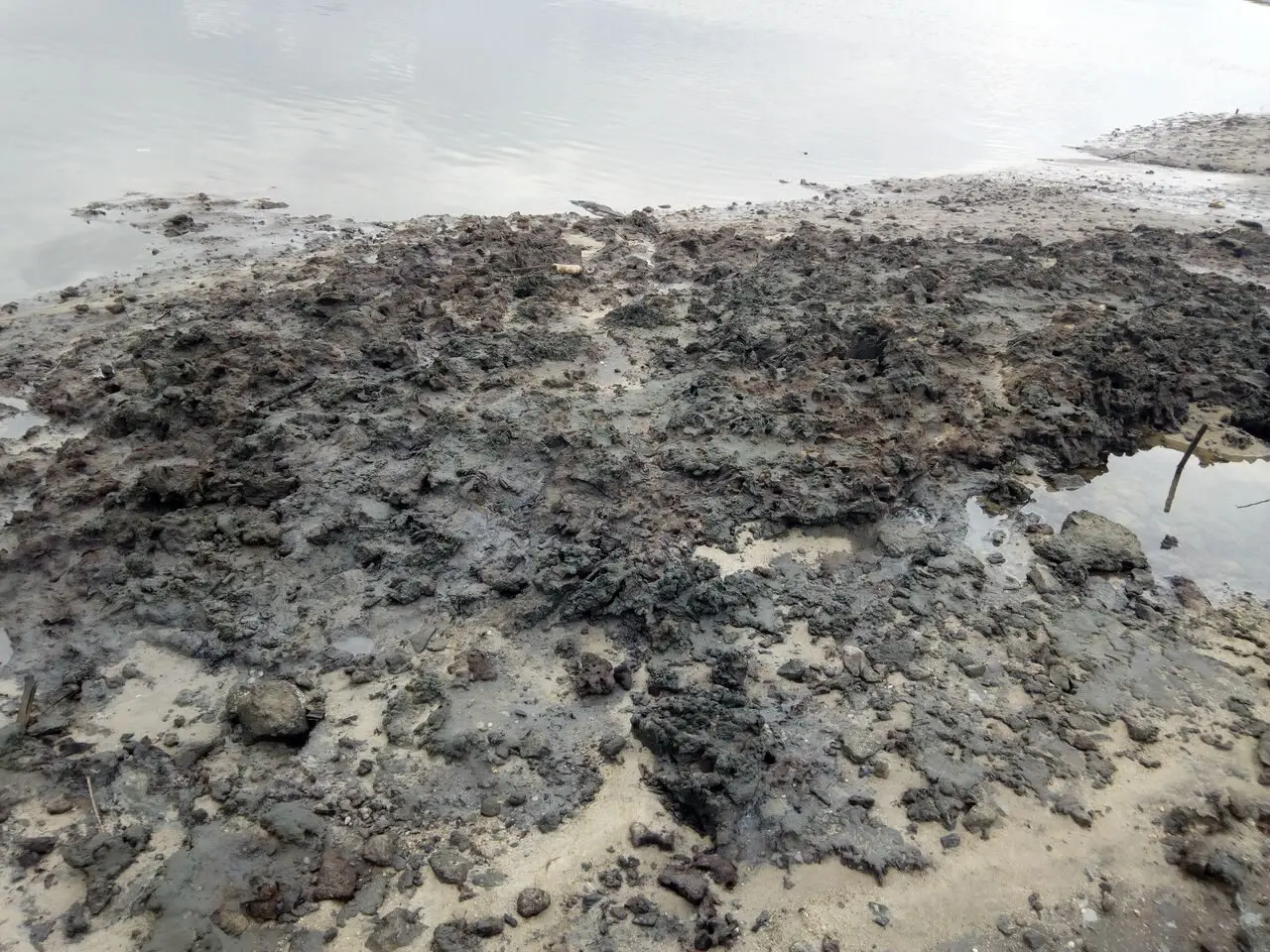
In the end, it all comes down to one thing. The Niger Delta needs attention, and it needs it urgently. The environmental damage shows in many ways, such as the black soot seen over the city of Port Harcourt in the months before the rains began in 2017.
The effects are also social. Where illegal bunkering and militancy appear to pay better than schooling, some young people take bunkering bosses and militants as role models, and recruitment into armed groups becomes easier. A lot needs to be done by the government, the companies and the people. The region must be healed of fifty years of industrial damage before the oil becomes economically useless to everyone.
Since this article was first published, Shell has left the onshore delta. It completed the sale of its onshore subsidiary, SPDC, to a Nigerian consortium, Renaissance Africa Energy Holdings, in March 2025. Claims by residents of Bille and Ogale that Shell is liable for oil spills on their land are before the High Court in London. In a preliminary judgment in June 2025, Mrs Justice May ruled that Shell could still be held liable for spills, without making any finding on the facts, and a four-month trial is due to start in March 2027.



