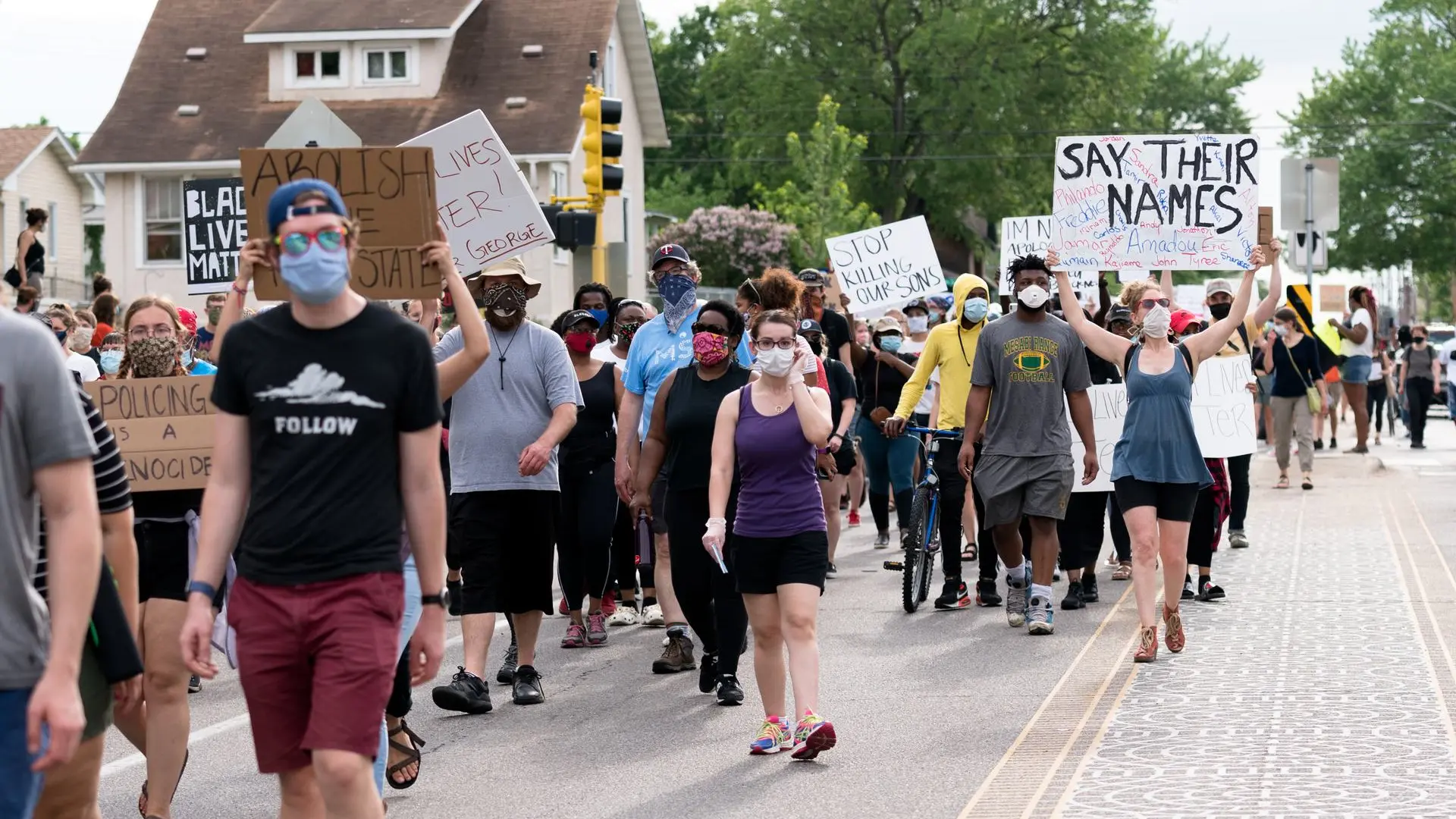
Racism is a man-made hierarchy, not a fact of biology. George Floyd’s killing in May 2020 drew protests across the world, and rightly so. Africa’s own prejudices draw far less attention: xenophobic violence in South Africa and tribalism in Nigerian politics. This analysis traces where the idea of race came from and why protest alone has not ended racism, and argues that the same scrutiny belongs at home.
Where the idea of race came from
The practice is old, but the word “racism” came into wide use in the Western world only in the 1930s. Before the 19th century, writers had already sorted humanity into categories such as Mongoloid, Caucasoid and Negroid. Those categories rested on stereotypes, not on genetic difference. Prominent scientists of the 17th and 18th centuries gave them authority by promoting the idea that the human race was unequal, and dissenting voices were largely ignored.
One widely cited definition, from Hoyt Jr. (2012), describes racism as the belief that all members of a purported race share characteristics, abilities or qualities specific to that race, especially in a way that marks it as inferior or superior to another race or races.
Why racism persists
Laws have not ended it. The United Nations convention on racial discrimination states that superiority based on racial differentiation is “scientifically false, morally condemnable, socially unjust and dangerous”. Racist acts have continued regardless.
The psychologists Phia Salter, Glenn Adams and Michael Perez (2018) argue that racist tendencies are not simply the natural product of an inborn disposition. They develop as people engage with cultural worlds that encourage and ease racialised experiences and racist habits of mind.
George Floyd and a history that repeats
Floyd, a Black man, was held face down while a white police officer knelt on his neck. He was heard begging for his life, repeating “I can’t breathe,” and was pronounced dead soon afterwards. Months earlier, Ahmaud Arbery, a 25-year-old Black man, had been chased and killed by armed white men.
Bryan Stevenson, founder and executive director of the Equal Justice Initiative, has long argued that Black Americans live under a presumption of guilt rooted in that country’s history. As his organisation puts it, “A presumption of guilt and dangerousness makes people of color vulnerable to racial violence”.
The pattern is not new. In 1991 Los Angeles police officers beat Rodney King with batons, and riots followed their acquittal in 1992. Twenty-eight years later, the same kind of act produced the same unrest.
Why protest is not enough
Protests have drawn promises and words of support, but they have not stopped racist violence. Their short-term aim is justice in individual cases. Their long-term aim is policy reform that makes Black lives safer, including laws on how prosecutions are conducted.
The author argues that protest needs economic and electoral weight behind it. Black consumers can direct their spending to Black-owned businesses and use boycotts where they have leverage, keeping more money within Black communities. Black voters, in the author’s view, carry most weight when they vote as a bloc. Neither step is meant to punish white businesses. Both are forms of self-emancipation, and both demand consistency over years rather than weeks.
Xenophobia in South Africa
In 2019, foreign nationals seen as a threat to local livelihoods were attacked in parts of Durban, Pretoria and Johannesburg. The violence drew reprisals elsewhere on the continent, where South African-owned businesses were targeted in Nigeria, Mozambique and Zambia. Earlier in 2020, refugees staged sit-in protests on the streets of Cape Town.
None of this drew more than a fraction of the international attention given to racism in the United States.
Tribalism in Nigerian politics
Tribalism, loyalty to an ethnic group placed above loyalty to the nation, is a local prejudice of the same kind. In Nigeria, the civil war left grievances that still shape politics, and government appointments are routinely questioned on ethnic grounds. That this draws so little sustained opposition is troubling, because it undermines any claim to African unity.
The same energy, turned inward
Racism in every form deserves to be confronted. The energy Africans spent opposing it abroad should also be directed at xenophobia and tribalism at home. In the words of Nelson Mandela, “A fundamental concern for others in our individual and community lives would go a long way in making the world the better place we so passionately dreamt of.”



