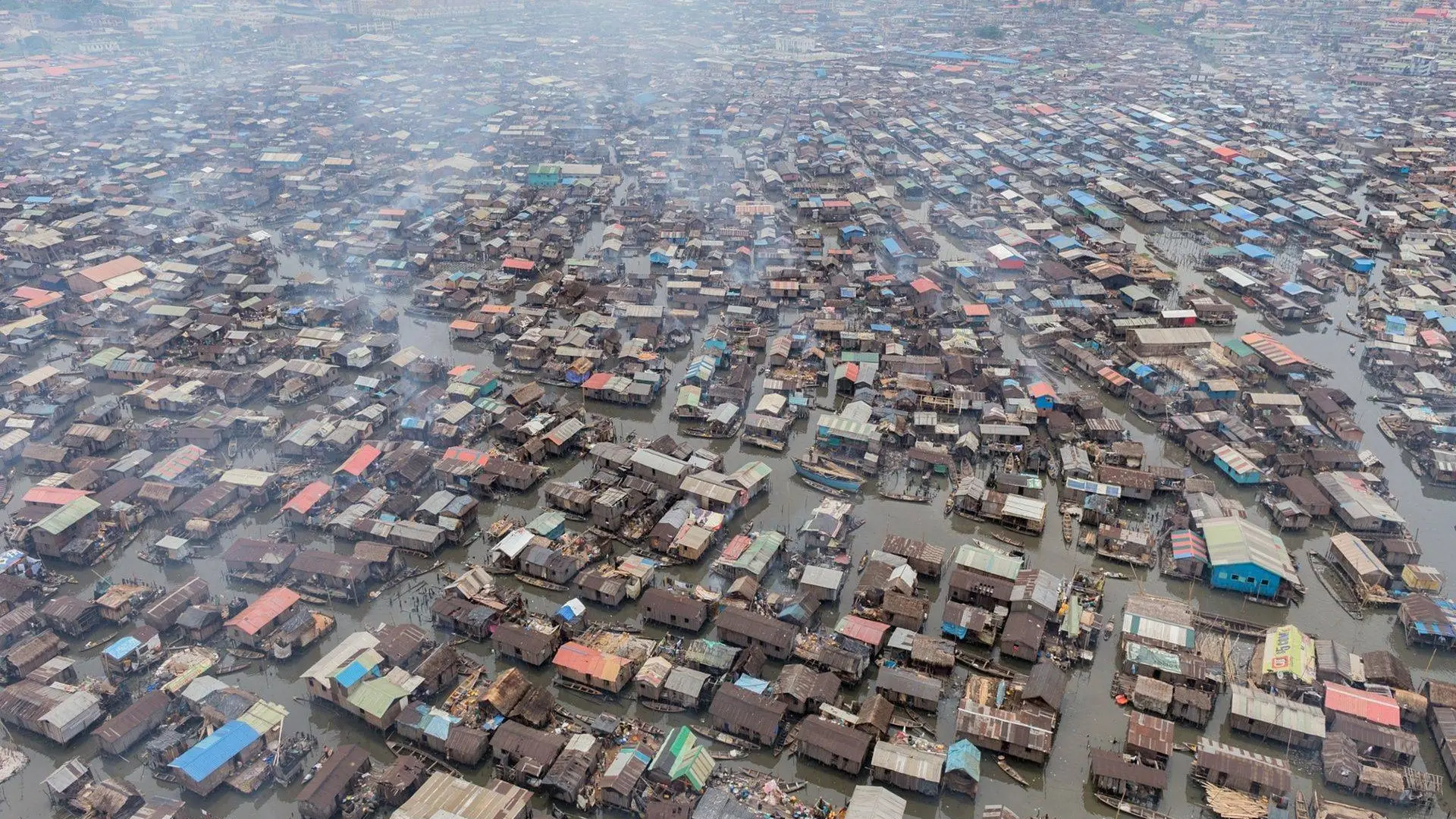
I once met a wealthy father with vast riches at his disposal whose children could not count on three square meals, let alone a comfortable life. Nigeria is that father, richly endowed but unable to feed its citizens. This analysis argues that weak regulation of the oil industry, corruption and reforms that never reach the poor have made a blessed country one of unblessed citizens.
Data from the World Poverty Clock, published by the Brookings Institution in June 2018, showed that by the end of May 2018 Nigeria had about 87 million people living in extreme poverty. On those projections, Nigeria had already overtaken India in early 2018 as the country with the largest number of extremely poor people, and the Democratic Republic of Congo could soon take the number 2 spot. India had 73 million people in extreme poverty against Nigeria’s 87 million, and extreme poverty in Nigeria was growing by six people every minute. Seven years on, the World Bank estimates that in 2025 50.8% of Nigerians, or 123 million people, lived in extreme poverty, and that over 60% lived below the national poverty line.
A rich country with poor citizens
Nigeria, a country of about 200 million people, has everything it needs to thrive and feed its citizens. It is Africa’s most populous country, blessed with vital natural and human resources. For a country with so much wealth and a population large enough to sustain commerce, this level of poverty is unacceptable.
Nigeria is also the continent’s largest crude oil exporter. The oil and gas industry has had its troubles, but the country still leads Africa. In January 2026 it extracted about 1.55 million barrels of crude a day, the 13th highest output in the world and the most in Africa, according to figures on world oil production.
Children pay the price
In March 2018, the International Monetary Fund reported that Nigerians were getting poorer and stressed the need for coherent and comprehensive economic reforms. Children beg for alms on the streets, even during school hours. Many beg on pedestrian bridges with children in tow. In Lagos, women have been arrested for begging with borrowed babies, and one woman drew wide attention for begging on a pedestrian bridge in Ikeja with “triplets” she could not show were her own.
Other children hawk on the streets to make ends meet, some of them to pay their school fees, as a drive along the Lagos expressways shows.
In Ebonyi State, stone-crushing sites and lead mines use children as cheap labour. Miners hire children to work during school hours, exposing them to hazardous substances and to diseases such as kidney disease, lung cancer and tuberculosis. Few parents would send a child into such hardship unless they were battered by poverty.
Poverty drives child labour in Nigeria. As more Nigerians fall below the poverty line, the country should prepare for more child labour, more out-of-school children, falling literacy, a lower human development index and further decline in the indicators of economic growth.
Denial in Abuja
A Yoruba proverb says that if you are being deceived, you should not deceive yourself. Even with these statistics staring us in the face, the federal government has called them a fallacy and bad-mouthing. It dismissed the Brookings findings that made Nigeria the new world headquarters of poverty. The Minister of Industry, Trade and Investment, Okechukwu Enelamah, said the indices behind the report may have been compiled while Nigeria was in recession. Reports with lagging indicators, he said, were “reporting on history”, and poverty would go down once the government’s infrastructure plans were delivered. “There is no magic to it,” he added.
The poverty rate keeps rising, and the masses have yet to feel the policies and programmes.
Oil, curse or blessing
Whether crude oil, the country’s main source of income, is a curse or a blessing has long been hotly debated. Other countries explore and export oil and do well. Saudi Arabia’s economy is fuelled mainly by oil revenue, and its development projects have turned a once struggling economy into a modern one. Nigeria, for all its oil, is nowhere near it.
According to the IMF’s 2017 figures, Nigeria’s GDP per capita at purchasing power parity was 5,927, against 55,263 for Saudi Arabia. GDP per capita at purchasing power parity is used to compare national wealth and is one of the indicators of a country’s standard of living. In the UNDP’s 2016 Human Development Report, Nigeria’s human development index was 0.527 and Saudi Arabia’s 0.847. The gap has since widened. In the UNDP’s latest index, for 2023, Saudi Arabia scores 0.900 and Nigeria 0.560, according to the list of countries by human development index.
Unlike other oil-producing countries that have developed, Nigeria has only stumbled along. In the author’s view, the country has failed to regulate the international oil companies properly and has left them to extract oil with too little oversight. Little wonder that oil spills, a major concern in the Niger Delta, have yet to be properly addressed. The Petroleum Industry Act, signed by President Muhammadu Buhari in 2021, has since created new regulators, among them the Nigerian Upstream Petroleum Regulatory Commission.
Many people in the Niger Delta live in poverty because their resource has become a curse on their land. Pollution from oil has fouled the air, water and farmland in parts of the delta, yet the resource behind the damage does little for local people’s well-being.
Unblessed citizens
Nigeria is blessed, yet its citizens are unblessed. Corruption has eaten deep into the system and diverts public funds that should serve them. The average Nigerian seeks shelter, food, good roads, opportunities to create, sound education and good healthcare.
What the country needs is sound, comprehensive and coherent reform that the masses can feel, not reform dangling in the air while we wonder where the money went. This is not the time to boast about 5,000 naira handed to poor families in some states. In the author’s view, such handouts are a misplaced priority. There would be no need to hand out a single naira if policies and reforms were enacted, implemented and monitored.
Fatherland, it is time to share the wealth with your children and grandchildren. Nigeria has yet to give its children fish, let alone teach them how to fish.



