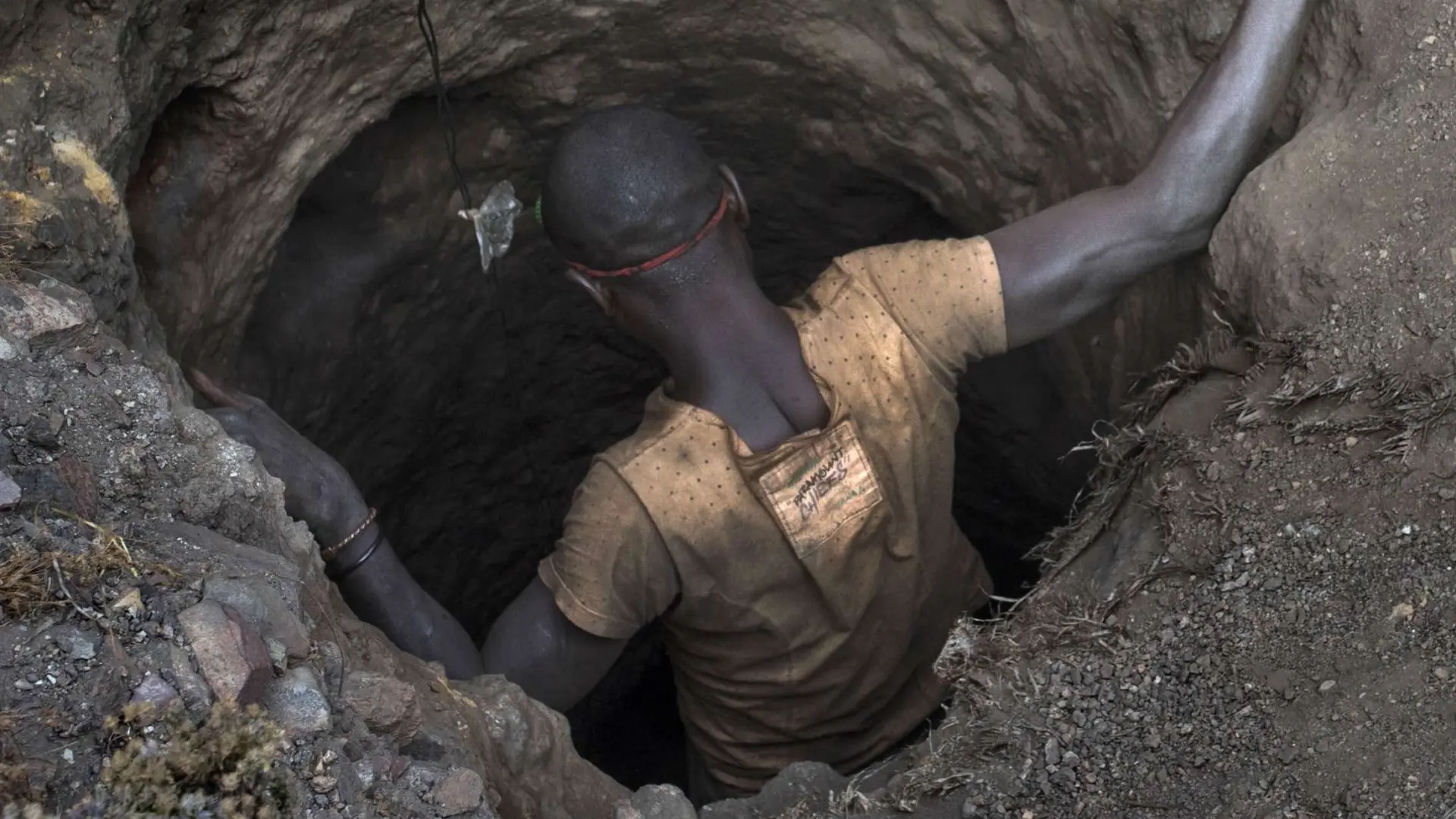
Electric cars are sold as part of the answer to climate change. Few of the people who buy them think about what goes into their batteries, or that much of the cobalt in them is dug in DR Congo, in some cases by children working in dangerous conditions. This analysis argues that the firms at the top of the supply chain, which profit most from the clean-energy boom, have done too little to keep those abuses out of their products.
Demand is rising fast. The UK government had set a target of 2040 for ending sales of new petrol and diesel cars, and in February 2020 it consulted on bringing it forward to 2035. In April 2025 the UK government confirmed that sales of new petrol and diesel cars will end in 2030, with hybrids allowed until 2035. The International Energy Agency’s latest count at the time put the global fleet at 5.1 million electric cars at the end of 2018, as pv magazine reported. By 2025, more than 20 million electric cars were sold in a single year, and one in four new cars sold worldwide was electric, according to the IEA’s Global EV Outlook 2026, as reported by Down To Earth.
It is generally accepted that electric vehicles are better for the environment than petrol and diesel cars. But the cost of that cleaner future is borne somewhere else.
DR Congo at the heart of a clean future
The Democratic Republic of Congo is rich in minerals, among them diamonds, copper, gold and uranium. Yet it remains one of the poorest countries in the world, and it is at the heart of the clean-energy economy.
Rising demand for electric cars has driven up demand for cobalt, a key component of laptops, mobile phones, tablets and, above all, electric car batteries. In 2019, DR Congo produced about 70 per cent of the world’s mined cobalt, according to the US Geological Survey, and no other country produced more than six per cent. By 2025 its share stood at 73%, down from 77% in 2024, according to the Cobalt Institute’s Cobalt Market Report 2025. Since 2019 Indonesia, where cobalt is mined as a by-product of nickel, has become the second largest producer, with 14% of mined supply in 2025, the same report says.
Most of that cobalt comes from the Katanga Copperbelt in the south of the country, which is why DR Congo is a destination of choice for battery makers and their suppliers. With unemployment and poverty high after many years of war, many people, including children, teenagers and women, rely on mining work, often in dangerous conditions.
The danger of cobalt mining in DR Congo
In March 2019, Amnesty International challenged the electric vehicle industry over human rights violations in the production of the lithium-ion batteries that power electric cars, phones and laptops. Since most of the world’s cobalt comes from DR Congo, many of these violations are likely to have taken place there.
The same pattern appears in the mining of coltan, another mineral used in electronics. In March 2020, the Business and Human Rights Resource Centre (BHRRC), a corporate watchdog, republished an ABC News investigation into coltan mining in DR Congo. Most of the mine workers come from poor families with little education, and many started as children. They are underpaid despite the dangers of their work, and one woman told ABC that she started in the mines at 11 and that from the age of 15 her team leader demanded sex in exchange for a better job.
Deep poverty and limited education push many children into mining work that harms their health and well-being. The problem is compounded by the scale of informal and unregulated mining. A 2023 study by a US Geological Survey researcher estimated that artisanal miners produced 40 to 53 per cent of DR Congo’s cobalt at their peak around 2008, falling to 9 to 11 per cent by 2020 as industrial output grew.
The government’s authority is weak in much of the country, and it has struggled to regulate informal mining. That weakness leaves miners, and above all child miners, with little protection.
The politics of top tech firms
Weak government has allowed these problems to persist. But in the author’s view the bigger problem is the conduct of the firms that profit from cobalt and have done too little to stop exploitation and abuse in their supply chains.
According to the BHRRC, 87% (20 of 23) of the top producers of cobalt, copper, lithium, manganese, nickel and zinc, minerals essential to the clean-energy economy, had faced allegations of abuse, including land rights infringements, corruption, violence or death, over the previous ten years, mining.com reported in September 2019. In December 2019, as the Guardian reported, International Rights Advocates, acting on behalf of 14 parents and children from DR Congo, accused Apple, Google, Dell, Microsoft and Tesla of human rights abuses and child labour that led to the death and serious injury of children working in cobalt mines in the firms’ supply chains.
The plaintiffs alleged that Congolese children worked at mines owned by the Swiss-based mining company Glencore, whose cobalt was sold to Umicore, based in Belgium, which in turn sold refined cobalt to Apple, Tesla, Microsoft, Dell and Google, CBS News reported. They also alleged that children worked at mines owned by a Chinese cobalt firm, Zhejiang Huayou Cobalt. Glencore said it “does not tolerate any form of child, forced, or compulsory labour”, and the technology firms that responded said their supplier rules prohibit child labour.
Many of the families said they had lost relatives who died working in the mines, and others described injuries that changed children’s lives for good. According to the complaint, children worked 12-hour days, some for as little as two dollars a day, Fortune reported.
The lawsuit failed, and no court has found the companies liable. A US district judge dismissed it in November 2021, and in March 2024 the US Court of Appeals for the District of Columbia upheld the dismissal, ruling unanimously that buying cobalt did not amount to “participation in a venture” under federal anti-trafficking and forced labour law, Reuters reported. The appeal court found the plaintiffs had not shown that the companies had more than a buyer-seller relationship with their suppliers or the power to stop child labour.
Commitments and the record
Many of these firms and their suppliers have stated their commitment to respecting human rights in their operations. In the author’s view, the record in DR Congo falls short of those commitments, and supply chains for laptops, electric cars and phones remain hard to trace back to the mine. The companies say they have never knowingly sourced materials from suppliers that use forced labour or abuse human rights.
Under the Guiding Principles on Business and Human Rights (UNGPs), endorsed by the United Nations Human Rights Council in 2011, companies are expected to respect human rights throughout their operations. Abuses persist in the supply chains of the materials used in these firms’ products, and in the author’s view the firms have not done enough to root them out. Artisanal cobalt, dug by hand in the conditions described above, has long entered the same supply chains as industrial output.
Western firms are not the only buyers. Chinese companies have a substantial presence in DR Congo, and much of the copper and cobalt mined there is exported to China, the world’s leading cobalt refiner. Buying from artisanal and informal miners who work in unsafe conditions keeps that trade going, whoever the buyer is.
Policies on paper are also thin. The BHRRC found in 2019 that all of the top five lithium companies had faced allegations of abuse, yet only one, Livent, had a publicly available human rights policy, according to mining.com. To the author, this shows how little the industry has done to curb exploitation in its supply chains.
As demand grows, more minerals mined in these conditions are likely to come out of DR Congo unless the pressure on the companies that buy them grows too. The clean-energy transition deserves every encouragement, but it need not come at the expense of the safety and well-being of children in DR Congo.
Since this article was first published, the DRC government has tightened its hold on cobalt exports. On 22 February 2025 it banned all cobalt exports to reverse a fall in prices, and from October 2025 it replaced the ban with a quota system due to run until the end of 2027, according to the Cobalt Institute.



