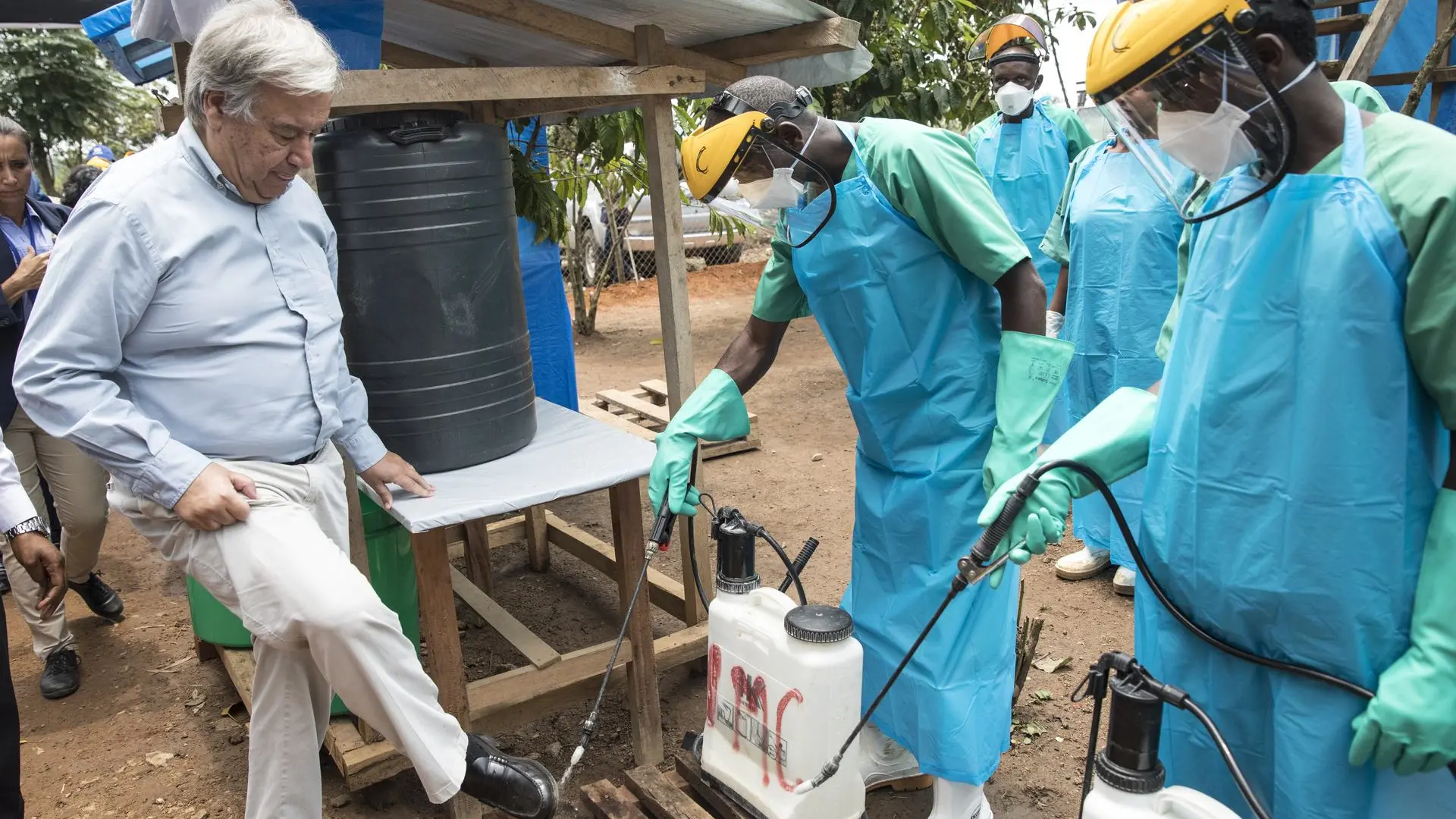
Congolese health workers at the centre of the Ebola outbreak in Ituri abandoned several health facilities on 6 August and gathered outside the governor’s office in Bunia to demand their wages. They have not been paid since the outbreak was declared in mid-May. Among them were nurses providing critical care to Ebola patients. By 8 August the Democratic Republic of Congo had recorded 4,209 confirmed cases and 1,916 deaths, with Ituri province carrying 3,636 of those cases across 28 of its 36 health zones. It is now the second-largest Ebola outbreak ever recorded, behind only the West African crisis of 2014 to 2016, and it reached that position in under three months.
The Bundibugyo outbreak was spreading faster than the response could contain it. Unpaid staff added an avoidable operational problem to the clinical, logistical and security pressures. Workers need reliable pay to remain in treatment facilities and community teams. Their departure can weaken care and surveillance; it does not establish that payroll is the sole explanation for the outbreak’s speed or severity.
The problem has surfaced in the same place before. Ituri health workers issued a strike notice early in this outbreak, citing unpaid benefits, low wages and inadequate supplies.
Reliable pay is part of the capacity that keeps treatment and surveillance running.
Staff shortages can delay recognition, isolation and follow-up of cases. Those delays can in turn increase the workload facing the remaining responders. Prompt detection, infection prevention, community cooperation and safe care all matter. Reliable pay supports those functions rather than replacing the need for them.
Violence and misinformation further complicated the response. The reported burning of treatment facilities and attacks on staff need careful, attributed reporting. They cannot simply be read as a community verdict on unpaid wages. Trust is affected by experience of services, insecurity and communication; the relative influence of each needs evidence from the communities concerned.
The comparison with Uganda also needs restraint. Uganda’s 20 cases against Congo’s 4,209 is a difference of roughly 210-fold. That contrast raises questions about detection, geography, mobility and response capacity. It cannot isolate the effect of payroll or state capacity without accounting for the outbreaks’ different conditions.
Emergency financing can pay for commodities and technical support while leaving recurrent employment costs insecure. That division deserves scrutiny in Ituri. It does not mean every donor is barred from supporting salaries, or that health-worker pay is necessarily a simpler administrative task than emergency procurement. The useful questions are which body employed the workers, which funds were committed, and where payment stalled.
Containing the outbreak requires the people delivering care and surveillance to be supported throughout it. Reliable wages should be treated as part of response capacity, with named responsibility for payment and a record that workers can check. The eventual account of the response should examine that financing alongside clinical care, contact tracing, community engagement and security.



