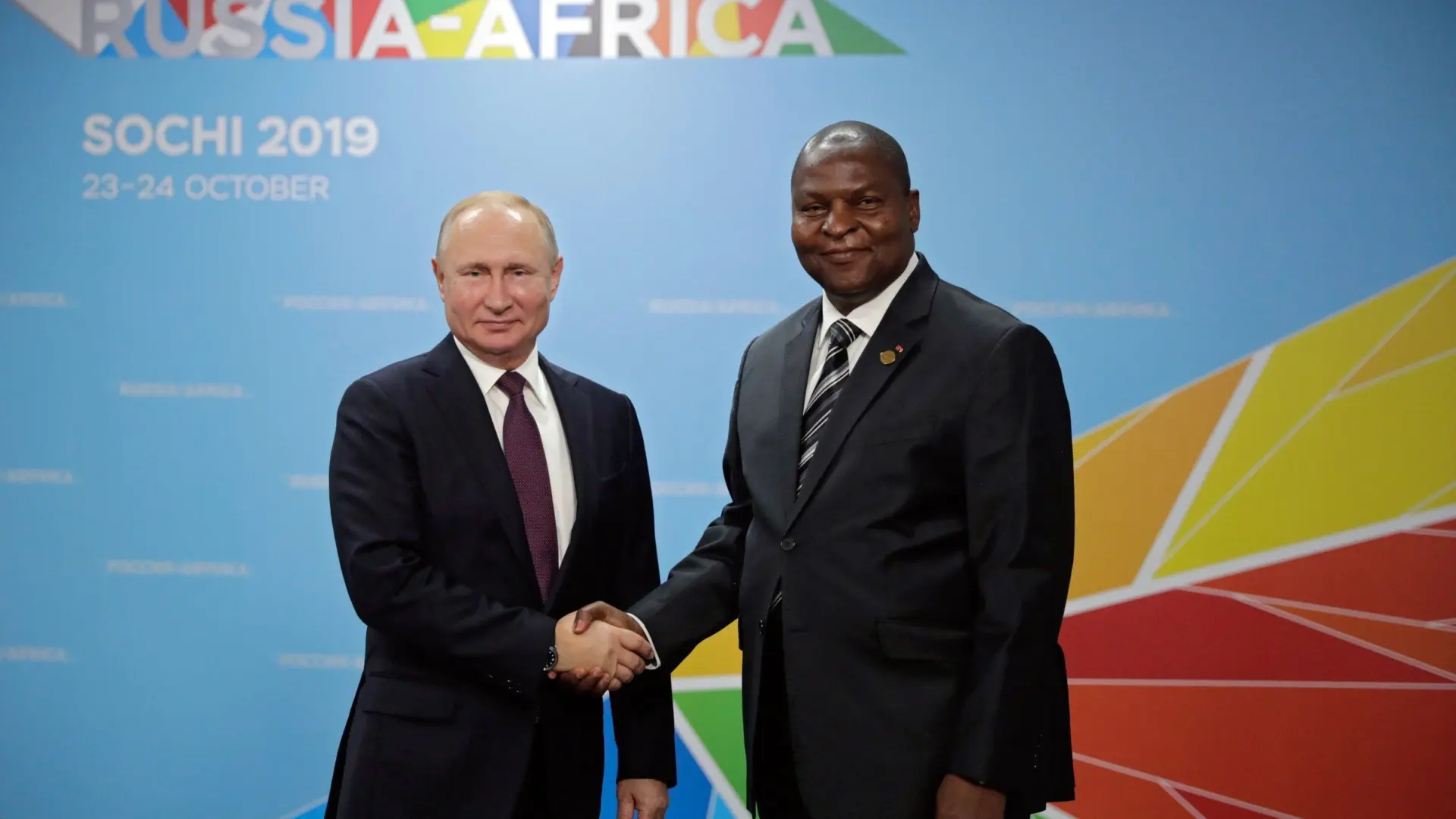
Russia’s relationship with Africa has a long history that began in the Soviet period. Many African countries took part in it, among them Egypt, Algeria, Libya and Ethiopia. The ties were mainly political and military. Moscow supported African countries in winning their freedom from the colonial powers and exported military equipment to help them defend their territory. In return, African countries exported minerals and other natural resources to Russia.
The relationship weakened after the Soviet period, as the Russian economy declined. More recently the Russian economy has grown stronger, with a solid industrial base and more manufactured goods to trade with African countries. This piece uses a SWOT analysis (strengths, weaknesses, opportunities and threats) to assess the outlook. It finds a natural exchange of Russian industry and expertise for African resources and markets, held back by sanctions, payment risk, instability and competition from other powers.
Strengths
- Russia has strong military equipment, oil and gas, mining and space industries, and it is looking for natural resources.
- African countries have natural resources and are looking for industrial products and investment in oil, gas and mining.
Weaknesses
- Russia’s exports are mainly military and space products.
- African countries have high levels of unemployment.
- African countries mostly want manufactured goods.
Opportunities
- African demand is strong, and the population is growing rapidly.
- Russia needs ever more natural resources.
- Some African countries still need military equipment.
- Russian tourists want to travel to Africa to discover its nature and sunshine.
Threats
- Russia is under sanctions from the US and Europe.
- African countries may not be able to pay.
- Political and economic instability in Africa.
- Competition from the US, Europe and China in African markets.
The first of these threats has grown since 2019. Russia now faces wider Western sanctions over its war against Ukraine, as Al Jazeera noted in October 2026.
Mining and investment
Russian investment in African oil, gas and mining could benefit both sides, because Russia has long experience in these sectors. It could also bring African countries jobs and help to reduce unemployment.
The first Russia-Africa Summit and Economic Forum, held in Sochi in October 2019, included a panel titled “The mining industry in Africa: new Russian technologies and high efficiency”. There, Russian companies offered African countries robots, driverless trucks and systems built on the industrial internet of things and artificial intelligence, which they said would raise productivity and export earnings, the Sierra Leone Telegraph reported.
The outlook
African countries will gain more partners and can make their investments more profitable. Some still want Russian military equipment. The payment problem could be eased if the two partners settled their bilateral transactions in their own currencies.
The summit has since become a regular event. A second was held in St Petersburg in July 2023, and the third took place in Moscow on 28–29 October 2026, with delegations from 48 African countries, 22 of them led by heads of state, according to the Kremlin. Trade between Russia and Africa has passed $28bn, up from about $16.8bn in 2019, though it is concentrated in a few countries and remains far smaller than Africa’s trade with China and the EU. Russian military missions or troops are now present in at least nine African countries, according to the African Security Analysis group, Al Jazeera reported.



