Some African countries are rising to the challenge of development and want to be counted in a globalising world. Africa’s big brother, Nigeria, is lagging behind. This piece argues that in electricity, education, governance and infrastructure, smaller neighbours have planned and delivered while the giant of Africa has drifted.
Development is not a magic wand to be waved at will. Like a race, it takes deliberate preparation. As a budding development economist, I accept that comparisons between countries need common ground if they are to avoid bias, so the comparisons here are with other African states rather than with countries that industrialised centuries ago.
Electricity
The power sector has been a major headache for Nigerians and for foreign investors. Firms that must generate their own power face overheads that outweigh almost every other cost, and that is bad for investment.
Nigeria has the capacity to generate an estimated 7000 megawatts (MW) of electricity, yet the grid peaked at 5,090MW on 26 April 2018, its highest output of the year at that point. The Energy Commission of Nigeria, a federal agency, projected in 2018 that the country could generate 100,000MW by 2030. Ghana, meanwhile, had backed a plan announced in 2015 to bring solar home systems to 100,000 off-grid homes. Ghana lived through years of rolling blackouts, known locally as dumsor, before ending them at the end of 2015. In Nigeria, blackouts remain routine.
South Africa’s power sector had a nominal installed capacity of about 45,700MW, and more generation is being worked on. In Nigeria, despite the huge sums spent, there is no appreciable result, and the country cannot yet distribute even 7,000MW.
In the author’s view, the problem is a failure to do the right thing when it is due. Too many reforms are made for the moment and for the glory of a single tenure rather than for the future. City dwellers complain of outages, but many rural areas are worse off. When I was deployed for national service, it was a shock to find villages that were not connected to the national grid at all.
Education
Education is power, and in the author’s view the Nigerian government has failed in its duty to empower young citizens. The curriculum is out of date and out of step with the digital world, and too many graduates leave without the skills employers want, except those who took time to invest in themselves. The talk of the country is how to become an entrepreneur, but not everyone has entrepreneurial skills, and those who do not still need a path to work.
Rwanda has chosen a different path. Children there are entitled to 12 years of free education, taking them all the way through primary and secondary school. Primary enrolment in Rwanda is close to 100%, while in Nigeria only 60.9% of children of primary school age were attending school, according to the 2016–17 Multiple Indicator Cluster Survey (MICS) conducted by the National Bureau of Statistics with the United Nations Children’s Fund (UNICEF).
Rwanda has also used technology to improve education. Academic Bridge, a platform built by a Kigali start-up and adopted by schools, gives teachers and parents an easy way to communicate online. Teachers can upload grades, attendance records and even disciplinary notes. The author knows of no comparable national effort in Nigeria, where even Google Classroom has no national recognition.
Governance
Some African governments have lately set the pace on accountability. Kenya’s President Uhuru Kenyatta built up real momentum in his campaign against corruption. In June 2018 he ordered that the heads of procurement and accounting across government be vetted afresh, including polygraph (lie detector) tests, to find out whether they were involved in corrupt practices. The move was criticised, but it was an attempt to clean house.
Also in Kenya, the governor of Busia County, Sospeter Ojaamong, and nine other county officials were arrested and charged in court in July 2018 over an alleged scheme to defraud the Busia county government of Sh8 million. They were also charged with abuse of office, conspiracy to commit an economic crime and engaging in a project without proper planning. The governor was accused of inserting a project that was not in the budget. In May 2025 an anti-corruption court acquitted Ojaamong and his co-accused of all the charges, finding no evidence that any money was lost or that the accused had benefited unlawfully. The case ended in acquittal, but a sitting governor was brought before a court over a county budget, something the author rarely sees in Nigeria.
In May 2018 the head of Kenya’s National Youth Service was among 54 people, 40 civil servants and 14 private-sector officials, charged over the alleged theft of 8bn Kenyan shillings (£59m, $78m) from the agency. In Nigeria, the author argues, public funds can disappear and all the public hears is “we are looking into the matter”. In March 2018 the Federal Government released a list of people it accused of looting, yet no obvious action followed.
Infrastructure
Infrastructure tells the same story. Ethiopia, a country once known for crisis, launched a light rail line in its capital, Addis Ababa. Construction began in December 2011, the first line opened in September 2015, and the project cost less than $500 million. Kenya, too, has launched a standard gauge railway that makes travel more comfortable and convenient.
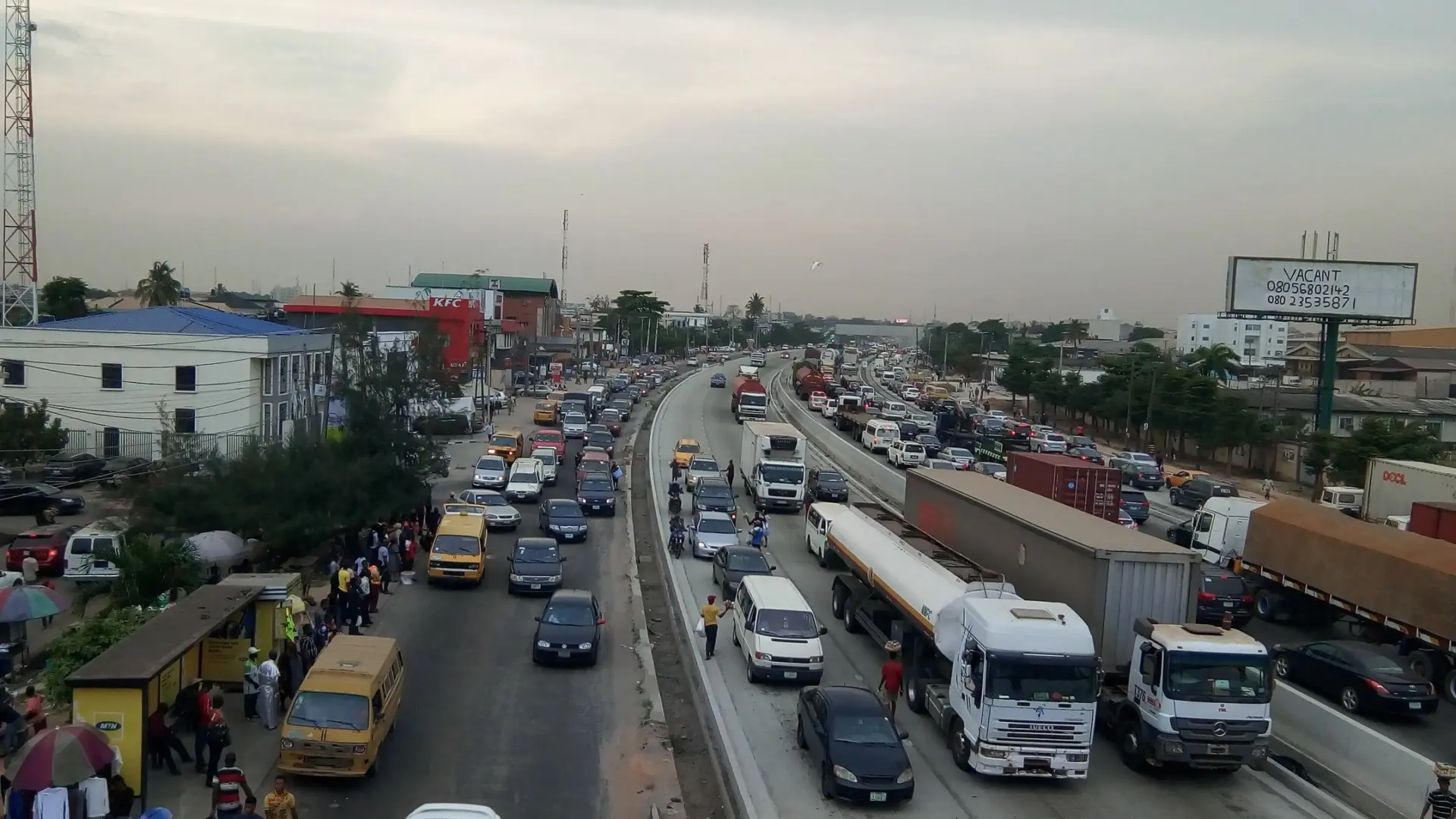
While other African countries are rising to meet a fast-changing world, Nigeria’s planning lacks foresight, and that keeps the government from running the race well. It is high time the Nigerian government braced itself and got ready to drive the nation forward.
What has changed since
Uhuru Kenyatta left office on 13 September 2022 and was succeeded by William Ruto. The gap in power supply remains. According to World Bank data for 2024, 62.5% of Nigerians had access to electricity, against 91.9% in Ghana and 90.2% in South Africa.



